
Industrial butterfly valves have become one of the most widely used flow-control devices across water treatment, HVAC, chemical processing, oil and gas, and power generation industries. Their compact structure, quick quarter-turn operation, and relatively low cost compared to gate or globe valves make them a practical choice for engineers who need reliable on/off or throttling control without sacrificing installation space.
This guide breaks down how an industrial butterfly valve works, the main design variations available on the market, and the factors that should guide your selection process.
What Is an Industrial Butterfly Valve?
At its core, an industrial butterfly valve consists of a circular disc mounted on a rotating shaft inside a cylindrical body. When the shaft turns 90 degrees, the disc moves from fully closed to fully open, allowing operators to regulate flow with a simple quarter-turn motion. This simplicity is a major reason butterfly valves are favored in large-diameter pipelines where the footprint and weight of a gate valve would be impractical.
Unlike ball valves, which require a full bore to minimize flow resistance, butterfly valves keep a portion of the disc in the flow path even when fully open. This creates slightly more pressure drop, but the trade-off is a lighter, more compact valve that is easier and faster to install.
Common Types of Industrial Butterfly Valves
Wafer type butterfly valves sit between two pipe flanges and are held in place by through-bolts. They are the most economical option and are widely used in low-to-medium pressure applications such as HVAC and general water systems.
Lug type butterfly valves use threaded inserts (lugs) around the body, allowing each side of the pipeline to be bolted independently. This design is particularly valuable in dead-end service, where one side of the line may need to be disconnected for maintenance without depressurizing the entire system.
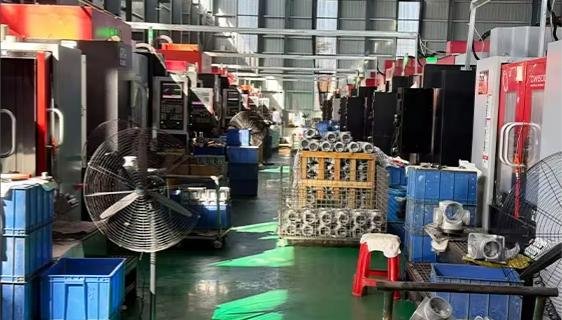
Double-flanged and triple-offset butterfly valves are typically specified for higher-pressure, higher-temperature industrial processes, including oil and gas and power plants, where a tighter shutoff and longer service life are required.
For manufacturers producing valves at scale, following recognized dimensional and material standards is essential. Many of these design parameters trace back to ASME B16.34, which covers pressure-temperature ratings, dimensions, tolerances, materials, and testing requirements for flanged, threaded, and welded valves, including wafer and lugged designs used across the industry (ASME B16.34 standard). ASME
Key Applications
Industrial butterfly valves are used in:
- Water and wastewater treatment – for flow isolation and regulation in large-diameter pipelines
- HVAC systems – controlling chilled or heated water circulation in commercial buildings
- Chemical and petrochemical processing – handling corrosive or high-temperature media with appropriate seat and disc materials
- Power generation – regulating cooling water and process fluids in plant piping
- Marine and shipbuilding – ballast and bilge systems requiring compact, corrosion-resistant valves
How to Choose the Right Butterfly Valve
Selecting the correct valve comes down to a few critical variables:
- Pressure and temperature rating – Confirm the valve’s class rating matches your system’s operating conditions.
- Body and disc material – Cast iron, ductile iron, and stainless steel are common choices depending on the media and environment.
- Seat material – EPDM, NBR, or PTFE seats determine chemical compatibility and temperature tolerance.
- Connection type – Wafer, lug, or flanged, depending on whether isolation on one side of the pipeline is required.
- Actuation method – Manual lever, gearbox, pneumatic, or electric actuator, depending on how frequently the valve is operated and whether automation is needed.
Working with a manufacturer that understands these variables — and can provide documentation and testing records to match — reduces the risk of premature failure or non-compliance in regulated industries.
Why Quality and Certification Matter
An industrial butterfly valve is only as reliable as the manufacturing process behind it. Look for suppliers with ISO 9001 certification and, where relevant, additional certifications such as PED (EU Pressure Equipment Directive) or WaterMark for drinking water applications. These certifications indicate that raw material sourcing, production monitoring, and final testing follow consistent, auditable procedures rather than ad hoc quality checks.
Hongda Valve manufactures a full range of wafer and lug type butterfly valves built to meet international pressure and material standards, including the Long Neck Wafer Type Model 25 Butterfly Valve, engineered for durability and corrosion resistance in demanding industrial environments.
Final Thoughts
Industrial butterfly valves offer a practical balance of cost, weight, and performance for flow control across a wide range of industries. Choosing the right type — and the right supplier — depends on matching pressure ratings, materials, and certifications to your specific application. If you’re evaluating butterfly valves for a new project or need technical guidance on material selection, contact our engineering team for support tailored to your system requirements.