
When a piping system needs a valve that can be removed for maintenance without disturbing the rest of the line, or when the application calls for higher pressure ratings than a standard wafer valve can handle, engineers typically turn to a flange butterfly valve. Also known as a double-flanged butterfly valve, this design bolts directly onto pipe flanges on both sides, offering more mechanical strength and independent isolation than wafer or lug alternatives.
This guide explains how flange butterfly valves are built, how they compare to other connection types, which international standards apply, and what to check before specifying one for your project.
What Is a Flange Butterfly Valve?
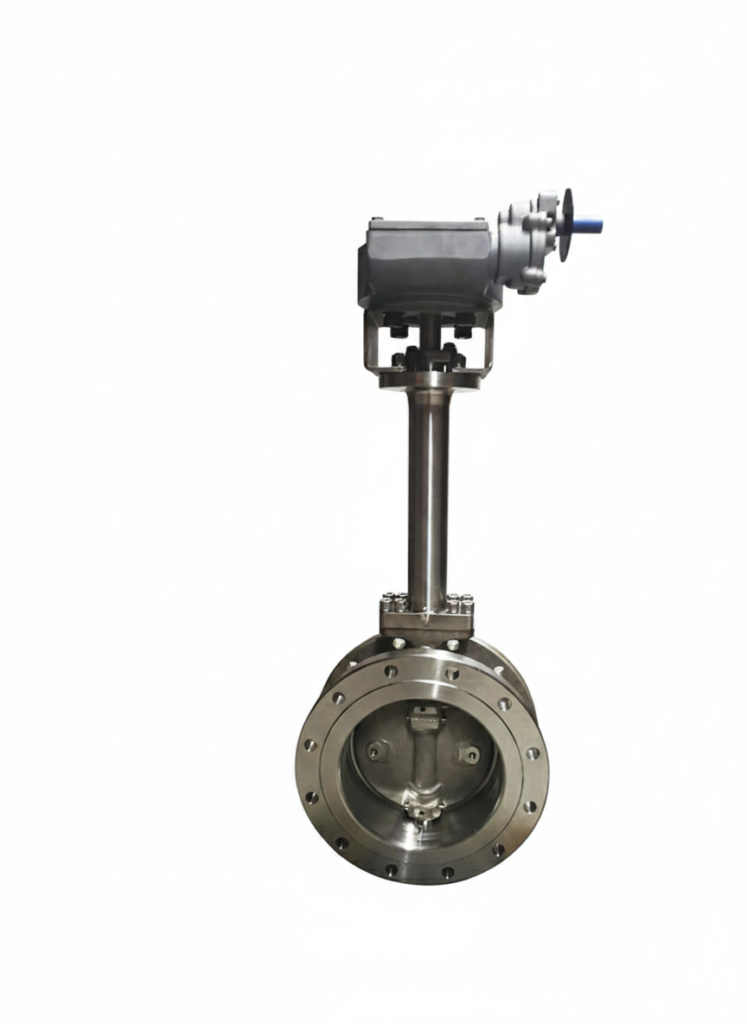
A flange butterfly valve has its own integral flanges cast or forged into the valve body on both the inlet and outlet sides. Instead of being sandwiched between two pipe flanges with through-bolts (as with a wafer valve), it is bolted independently to each mating flange using separate bolt sets. This construction gives the valve two key advantages:
- Independent line isolation – One side of the pipeline can be unbolted and removed for inspection or maintenance while the other side remains pressurized and sealed.
- Higher structural strength – The dedicated flange faces distribute bolt load more evenly, allowing the valve to handle larger diameters and higher pressure classes than wafer designs.
Because of this, flange butterfly valves are the preferred choice in large-diameter pipelines, high-pressure process lines, and any application where dead-end service (one side of the valve open to atmosphere) is a real operating condition.
Flange vs. Wafer vs. Lug: How They Compare
| Feature | Wafer Type | Lug Type | Flange (Double-Flanged) Type |
|---|---|---|---|
| Connection method | Sandwiched between flanges with through-bolts | Threaded lugs bolted independently to each flange | Integral flanges bolted independently on each side |
| Dead-end service | Not suitable | Suitable | Suitable, with the highest strength |
| Typical pressure range | Low to medium | Medium | Medium to high |
| Installation cost | Lowest | Moderate | Highest |
| Common use case | HVAC, general water systems | Water treatment, light process lines | Oil & gas, petrochemical, power generation |
| Maintenance flexibility | Requires full line shutdown | One side can be isolated | One side can be isolated with maximum structural support |
If your project has already been narrowed down to lug-type valves for maintenance flexibility at a lower cost, our earlier breakdown of wholesale lug-type butterfly valve considerations covers that comparison in more depth.
Standards Governing Flange Butterfly Valves
Flange butterfly valves are not built to arbitrary dimensions — they follow internationally recognized standards that define face-to-face length, flange drilling, pressure-temperature ratings, and testing requirements. Two standards come up most often:
- API 609 – Published by the American Petroleum Institute, this standard specifically covers double-flanged, lug-, and wafer-type butterfly valves, including material, design, and testing requirements for Category A (concentric) and Category B (offset/eccentric) designs (API Std 609 standard details).
- ASME B16.34 – This standard governs pressure-temperature ratings, dimensions, and materials for flanged, threaded, and welding-end valves, and is frequently referenced alongside API 609 for flange butterfly valve design (ASME B16.34 standard).
Specifying a valve built to both standards gives buyers confidence that flange dimensions, bolt patterns, and pressure classes will match other components in the system — an important consideration when sourcing from multiple manufacturers or planning future replacements.
Material Selection for Flange Butterfly Valves
Because flange butterfly valves are often used in higher-pressure or higher-temperature service than wafer types, material selection carries more weight:
- Body material – Ductile iron is common for water and general industrial service; cast steel (WCB) or stainless steel (CF8/CF8M) is used for higher pressure, higher temperature, or corrosive media.
- Disc material – Stainless steel discs resist corrosion and wear better than cast iron, especially in continuous-duty applications.
- Seat material – EPDM and NBR seats work well for water and mild chemical service; PTFE or metal seats are specified for aggressive chemicals, high temperatures, or applications requiring bubble-tight, Class VI shutoff.
- Stem material – Stainless steel stems are standard for corrosion resistance and long-term reliability under repeated cycling.
Matching the disc and seat material to the actual process media — rather than defaulting to the cheapest option — is one of the most common points of failure in poorly specified systems.
Typical Applications
Flange butterfly valves show up wherever a system needs a robust, bolt-independent isolation point:
- Oil, gas, and petrochemical pipelines – handling hydrocarbons under variable pressure and temperature conditions
- Power generation plants – cooling water and process fluid isolation
- Large-diameter water and wastewater mains – where dead-end maintenance access is required
- Marine and offshore piping – where structural strength and corrosion resistance are critical
- Industrial process lines – for chemicals, slurries, and other demanding media
Installation and Maintenance Tips
A well-selected valve can still underperform if it’s installed or maintained incorrectly. A few practical points worth checking:
- Confirm flange compatibility – Mixing ASME and ISO/metric bolt patterns is one of the most common installation errors and can compromise the seal.
- Check actuator mounting – Valves with pneumatic, electric, or gearbox actuators should follow ISO 5211 mounting standards to avoid torque mismatches.
- Verify clearance for disc rotation – Especially in tight piping runs, make sure the open disc doesn’t interfere with adjacent fittings.
- Inspect seat and seal condition periodically – Seat wear is usually the first sign of aging in a butterfly valve and is far cheaper to address early than after a leak develops.
- Torque bolts evenly and in sequence – Uneven bolt torque on flange connections is a leading cause of early seal failure.
Frequently Asked Questions
What’s the difference between a flange butterfly valve and a wafer butterfly valve?
A flange butterfly valve has integral flanges bolted independently to each side of the pipeline, allowing one side to be isolated for maintenance. A wafer valve is sandwiched between two pipe flanges using shared through-bolts and cannot be isolated on just one side.
Can a flange butterfly valve handle dead-end service?
Yes. Because each side is bolted independently, a properly rated flange butterfly valve can safely be operated with one side open to atmosphere — something wafer-type valves are not designed for.
What pressure class do flange butterfly valves typically cover?
Depending on size and material, flange butterfly valves are commonly available in ASME Class 150, 300, and 600, with higher classes available for specialized high-pressure and high-temperature applications.
Do flange butterfly valves need to meet API 609?
API 609 is not legally mandatory everywhere, but it’s the most widely recognized standard for double-flanged, lug, and wafer butterfly valve design and is commonly specified in oil, gas, and petrochemical projects to ensure consistency and interchangeability.
Final Thoughts
A flange butterfly valve offers the structural strength and maintenance flexibility that wafer and lug types can’t fully match, making it the right choice for higher-pressure systems and applications requiring dead-end isolation. Getting the selection right comes down to matching pressure class, body and seat materials, and applicable standards to your actual operating conditions.
Hongda Valve manufactures a range of butterfly valves, including flanged, wafer, and lug types, built to meet international pressure and material standards. If you’re specifying a flange butterfly valve for a new project, get in touch with our engineering team for guidance tailored to your system’s pressure, temperature, and media requirements.