
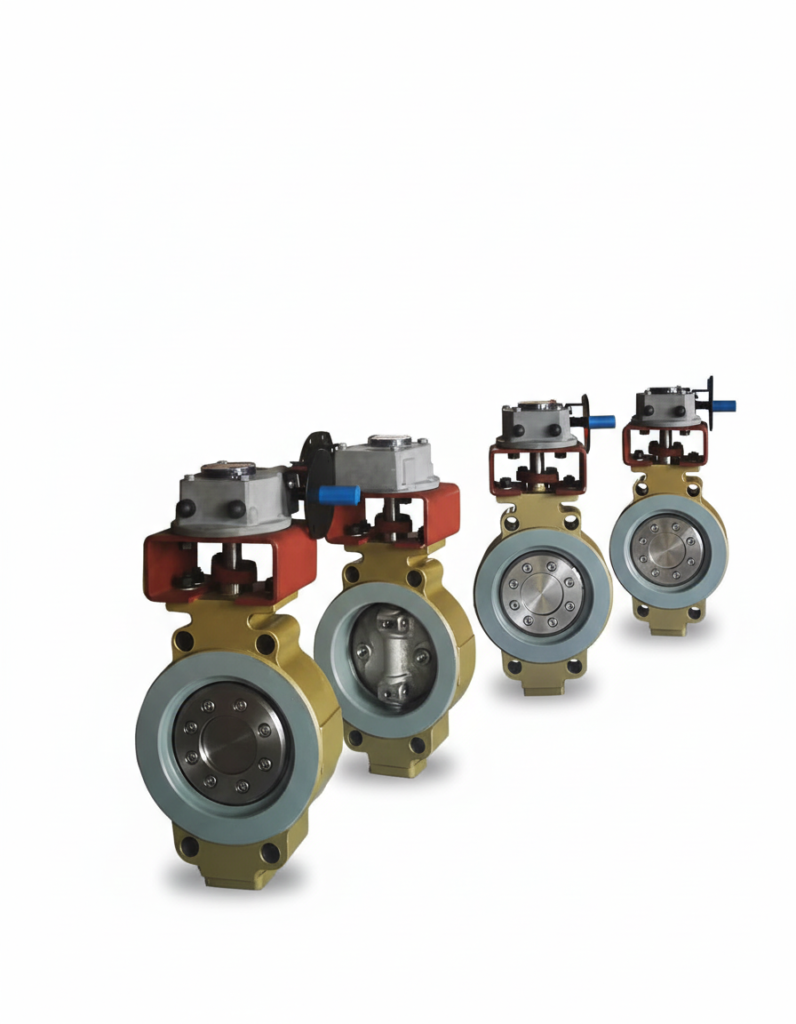
A carbon steel butterfly valve is a quarter-turn flow control valve manufactured with a carbon steel body, offering excellent mechanical strength, high pressure resistance, and reliable performance in demanding industrial environments. Carbon steel is widely used for butterfly valves because of its durability, cost-effectiveness, and ability to withstand moderate to high temperatures.
Carbon steel butterfly valves are commonly installed in oil and gas, petrochemical, power generation, chemical processing, mining, water treatment, and general industrial piping systems. They are available in wafer, lug, and flanged butterfly valve configurations to meet different installation and operational requirements.
How Does a Carbon Steel Butterfly Valve Work?
A carbon steel butterfly valve regulates or isolates fluid flow through a rotating disc mounted on a central shaft.
- Open Position: The disc rotates parallel to the flow direction, allowing fluid to pass with minimal pressure loss.
- Closed Position: The disc rotates 90 degrees and seals tightly against the valve seat, preventing or regulating flow.
Depending on the seat material, carbon steel butterfly valves can handle a wide range of operating conditions, from water systems to high-temperature industrial processes.
Advantages of Carbon Steel Butterfly Valves
A carbon steel butterfly valve provides several important advantages:
- High mechanical strength
- Excellent pressure resistance
- Cost-effective compared to stainless steel
- Good resistance to mechanical impact
- Suitable for medium- and high-temperature applications
- Reliable sealing performance
- Long service life
- Compatible with manual and automated operation
- Available in a wide range of sizes and pressure ratings
These characteristics make carbon steel butterfly valves a preferred solution for many industrial applications.
Types of Carbon Steel Butterfly Valves
Wafer Carbon Steel Butterfly Valve
A compact and lightweight design installed between two flanges.
Applications
- Industrial processing
- Water treatment
- Utility pipelines
Lug Carbon Steel Butterfly Valve
Designed with threaded lugs for end-of-line service and simplified maintenance.
Applications
- Process plants
- Pump stations
- Industrial utility systems
Flanged Carbon Steel Butterfly Valve
The flanged butterfly valve configuration provides a strong bolted connection for larger pipelines and systems requiring enhanced structural stability.
Applications
- Oil and gas pipelines
- Petrochemical facilities
- Power generation plants
Body Materials
Carbon steel butterfly valves are available in several material grades.
| Material Grade | Typical Application |
|---|---|
| WCB | General industrial service |
| LCB | Low-temperature applications |
| WC6 | High-temperature service |
| WC9 | Elevated temperature and pressure systems |
Selecting the appropriate material grade helps ensure reliable long-term performance.
Seat Materials
Carbon steel butterfly valves can be equipped with different seat materials based on operating conditions.
| Seat Material | Typical Application |
| EPDM | Water and HVAC systems |
| NBR | Oil, fuel, compressed air |
| PTFE | Corrosive chemicals |
| Metal Seat | High-temperature and high-pressure service |
Proper seat selection improves sealing performance and extends valve life.
Pressure Ratings and Sizes
Carbon steel butterfly valves are manufactured in a wide variety of sizes and pressure classes.
Common Sizes
- DN50–DN2000+
- 2″–80″+
Common Pressure Ratings
- PN16
- PN25
- PN40
- ANSI Class 150
- ANSI Class 300
- ANSI Class 600
Higher pressure ratings are available for specialized industrial applications.
Industrial Applications
Oil and Gas
Widely used in:
- Transmission pipelines
- Refineries
- Storage terminals
- Offshore platforms
Power Generation
Installed in:
- Steam systems
- Cooling water systems
- Boiler auxiliary pipelines
Chemical Processing
Suitable for:
- Process control
- Chemical transfer
- Utility services
Mining
Applications include:
- Slurry pipelines
- Process water systems
- Mineral processing
Water Treatment
Commonly used in:
- Industrial water supply
- Wastewater treatment
- Utility pipelines
General Industrial Applications
Installed in:
- Manufacturing facilities
- Process pipelines
- Industrial utility systems
Manual and Automated Operation
Carbon steel butterfly valves are available with various actuation options:
- Lever handle
- Worm gear operator
- Electric actuator
- Pneumatic actuator
- Hydraulic actuator
Automation improves efficiency, reduces manual operation, and supports integration with modern process control systems.
Carbon Steel vs. Stainless Steel Butterfly Valve
| Feature | Carbon Steel | Stainless Steel |
| Mechanical Strength | Excellent | Excellent |
| Corrosion Resistance | Good (with coating) | Excellent |
| Cost | Lower | Higher |
| High-Temperature Performance | Excellent | Excellent |
| Typical Applications | Oil & Gas, Power Plants | Food, Chemical, Marine |
Carbon steel is often selected for strength and cost efficiency, while stainless steel is preferred for highly corrosive or hygienic applications.
How to Choose the Right Carbon Steel Butterfly Valve
When selecting a carbon steel butterfly valve, consider:
- Operating pressure
- Working temperature
- Process media
- Material grade
- Seat material
- Valve size
- Connection type
- Manual or automated operation
- Industry certifications
Selecting the correct valve improves operational reliability and reduces maintenance costs.
Quality Standards and Certifications
Reliable carbon steel butterfly valves are manufactured according to internationally recognized standards, including:
- ISO 9001
- API 609
- API 598
- EN 593
- CE Certification
- ANSI / ASME
- DIN
- JIS
- PED (Pressure Equipment Directive)
Compliance with these standards ensures consistent quality, safety, and long-term industrial performance.
Frequently Asked Questions
What is a carbon steel butterfly valve?
A carbon steel butterfly valve is a flow control valve with a carbon steel body designed for medium- to high-pressure industrial applications requiring strength and durability.
What are the advantages of carbon steel butterfly valves?
They offer excellent mechanical strength, pressure resistance, cost efficiency, long service life, and reliable performance in demanding industrial environments.
What is the difference between carbon steel and stainless steel butterfly valves?
Carbon steel provides excellent strength at a lower cost, while stainless steel offers superior corrosion resistance for aggressive or hygienic environments.
Which industries commonly use carbon steel butterfly valves?
Oil and gas, petrochemical, power generation, mining, chemical processing, water treatment, and general industrial manufacturing.
Can carbon steel butterfly valves be automated?
Yes. They are available with electric, pneumatic, hydraulic, and gear-operated actuators for automated process control.
How do I choose the right carbon steel butterfly valve?
Evaluate operating pressure, temperature, media compatibility, material grade, seat material, connection type, and required industry standards before selecting a valve.
Conclusion
A carbon steel butterfly valve is a durable and economical solution for industrial applications requiring high mechanical strength and reliable performance. Its robust construction makes it well suited for oil and gas, power generation, petrochemical processing, mining, water treatment, and general industrial piping systems.
Whether selecting a wafer, lug, or flanged butterfly valve configuration, choosing the appropriate carbon steel grade, seat material, and pressure rating will help ensure dependable sealing, efficient flow control, and long-term operational reliability.