
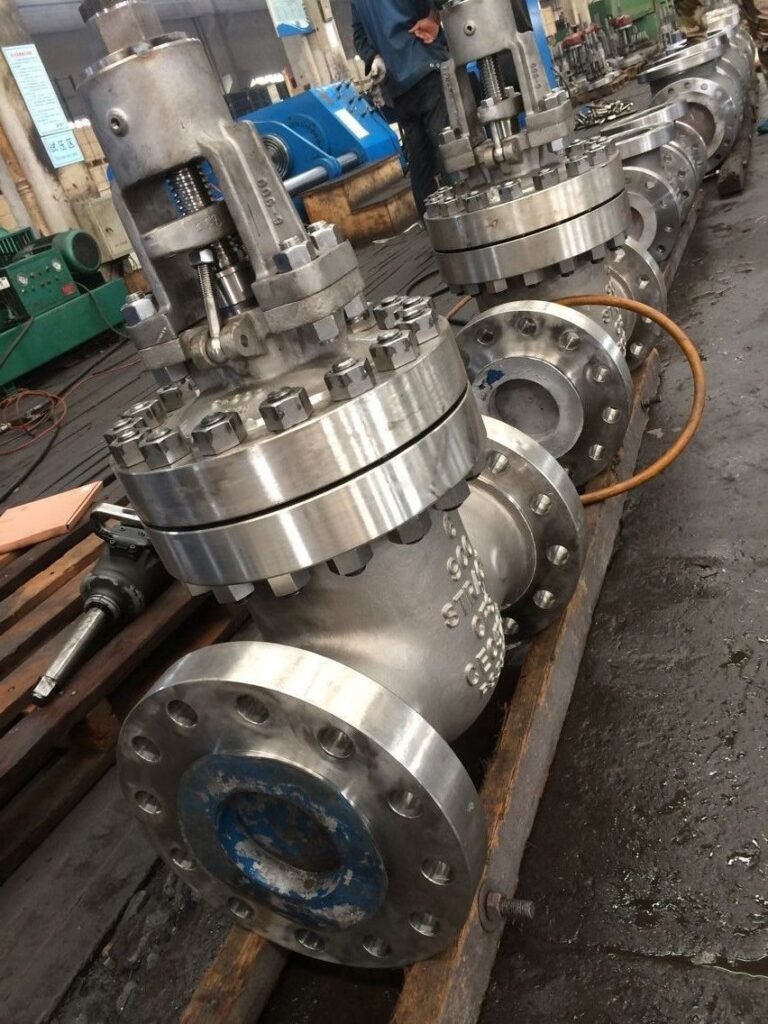
What Is a Stainless Steel Disc Butterfly Valve?
A stainless steel disc butterfly valve is a butterfly valve equipped with a stainless steel disc, while the valve body may be manufactured from ductile iron, cast iron, carbon steel, stainless steel, or other materials. The stainless steel disc provides excellent corrosion resistance, improved durability, and reliable sealing performance, making it one of the most widely used configurations in industrial piping systems.
Compared with coated iron discs, stainless steel discs offer better resistance to rust, chemical corrosion, and wear, making them suitable for water treatment, chemical processing, food production, marine engineering, and HVAC systems.
Stainless steel disc butterfly valves are available in wafer, lug, and flanged butterfly valve designs to accommodate various installation requirements.
How Does a Stainless Steel Disc Butterfly Valve Work?
A stainless steel disc butterfly valve controls or isolates flow through a quarter-turn rotating disc.
- Open Position: The stainless steel disc rotates parallel to the flow direction, allowing fluid to pass with minimal pressure loss.
- Closed Position: The disc rotates 90 degrees and compresses against the valve seat, creating a dependable seal.
The stainless steel disc resists corrosion and erosion while maintaining smooth operation over extended service periods.
Advantages of Stainless Steel Disc Butterfly Valves
A stainless steel disc butterfly valve offers several important advantages:
- Excellent corrosion resistance
- High mechanical strength
- Improved wear resistance
- Smooth flow characteristics
- Long service life
- Reliable sealing performance
- Low maintenance requirements
- Suitable for manual and automated operation
- Compatible with various body materials
These benefits make stainless steel disc butterfly valves suitable for a wide range of industrial applications.
Types of Stainless Steel Disc Butterfly Valves
Wafer Stainless Steel Disc Butterfly Valve
A compact design installed between two flanges.
Applications
- Water treatment
- HVAC systems
- Municipal pipelines
Lug Stainless Steel Disc Butterfly Valve
Designed with threaded lugs for end-of-line service and convenient maintenance.
Applications
- Industrial processing
- Utility systems
- Pump stations
Flanged Stainless Steel Disc Butterfly Valve
The flanged butterfly valve configuration provides enhanced structural stability and is ideal for larger pipelines and heavy-duty installations.
Applications
- Water distribution
- Chemical processing
- Industrial utilities
Common Disc Materials
Different stainless steel grades are available depending on the operating environment.
| Disc Material | Typical Application |
|---|---|
| Stainless Steel 304 | Water treatment, HVAC, general industry |
| Stainless Steel 316 | Marine, chemical processing, pharmaceuticals |
| Duplex Stainless Steel | Offshore and high-pressure systems |
| CF8 | General corrosion-resistant applications |
| CF8M | Highly corrosive and chloride-rich environments |
Selecting the appropriate disc material improves valve durability and operating reliability.
Body Materials
Stainless steel disc butterfly valves can be paired with different body materials.
| Body Material | Typical Application |
| Ductile Iron | Water supply, wastewater |
| Cast Iron | HVAC, municipal systems |
| Carbon Steel | Oil & gas, industrial processing |
| Stainless Steel | Corrosive environments |
| Cast Steel | High-pressure industrial systems |
The combination of body and disc materials should be selected according to pressure, media, and environmental conditions.
Pressure Ratings and Sizes
Stainless steel disc butterfly valves are manufactured in a broad range of sizes and pressure classes.
Common Sizes
- DN40–DN2000+
- 1½”–80″+
Common Pressure Ratings
- PN10
- PN16
- PN25
- PN40
- ANSI Class 150
- ANSI Class 300
Higher pressure ratings are available for specialized applications.
Industrial Applications
Water Treatment
Widely used in:
- Drinking water systems
- Wastewater treatment
- Distribution networks
Chemical Processing
Installed in:
- Chemical transfer
- Utility pipelines
- Corrosive process systems
Food and Beverage
Suitable for:
- Beverage production
- Food processing
- Cleaning systems
Marine Engineering
Applications include:
- Seawater systems
- Ballast water systems
- Shipbuilding
HVAC Systems
Commonly used in:
- Chilled water systems
- Heating networks
- Cooling towers
General Industrial Applications
Installed in:
- Manufacturing facilities
- Utility pipelines
- Process water systems
Manual and Automated Operation
Stainless steel disc butterfly valves are available with multiple actuation options:
- Lever handle
- Worm gear operator
- Electric actuator
- Pneumatic actuator
- Hydraulic actuator
Automated operation improves process efficiency and supports remote monitoring and control.
Stainless Steel Disc vs. Nickel-Plated Ductile Iron Disc
| Feature | Stainless Steel Disc | Nickel-Plated Ductile Iron Disc |
| Corrosion Resistance | Excellent | Good |
| Wear Resistance | Excellent | Good |
| Service Life | Longer | Standard |
| Chemical Resistance | Excellent | Moderate |
| Typical Applications | Chemical, Marine, Food | Water Supply, HVAC |
A stainless steel disc is generally recommended for applications involving corrosive media or requiring enhanced durability.
How to Choose the Right Stainless Steel Disc Butterfly Valve
When selecting a stainless steel disc butterfly valve, consider:
- Operating pressure
- Working temperature
- Process media
- Disc material
- Body material
- Seat material
- Valve size
- Connection type
- Manual or automated operation
- Industry certifications
Choosing the right material combination ensures optimal performance and long service life.
Tip: For projects requiring secure bolted connections, explore our Flanged Butterfly Valve range to find suitable models for industrial and municipal piping systems.
Quality Standards and Certifications
Reliable stainless steel disc butterfly valves are manufactured according to internationally recognized standards, including:
- ISO 9001
- API 609
- API 598
- EN 593
- CE Certification
- ANSI / ASME
- DIN
- JIS
- WRAS (for potable water applications)
- PED (Pressure Equipment Directive)
Compliance with these standards helps ensure consistent quality, safety, and dependable industrial performance.
Frequently Asked Questions
What is a stainless steel disc butterfly valve?
A stainless steel disc butterfly valve is a butterfly valve that uses a stainless steel disc to improve corrosion resistance, durability, and sealing performance.
Why use a stainless steel disc instead of ductile iron?
Stainless steel provides superior corrosion resistance, longer service life, better chemical compatibility, and improved wear resistance compared to coated ductile iron discs.
Which stainless steel grade is best for butterfly valve discs?
304 stainless steel is suitable for general applications, while 316 stainless steel is preferred for marine, chemical, and highly corrosive environments.
Which industries commonly use stainless steel disc butterfly valves?
Water treatment, chemical processing, food production, marine engineering, HVAC, pharmaceuticals, and industrial manufacturing.
Can stainless steel disc butterfly valves be automated?
Yes. They can be equipped with electric, pneumatic, hydraulic, or gear-operated actuators.
How do I choose the right stainless steel disc butterfly valve?
Evaluate the operating pressure, media compatibility, disc material, body material, seat material, connection type, and industry standards before selecting the valve.
Conclusion
A butterfly valve offers an ideal balance of durability, corrosion resistance, and reliable sealing for industrial flow control systems. Its corrosion-resistant disc extends service life while maintaining dependable performance in water treatment, chemical processing, marine engineering, food production, HVAC, and numerous industrial applications.
Whether paired with a ductile iron, carbon steel, or stainless steel body in a wafer, lug, or flanged butterfly valve configuration, selecting the appropriate disc material, seat material, and pressure rating will ensure efficient operation, reduced maintenance, and long-term reliability.