
What Is Butterfly Valve Torque Calculation?
Butterfly valve torque calculation is the process of determining how much rotational force is required to open, operate, and close a butterfly valve under specific working conditions.
Torque is one of the most important parameters when selecting a manual gearbox, electric actuator, pneumatic actuator, or hydraulic actuator. If the actuator is undersized, the valve may fail to open or close properly. If it’s significantly oversized, the system can become unnecessarily expensive and may create excessive mechanical stress.
The required torque isn’t a single fixed value. It depends on valve size, pressure differential, seat material, fluid conditions, disc design, shaft friction, operating temperature, and whether the valve is being opened or closed.
For this reason, a proper calculation should consider several torque components rather than simply using valve diameter.
Why Is Butterfly Valve Torque Calculation Important?
A butterfly valve rotates around its shaft. The actuator must overcome resistance from several sources during this movement.
The most important reasons to calculate torque accurately are:
- Correct actuator sizing
- Reliable valve operation
- Reduced risk of actuator overload
- Longer valve service life
- Lower equipment costs
- Better control performance
- Safer pipeline operation
This becomes especially important for large industrial valves. A DN500 valve operating at relatively high differential pressure can require substantially more torque than a small water-service valve.
The valve manufacturer’s torque data should always be treated as the primary reference for final actuator selection because internal geometry and seat construction can cause significant differences between apparently similar valves.
Main Types of Butterfly Valve Torque
Butterfly valve torque is normally considered at different stages of operation.
Breakaway Torque
Breakaway torque is the torque required to start moving the disc from the closed position.
This can be one of the highest torque points because the seat and disc may have significant contact pressure.
Factors affecting breakaway torque include:
- Seat material
- Differential pressure
- Disc diameter
- Shaft design
- Seat interference
- Temperature
- Valve age
Running Torque
Running torque is the torque required to keep the disc rotating after it has started moving.
It is usually different from breakaway torque because the static friction associated with starting movement has already been overcome.
Running torque is affected by:
- Disc geometry
- Shaft bearings
- Seat friction
- Fluid pressure
- Valve construction
Seating Torque
Seating torque is the torque required to move the valve into its final closed position and establish the required seal.
This is particularly important for resilient seated butterfly valves.
If the seating torque is underestimated, the valve may not achieve the required shut-off performance.
Unseating Torque
Unseating torque is the torque required to move the disc away from the closed position.
For some valve designs, unseating torque can be greater than running torque because the disc is working against both seat friction and differential pressure.
What Factors Affect Butterfly Valve Torque?
Several variables must be considered during butterfly valve torque calculation.
| Factor | Effect on Required Torque |
|---|---|
| Valve size | Larger disc generally requires greater torque |
| Differential pressure | Higher pressure can increase torque |
| Seat material | Higher friction can increase torque |
| Disc design | Influences hydraulic and mechanical forces |
| Fluid type | Density and viscosity affect operation |
| Temperature | Can change seat friction and material behavior |
| Valve type | Offset geometry changes torque characteristics |
| Operating direction | Opening and closing torque can differ |
| Valve condition | Deposits and corrosion can increase resistance |
The exact relationship isn’t always linear, which is why manufacturer torque curves are valuable.
Butterfly Valve Torque Calculation Formula
There isn’t one universal formula that accurately predicts the operating torque of every butterfly valve.
For preliminary engineering analysis, torque can be considered as the combined effect of mechanical and fluid-related resistance:
Where:
- Ttotal = required valve torque
- Tseat = seat-related torque
- Tbearing = bearing and shaft friction torque
- Tfluid = torque caused by fluid pressure and flow
- Tother = other mechanical resistance
This is a conceptual engineering model rather than a universal valve-sizing equation.
For actual actuator selection, use the manufacturer’s tested torque values whenever available.
How Differential Pressure Affects Butterfly Valve Torque
Differential pressure is one of the most important variables.
When the valve is closed, pressure acts against the disc. Depending on the valve geometry and pressure direction, this can create a substantial force that the actuator must overcome.
As differential pressure increases:
Pressure force ↑ → Disc loading ↑ → Required torque may increase
However, the relationship isn’t simply proportional in every operating position because disc angle and valve geometry also change the hydraulic moment.
For this reason, actuator sizing should consider the maximum expected differential pressure, not simply the normal pipeline pressure.
Torque Calculation for Soft Seated Butterfly Valves
Soft seated butterfly valves commonly use EPDM, NBR, PTFE, or other elastomeric or polymeric seats.
The seat creates friction against the disc, especially around the closed position.
Important factors include:
- Seat interference
- Seat hardness
- Material friction coefficient
- Temperature
- Differential pressure
- Disc surface finish
A soft seated valve can therefore require relatively high torque during breakaway and seating even when the running torque is relatively low.
This is one reason manufacturers often provide separate torque values for opening and closing.
Torque Calculation for Metal Seated Butterfly Valves
Metal seated butterfly valves are commonly used in higher-temperature or more demanding industrial applications.
Their torque characteristics can differ significantly from soft seated designs.
Factors include:
- Metal seat geometry
- Disc-to-seat contact
- Thermal expansion
- Operating temperature
- Surface finish
- Pressure differential
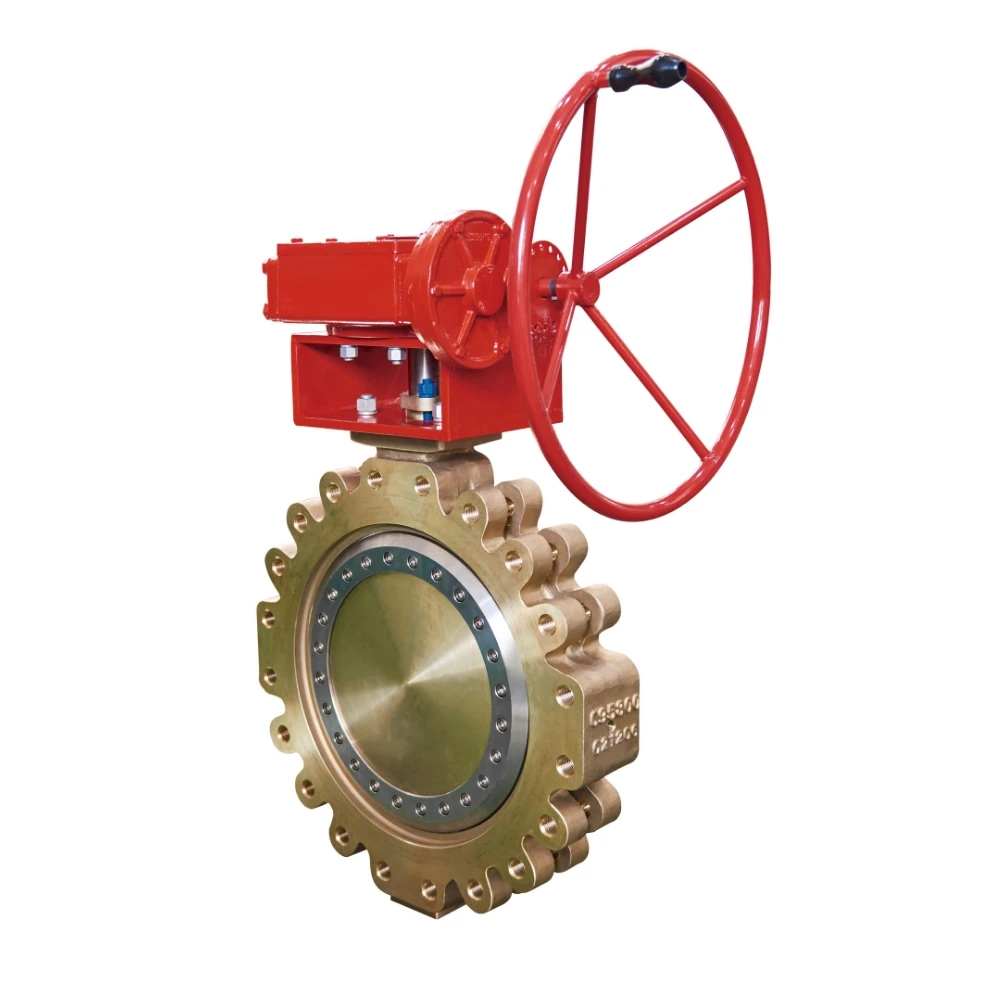
Triple offset butterfly valves are a particularly important example. Their geometry is designed to minimize rubbing between the disc and seat during operation.
This can reduce wear and help provide reliable shut-off under demanding conditions.
Double Offset and Triple Offset Butterfly Valve Torque
Offset geometry has a major influence on torque.
Double Offset Butterfly Valve
A double offset design moves the shaft away from the centerline of the disc and pipe.
This reduces seat contact during most of the rotation and can lower friction compared with a conventional concentric design.
Triple Offset Butterfly Valve
A triple offset design adds a conical seat geometry.
The disc and seat move away from one another during opening, significantly reducing rubbing.
This design is often used for:
- High-temperature service
- High-pressure applications
- Steam
- Oil and gas
- Chemical processing
The torque curve of a triple offset valve can therefore be quite different from that of a resilient seated concentric butterfly valve.
Butterfly Valve Torque and Actuator Sizing
Once the required valve torque has been established, it can be compared with actuator output torque.
A practical sizing approach is:
Required actuator torque ≥ maximum valve torque × safety factor
For example, if the maximum verified valve torque is 500 N·m and the project specifies a 1.25 safety factor: 500×1.25=625 N\cdotpm
The selected actuator should therefore provide at least the required output torque under the relevant operating conditions.
The exact safety factor should follow the valve and actuator manufacturer’s recommendations and the applicable project specifications. Avoid adding an arbitrary oversized factor simply because “more torque is better.”
How to Calculate Pneumatic Butterfly Valve Torque
Pneumatic actuator output depends mainly on:
- Air pressure
- Piston area
- Actuator geometry
- Stroke angle
- Spring configuration
For a basic pneumatic actuator, force can be represented as:
Where:
- F = actuator force
- P = air pressure
- A = effective piston area
The resulting torque depends on the actuator’s mechanical arrangement and effective lever arm.
For rack-and-pinion pneumatic actuators, torque changes with rotation angle. Therefore, engineers should compare the actuator’s torque curve against the valve’s complete torque curve rather than checking only one nominal value.
How to Calculate Electric Actuator Torque
Electric actuators are usually specified directly by output torque.
For butterfly valve applications, engineers should verify:
- Breakaway torque
- Running torque
- Seating torque
- Maximum differential pressure
- Required operating time
- Duty cycle
- Number of starts
- Fail-safe requirements
The actuator’s rated output should exceed the valve’s maximum required torque under the specified operating conditions.
For automated isolation valves, torque switches and limit switches should also be correctly configured to protect the valve and actuator.
Butterfly Valve Torque Calculation Example
Consider a hypothetical butterfly valve with:
- Valve size: DN200
- Maximum valve torque: 350 N·m
- Safety factor: 1.25
The minimum target actuator torque would be: 350×1.25=437.5 N\cdotpm
A suitable actuator would therefore need to provide at least approximately 438 N·m under the relevant operating condition.
However, this simplified example doesn’t replace manufacturer data.
If the valve manufacturer specifies different opening, running, and closing torque values, each point should be checked against the actuator’s torque output.
Butterfly Valve Torque Calculation for Large Valves
Large butterfly valves require additional attention because actuator torque can become substantial.
Applications include:
- Water transmission
- Cooling water
- Desalination
- Hydropower
- Wastewater treatment
- Industrial process pipelines
A large valve doesn’t necessarily have an extremely high torque if the design minimizes seat friction and pressure-induced loading. Conversely, a smaller valve with a high-friction seat and large differential pressure may require surprisingly high torque.
Therefore, valve diameter alone should never be used to estimate actuator size.
How Seat Material Influences Torque
Seat selection can significantly affect operating torque.
| Seat Material | General Torque Consideration |
|---|---|
| EPDM | Common water-service seat |
| NBR | Suitable for selected oil-containing applications |
| PTFE | Low-friction material with application-specific limits |
| Metal | High-temperature and severe-service applications |
| Graphite-based sealing | Often used in high-temperature designs |
The actual torque depends on the complete valve design rather than seat material alone.
Butterfly Valve Torque vs Pressure Rating
Pressure rating and operating torque are related, but they’re not the same specification.
For example, a valve may have a high pressure rating but still have relatively manageable operating torque because of its seat and offset design.
Common pressure classifications include:
- PN10
- PN16
- Class 150
- Higher pressure classes for specialized designs
When calculating torque, use the actual maximum differential pressure across the valve, not simply the nominal pressure rating.
How to Select the Correct Butterfly Valve Actuator
Before selecting an actuator, collect these parameters:
| Required Data | Why It Matters |
|---|---|
| Valve size | Establishes basic valve geometry |
| Valve type | Determines torque characteristics |
| Seat type | Influences friction |
| Maximum differential pressure | Affects disc loading |
| Fluid | Affects hydraulic forces |
| Temperature | Influences materials |
| Opening/closing time | Determines actuator requirements |
| Fail position | Determines actuator configuration |
| Operating frequency | Affects actuator duty |
| Manufacturer torque data | Primary sizing reference |
The most reliable workflow is:
Valve data → Torque curve → Safety factor → Actuator output → Final verification
Common Mistakes in Butterfly Valve Torque Calculation
Using Valve Diameter Alone
DN size doesn’t tell you the complete torque requirement.
Using Pipeline Pressure Instead of Differential Pressure
The actuator responds to the forces acting across the valve. Upstream pressure alone isn’t sufficient.
Ignoring Breakaway Torque
The torque required to start movement can be higher than running torque.
Ignoring Seat Torque
This can lead to actuator undersizing, particularly with resilient seated valves.
Oversizing the Actuator Excessively
An unnecessarily large actuator can increase cost and potentially create excessive mechanical loading.
Using Generic Torque Tables for Final Selection
Generic tables are useful for preliminary estimates but shouldn’t replace manufacturer-specific data.
Internal Product Link
For industrial projects that require a reliable flange connection, you can also explore our flanged butterfly valve product range here:
View our flanged valve products
Frequently Asked Questions
What is butterfly valve torque calculation?
It is the process of determining the rotational torque required to open, operate, and close a butterfly valve under specified operating conditions.
What is the most important factor in butterfly valve torque?
There isn’t one universal factor. Differential pressure, valve size, seat friction, disc design, temperature, and valve construction all contribute to the required torque.
Does a larger butterfly valve always require more torque?
Not necessarily. Larger valves generally have greater mechanical and hydraulic forces, but offset design, seat construction, and pressure conditions can significantly change the actual torque requirement.
How much safety factor should be used for actuator sizing?
The appropriate factor depends on the valve manufacturer, actuator manufacturer, service conditions, and project specifications. A common preliminary approach is to apply a modest margin to the verified maximum valve torque, then confirm the selection against manufacturer data.
Why is breakaway torque important?
Breakaway torque determines how much force is needed to start moving the disc from the closed position. If the actuator can’t overcome this torque, the valve may remain stuck even though the actuator appears adequate based on running torque.
Does pressure affect butterfly valve torque?
Yes. Differential pressure can create forces on the disc that increase the torque required to operate the valve.
Do triple offset butterfly valves require high torque?
They can require substantial torque depending on size, pressure, and service conditions, but their geometry minimizes rubbing between the disc and seat and can provide favorable operating characteristics compared with conventional designs.
Can I calculate actuator size from valve DN alone?
No. Valve diameter alone isn’t sufficient. You should obtain the manufacturer’s torque curve and consider differential pressure, seat type, temperature, and operating requirements.
Conclusion
Accurate butterfly valve torque calculation is essential for selecting the correct actuator and ensuring reliable valve operation. The calculation should consider breakaway, running, seating, and unseating torque rather than relying on valve diameter alone.
For practical engineering work, the best approach is to obtain the valve manufacturer’s tested torque data, identify the maximum required operating torque under actual pressure and temperature conditions, apply an appropriate project-specific margin, and then verify the actuator’s complete torque curve.
This method helps prevent both actuator undersizing and unnecessary oversizing, resulting in a safer, more economical, and more reliable butterfly valve system.