
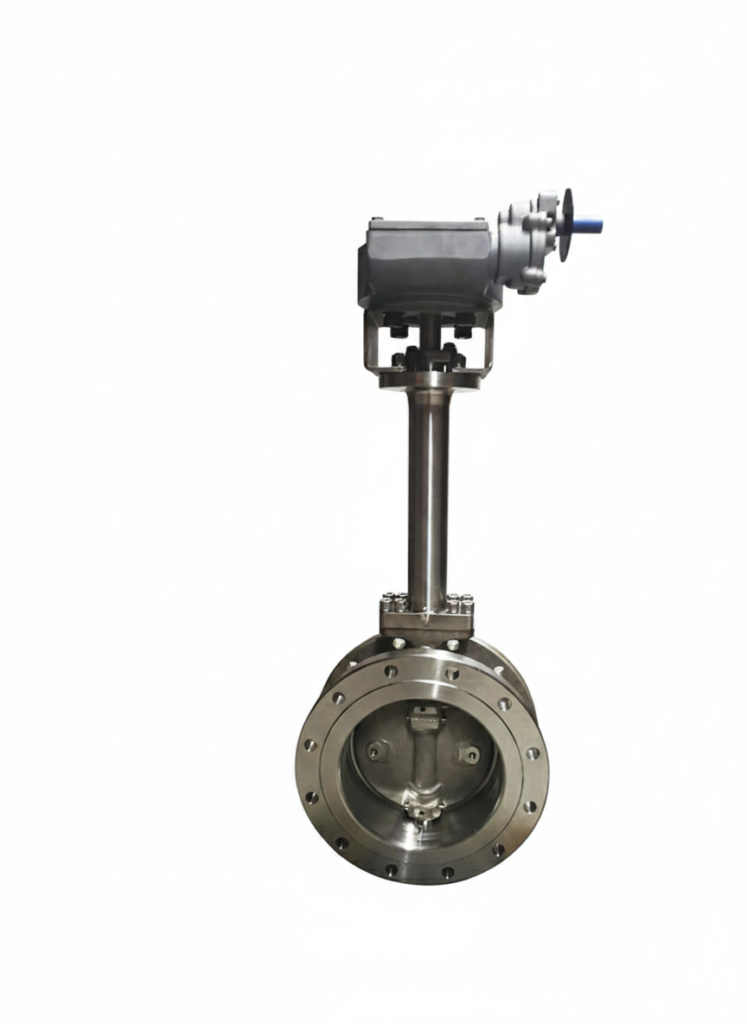
Quarter-turn valves are widely used across industrial piping systems because they can move from fully open to fully closed with a 90-degree rotation. This simple operating principle makes them suitable for manual isolation, automated shut-off, and, depending on the valve design, flow regulation.
When selecting a quarter turn valve supplier, however, the product catalog is only part of the picture. A dependable supplier should understand valve design, operating torque, material compatibility, pressure and temperature requirements, actuator selection, testing, and project documentation.
Common quarter-turn valve types include butterfly valves, ball valves, and plug valves. Each has different characteristics and is suited to different applications. Water treatment may favor butterfly valves for large pipelines, while process applications may require ball or plug valves for specific shut-off or fluid-handling duties.
For industrial projects requiring flanged valve connections, you can also explore our flanged valve product range.
What Is a Quarter-Turn Valve?
A quarter-turn valve is a valve that typically requires approximately 90 degrees of rotational movement to move between its open and closed positions.
The most common examples are:
- Butterfly valves
- Ball valves
- Plug valves
Compared with multi-turn valves such as many gate and globe valves, quarter-turn valves can offer fast operation and relatively simple automation.
Their basic operating principle is:
90° rotation → valve position changes
This makes them particularly suitable for applications requiring quick isolation or automated operation.
Why Quarter-Turn Valves Are Widely Used
Quarter-turn valves offer several practical advantages.
Fast Operation
A 90-degree movement can be completed relatively quickly, especially with pneumatic or electric actuation.
Compact Automation
Quarter-turn actuators can be compact compared with many multi-turn actuator arrangements.
Simple Operation
Manual handles, gearboxes, and actuators can provide straightforward control.
Broad Size Range
Butterfly valves, in particular, are available in large diameters for industrial pipelines.
Automation Compatibility
Quarter-turn valves can readily be paired with:
- Electric actuators
- Pneumatic actuators
- Hydraulic actuators
- Positioners
- Limit switches
- Solenoid valves
1. Butterfly Valves as Quarter-Turn Valves
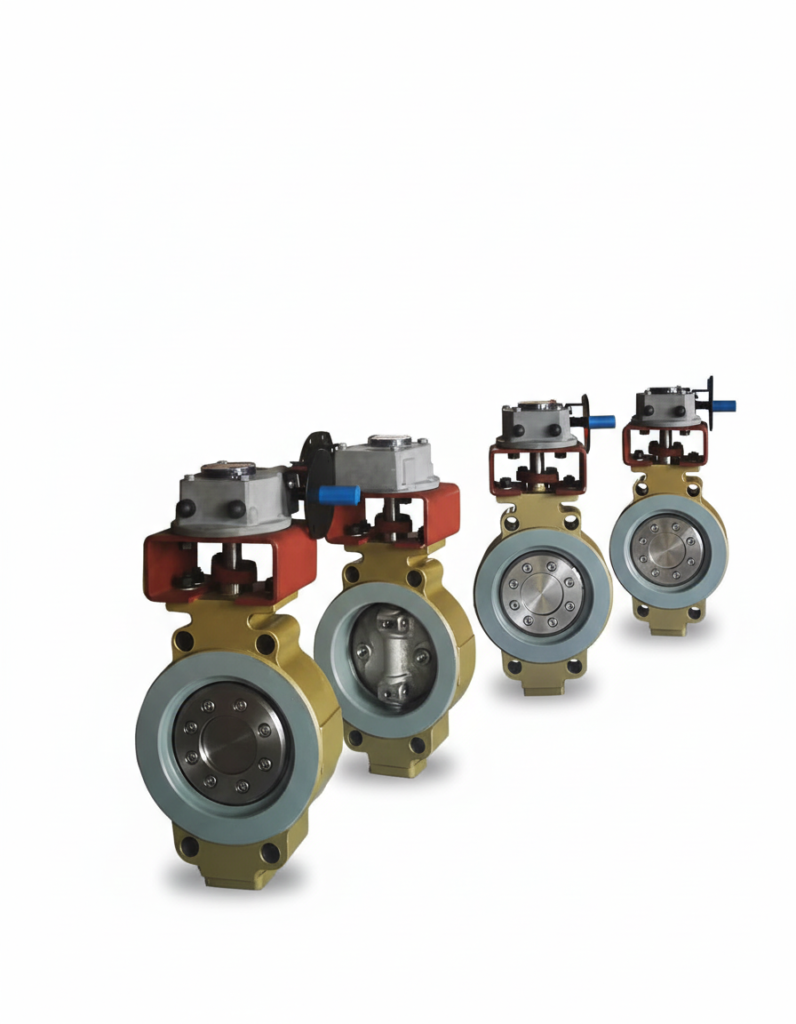
Butterfly valves use a rotating disc installed inside the flow passage.
They’re commonly used in:
- Water treatment
- Wastewater
- Cooling water
- HVAC
- Desalination
- General industrial applications
One major advantage is their compact construction.
For large pipelines, a butterfly valve can often provide a lighter and more space-efficient solution than some alternative valve designs.
Common Butterfly Valve Designs
Concentric Butterfly Valve
Often used for general water and industrial applications.
Double Offset Butterfly Valve
The offset design can reduce seat-disc rubbing and may provide improved durability.
Triple Offset Butterfly Valve
Often considered for more demanding applications involving higher temperatures, pressures, or metal-to-metal sealing.
The correct design depends on the process conditions rather than simply the pipe diameter.
2. Ball Valves as Quarter-Turn Valves
Ball valves use a rotating ball with a central flow passage.
When the bore aligns with the pipeline, the valve is open. Rotating the ball 90 degrees places the solid portion across the flow path.
Ball valves are commonly selected for:
- Process systems
- Oil and gas
- Chemical applications
- Gas service
- Water
- General industrial applications
They can provide fast operation and reliable shut-off.
Different ball valve designs include:
- Floating ball valves
- Trunnion-mounted ball valves
- Reduced-port ball valves
- Full-port ball valves
3. Plug Valves as Quarter-Turn Valves
Plug valves use a rotating cylindrical or tapered plug.
They’re commonly considered for applications involving:
- Wastewater
- Slurry
- Chemical processing
- Hydrocarbons
- Industrial fluids
Their suitability depends on the specific plug design, materials, pressure, temperature, and medium.
For abrasive or solids-containing fluids, the valve design and sealing arrangement require careful evaluation.
4. How to Choose a Quarter Turn Valve Supplier
Choosing a supplier should start with technical capability.
Consider the following factors.
| Factor | What to Evaluate |
|---|---|
| Product range | Butterfly, ball, plug and related valves |
| Size range | Can they supply the required diameters? |
| Pressure ratings | PN/Class requirements |
| Materials | Body, disc, ball, stem, seat and seals |
| Actuation | Electric, pneumatic, hydraulic |
| Testing | Pressure and functional testing |
| Customization | Special materials and dimensions |
| Documentation | Drawings, certificates and test reports |
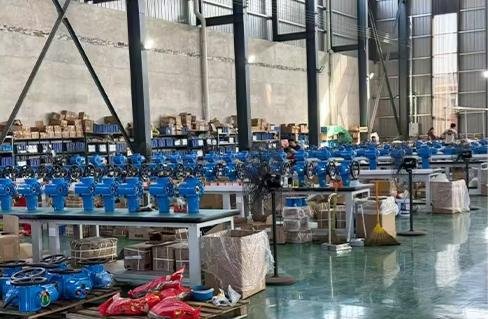
| Production capacity | Can they meet project quantities? |
| Delivery | Can they meet the required schedule? |
A supplier that can support both standard and customized requirements may be more useful for industrial projects.
5. Valve Material Selection
Material compatibility is critical.
Common valve body materials include:
- Cast iron
- Ductile iron
- Carbon steel
- Stainless steel
- Aluminum bronze
The appropriate choice depends on:
- Fluid
- Pressure
- Temperature
- Corrosion
- Abrasion
- Installation environment
The internal components also need to be considered.
These can include:
- Disc
- Ball
- Plug
- Stem
- Shaft
- Seat
- Seals
For example, the body may be suitable for water service while the selected elastomer isn’t appropriate for a particular chemical.
A good quarter-turn valve supplier should therefore evaluate the complete wetted assembly.
6. Seat and Seal Selection
The sealing material can strongly influence valve performance.
Common options include:
EPDM
Often used in water-related applications, depending on temperature and chemical conditions.
NBR
Commonly used for selected oil and hydrocarbon services.
PTFE
Known for broad chemical resistance and often considered for chemical-processing applications.
FKM
Used for certain hydrocarbon, chemical, and higher-temperature applications.
Metal Seats
Can be considered for severe temperature, pressure, or service conditions where soft seats aren’t suitable.
The correct seat should be selected based on the exact fluid and operating conditions.
7. Quarter-Turn Valve Pressure and Temperature Ratings
A valve needs to withstand the maximum expected operating conditions.
Important specifications include:
- Nominal pressure
- Maximum working pressure
- Operating temperature
- Design temperature
- Differential pressure
Common pressure classes include:
- PN10
- PN16
- PN25
- Class 150
Pressure ratings can vary with temperature, particularly for higher-temperature service.
A supplier should therefore provide appropriate pressure-temperature information rather than treating the nominal pressure as an absolute operating limit.
8. Quarter-Turn Valve Torque and Actuator Selection
Torque is one of the most important considerations when automating a quarter-turn valve.
The required torque can be influenced by:
- Differential pressure
- Seat friction
- Valve size
- Fluid conditions
- Temperature
- Valve design
- Operating frequency
The actuator should provide enough torque to operate the valve under the worst expected conditions.
Electric Actuators
Useful when the project requires:
- Remote operation
- Position feedback
- PLC integration
- Modulating control
Pneumatic Actuators
Suitable for many industrial applications where compressed air is available.
They can provide rapid operation and are commonly used with butterfly and ball valves.
Hydraulic Actuators
Can provide high operating torque and may be selected for specialized heavy-duty applications.
9. Manual Quarter-Turn Valve Operation
Not every valve needs automation.
Manual quarter-turn operation can be suitable for applications where operators only need occasional isolation.
Common options include:
- Handle
- Lever
- Gearbox
- Chain wheel
For larger butterfly valves, gearboxes can make manual operation easier by reducing the force required from the operator.
For elevated valves, chain-wheel operation may provide access from floor level.
10. Quarter-Turn Valve Connections
The connection style must match the piping system.
Common options include:
- Wafer
- Lug
- Flanged
- Threaded
- Butt-weld
- Socket-weld
For large industrial butterfly valves, wafer, lug, and flanged designs are common.
Connection dimensions should be verified against the applicable piping standard before manufacturing.
Important dimensional factors include:
- Flange drilling
- Bolt pattern
- Face-to-face dimension
- Valve bore
- Mounting interface
11. Flow Control vs Isolation
A common mistake is assuming every quarter-turn valve is equally suitable for throttling.
That’s not the case.
Some valves are designed primarily for isolation, while others can provide useful flow regulation.
When flow control is required, consider:
- Valve flow characteristics
- Required operating range
- Cv
- Pressure drop
- Cavitation risk
- Noise
- Valve position
For example, a butterfly valve may be suitable for certain flow-control applications, but the correct valve size and design need to be determined through proper engineering.
12. Quality Control and Valve Testing
A reliable supplier should have a structured testing process.
Potential tests include:
Shell Test
Checks the pressure integrity of the valve body.
Seat Leakage Test
Verifies shut-off performance.
Functional Test
Confirms proper valve operation.
Dimensional Inspection
Verifies compliance with approved drawings.
Actuator Test
For automated valves, confirms proper valve-actuator operation.
Coating Inspection
Checks surface preparation and coating requirements where applicable.
Testing should be performed according to the applicable valve standards and project specifications.
13. Quarter-Turn Valve Supplier for EPC Projects
EPC contractors often require suppliers to handle much more than manufacturing.
A typical project may involve:
RFQ → Technical Review → Quotation → Clarification → Drawing Approval → Manufacturing → Inspection → Testing → Documentation → Shipment
The supplier may need to provide:
- Datasheets
- GA drawings
- Material certificates
- Pressure test reports
- Inspection records
- Actuator documents
- Certificates
- Operation manuals
- Packing lists
Document control is particularly important when projects involve multiple revisions.
Manufacturing should always follow the approved technical documents.
14. Custom Quarter-Turn Valve Solutions
Industrial projects may require configurations outside a standard catalog.
A capable supplier may offer:
- Special seat materials
- Special body materials
- Extended stems
- Custom coatings
- Special flange dimensions
- Customized face-to-face dimensions
- Electric actuation
- Pneumatic actuation
- Hydraulic actuation
- Position feedback
- Limit switches
- Solenoid valves
- Locking devices
Before production, customized configurations should be confirmed through approved technical drawings.
15. Quarter-Turn Valves for Different Industries
Water Treatment
Butterfly valves are widely used for water pipelines.
Typical priorities include:
- Reliable shut-off
- Corrosion resistance
- Long service life
- Low maintenance
Wastewater
Valve selection should consider:
- Solids
- Debris
- Corrosion
- Abrasion
Chemical Processing
Chemical compatibility is a major consideration for body, seat, and seals.
Oil and Gas
Pressure, temperature, hydrocarbons, safety requirements, and applicable standards may all influence valve selection.
HVAC
Quarter-turn butterfly valves are commonly used in:
- Chilled water
- Hot water
- Cooling water
Marine Applications
Seawater service can create significant corrosion challenges, making material selection particularly important.
How to Compare Quarter Turn Valve Suppliers
Don’t judge suppliers only by their unit price.
A broader comparison should include:
| Category | Questions |
|---|---|
| Engineering | Can they recommend the right design? |
| Manufacturing | Do they have appropriate production capability? |
| Materials | Can they provide suitable wetted materials? |
| Actuation | Can they supply complete valve packages? |
| Testing | What tests are available? |
| Documentation | Can they meet project requirements? |
| Capacity | Can they handle the required volume? |
| Delivery | Is the lead time realistic? |
| Customization | Can they handle special requirements? |
| Support | Is technical assistance available? |
This approach can help identify a supplier that is capable of supporting the entire project rather than simply selling individual valves.
Common Quarter-Turn Valve Selection Mistakes
Choosing the Valve Based Only on Pipe Size
Matching the pipe diameter doesn’t guarantee suitable flow performance.
Ignoring Operating Torque
Automated valves need sufficient actuator torque.
Selecting the Wrong Seat
Chemical and temperature compatibility should always be checked.
Ignoring Pressure Drop
Excessive pressure loss can increase operating costs.
Using an Isolation Valve for Continuous Throttling
Not every quarter-turn valve is designed for prolonged throttling.
Failing to Confirm Connection Dimensions
Flange standards and face-to-face dimensions should be verified before ordering.
Not Defining Testing Requirements
Testing should be agreed upon before manufacturing.
Quarter-Turn Valve Supplier Procurement Checklist
Before placing an order, confirm:
- Valve type
- Valve size
- Pressure rating
- Fluid
- Operating pressure
- Operating temperature
- Flow rate
- Body material
- Internal materials
- Seat material
- Connection type
- Face-to-face dimension
- Manual or automatic operation
- Required torque
- Actuator type
- Accessories
- Leakage requirements
- Testing requirements
- Documentation
- Delivery schedule
This checklist can help prevent specification errors and costly changes after production begins.
Frequently Asked Questions
What is a quarter-turn valve?
A quarter-turn valve is a valve that normally requires about 90 degrees of rotation to move between open and closed positions. Butterfly, ball, and plug valves are common examples.
Which valves are quarter-turn valves?
The most common types are butterfly valves, ball valves, and plug valves. Some specialty valve designs can also use quarter-turn operation.
What should I look for in a quarter turn valve supplier?
Look for strong manufacturing capability, suitable materials, a broad product range, actuator options, quality control, testing, technical support, customization, documentation, and reliable delivery.
Are butterfly valves quarter-turn valves?
Yes. Butterfly valves use a rotating disc and generally require approximately 90 degrees of shaft rotation between fully open and fully closed positions.
Are quarter-turn valves suitable for automation?
Yes. They can be paired with electric, pneumatic, or hydraulic actuators. Actuator selection should be based on the valve’s operating torque and application requirements.
How do I select the correct actuator for a quarter-turn valve?
Determine the valve’s required operating torque under the worst expected conditions, then select an actuator with sufficient output torque and appropriate safety margin according to the applicable engineering requirements.
What materials are available for quarter-turn valves?
Common body materials include cast iron, ductile iron, carbon steel, stainless steel, and aluminum bronze. Seats and seals may use EPDM, NBR, PTFE, FKM, or metal depending on the service.
Can quarter-turn valves regulate flow?
Some can. However, suitability for throttling depends on the specific valve design, sizing, flow characteristics, and process conditions.
What industries use quarter-turn valves?
They’re widely used in water treatment, wastewater, HVAC, chemical processing, oil and gas, desalination, marine systems, power generation, and general industrial applications.
Conclusion
Selecting the right quarter turn valve supplier requires more than checking price and availability. A reliable supplier should understand valve design, material compatibility, pressure and temperature requirements, flow conditions, operating torque, actuation, testing, and project documentation.
Butterfly, ball, and plug valves can all provide effective quarter-turn operation, but each has different strengths. The right choice depends on the actual process and whether the valve is being used for isolation, regulation, or automated control.
For industrial and EPC projects, the ideal supplier should be capable of providing a complete solution—from valve selection and engineering to manufacturing, testing, documentation, and delivery.
In the long run, choosing a technically capable supplier can help improve valve reliability, project efficiency, maintenance performance, and overall lifecycle value.