
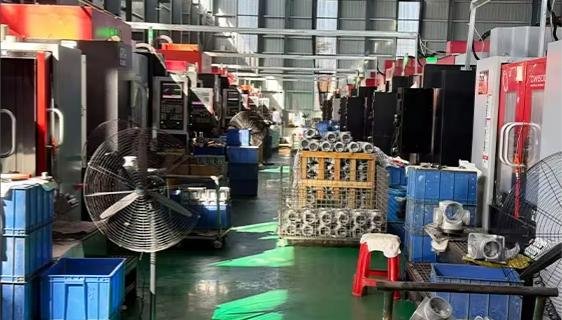
Choosing among different butterfly valve manufacturers can be challenging, especially when a project involves large quantities, demanding operating conditions, or strict technical specifications. A butterfly valve may look relatively simple, but its performance depends on many details, including body construction, disc design, shaft materials, seat selection, machining accuracy, pressure rating, and testing.
Butterfly valves are widely used in water treatment, wastewater, HVAC, desalination, chemical processing, power generation, marine systems, and general industrial piping. They can be supplied as manual valves or integrated with electric, pneumatic, or hydraulic actuators.
For buyers, distributors, EPC contractors, and system integrators, the goal isn’t simply to find the cheapest valve. It’s to identify a manufacturer that can consistently deliver the required quality, specifications, documentation, and delivery performance.
For industrial projects requiring flanged valves, you can also explore our flanged valve product range.
What Do Butterfly Valve Manufacturers Produce?
Butterfly valve manufacturers design and manufacture valves that use a rotating disc to control or isolate fluid flow.
Depending on the manufacturer, product ranges can include:
- Concentric butterfly valves
- Double offset butterfly valves
- Triple offset butterfly valves
- Wafer butterfly valves
- Lug butterfly valves
- Flanged butterfly valves
- Resilient seated butterfly valves
- Metal seated butterfly valves
- Manually operated valves
- Actuated butterfly valves
Manufacturers may also offer:
- OEM production
- Private labeling
- Custom valve designs
- Special materials
- Custom coatings
- Valve assemblies
- Actuator packages
- Inspection and testing
- Technical documentation
The available range depends on the manufacturer’s engineering and production capabilities.
Why Does the Choice of Butterfly Valve Manufacturer Matter?
Butterfly valves from different manufacturers can have significant differences even when their basic specifications appear similar.
Important differences may include:
- Casting quality
- Disc design
- Shaft construction
- Seat formulation
- Machining tolerances
- Coating quality
- Assembly procedures
- Testing standards
- Quality control
A reliable manufacturer should have a repeatable manufacturing process that controls these factors.
Benefits of Choosing an Experienced Manufacturer
A capable manufacturer can provide:
- Consistent valve quality
- Better dimensional accuracy
- Reliable sealing
- Appropriate material selection
- Actuator compatibility
- Customization options
- Factory testing
- Technical support
- Project documentation
For long-term purchasing, consistency can be just as important as the performance of an individual valve.

1. Main Types of Butterfly Valves
Understanding valve design is the first step when comparing manufacturers.
Concentric Butterfly Valves
Concentric butterfly valves are widely used for general industrial and water applications.
Typical services include:
- Drinking water
- Wastewater
- Cooling water
- HVAC
- Irrigation
- General utilities
They commonly use resilient seats such as EPDM or NBR.
Double Offset Butterfly Valves
A double offset design moves the shaft away from the centerline of the disc and sealing surface.
This reduces contact between the disc and seat during opening and closing.
Potential benefits include:
- Lower seat friction
- Reduced wear
- Improved operating efficiency
- Longer service life in suitable applications
Triple Offset Butterfly Valves
Triple offset butterfly valves use a more specialized sealing geometry.
They’re often considered for demanding applications involving:
- High temperatures
- Higher pressures
- Steam
- Hydrocarbons
- Metal-to-metal sealing
The appropriate design depends on the actual service conditions.
2. Butterfly Valve Materials
Material selection is a major factor when comparing manufacturers.
Common body materials include:
| Material | Typical Application |
|---|---|
| Cast iron | General water and HVAC |
| Ductile iron | Water and industrial service |
| Carbon steel | Industrial process systems |
| Stainless steel | Corrosive applications |
| Aluminum bronze | Selected marine and seawater service |
Internal components can use different materials depending on the application.
These may include:
- Stainless steel
- Aluminum bronze
- Carbon steel
- Coated steel
- EPDM
- NBR
- PTFE
- FKM
- Metal sealing materials
A good manufacturer should be able to explain the reason behind the selected materials.
3. Butterfly Valve Seat Materials
The seat is critical to shut-off performance.
EPDM Seats
EPDM is commonly used for:
- Water
- Wastewater
- Cooling water
It provides good performance in many water-based services but isn’t suitable for every hydrocarbon application.
NBR Seats
NBR can be appropriate for certain oil and hydrocarbon-related services, depending on temperature and chemical compatibility.
PTFE Seats
PTFE offers strong chemical resistance and can be considered for selected corrosive applications.
FKM Seats
FKM is often selected for applications requiring good resistance to certain chemicals, hydrocarbons, and elevated temperatures.
Metal Seats
Metal-seated butterfly valves can be considered for high-temperature or demanding services where resilient materials aren’t appropriate.
4. Pressure Ratings and Standards
Butterfly valves are manufactured for different pressure classes.
Common ratings include:
- PN10
- PN16
- PN25
- Class 150
When comparing manufacturers, check more than the nominal pressure rating.
Also consider:
- Maximum working pressure
- Differential pressure
- Operating temperature
- Pressure-temperature relationship
- Leakage requirements
A valve rated for a certain pressure at ambient temperature may have a different allowable pressure at elevated temperature.
5. Connection Types
Different piping systems require different valve connections.
Common configurations include:
- Wafer
- Lug
- Flanged
- Double flanged
- Grooved
- Customized connections
Flange dimensions and drilling patterns should match the applicable piping standard.
This is especially important for replacement valves because even small dimensional differences can cause installation problems.
6. Valve Size and Application
Butterfly valves are popular for large-diameter pipelines because they can provide a relatively compact and lightweight alternative to some other valve designs.
Depending on the manufacturer, sizes can range from small industrial piping to very large water infrastructure applications.
When comparing large-diameter valves, pay attention to:
- Shaft strength
- Disc strength
- Seat design
- Bearing arrangement
- Operating torque
- Actuator sizing
- Overall dimensions
Large valves require careful engineering rather than simple scaling of smaller designs.
7. Manual and Automated Butterfly Valves
Manufacturers may offer several operating methods.
Manual Operation
Common options include:
- Lever
- Gearbox
- Chain wheel
Manual valves are suitable for applications where frequent remote operation isn’t required.
Electric Actuation
Electric actuators can provide:
- Remote operation
- PLC integration
- Position feedback
- Automated isolation
- Modulating control
Pneumatic Actuation
Pneumatic actuators are commonly used where compressed air is available.
They can provide fast quarter-turn operation and may be configured with spring-return or double-acting mechanisms.
Hydraulic Actuation
Hydraulic actuators can be selected where high operating force is required.
8. Actuator Torque and Valve Sizing
Actuator compatibility is an important area when comparing butterfly valve manufacturers.
The required operating torque can depend on:
- Valve size
- Seat material
- Differential pressure
- Fluid conditions
- Temperature
- Disc geometry
- Operating frequency
The actuator shouldn’t be selected simply according to nominal valve size.
A professional manufacturer should determine the required torque and then select an actuator with adequate output.
For automated valves, also confirm whether the application requires:
- Fail open
- Fail closed
- Fail in place
These requirements should be established before production.
9. Manufacturing Quality and Production Process
A manufacturer’s production process can have a major impact on valve consistency.
A typical process includes:
Casting or Forging
Valve bodies and pressure-containing components are manufactured according to approved designs.
Machining
Critical surfaces are machined to specified tolerances.
Component Inspection
Important dimensions and material requirements are checked.
Assembly
The disc, shaft, seat, bearings, and other components are assembled.
Pressure Testing
The finished valve undergoes appropriate shell and seat tests.
Surface Treatment
Depending on material and application, manufacturers may apply protective coatings.
Final Inspection
The finished product is checked before packaging.
A controlled production process is particularly important for repeat orders.
Butterfly Valve Testing and Quality Control
Testing is one of the most important factors when evaluating manufacturers.
Shell Pressure Testing
Checks pressure integrity of the valve body.
Seat Leakage Testing
Verifies the valve’s shut-off performance.
Functional Testing
Confirms correct opening and closing.
Dimensional Inspection
Checks:
- Face-to-face dimensions
- Flange dimensions
- Mounting dimensions
- Valve size
Material Inspection
Confirms supplied materials against specified requirements.
Actuator Testing
For automated valves, the manufacturer may test:
- Opening
- Closing
- Position feedback
- Limit switches
- Fail-safe operation
Testing requirements should be clearly defined in the purchase specification.
Butterfly Valve Manufacturers for OEM and Private Label Projects
Distributors and industrial equipment companies often need products manufactured under their own brand.
OEM and private-label services can include:
- Custom logo
- Nameplate
- Packaging
- Documentation
- Product markings
- Special colors
- Custom specifications
More advanced OEM projects may involve:
- Modified valve dimensions
- Special materials
- Custom seats
- Special coatings
- Unique actuator configurations
For long-term OEM relationships, consistency is critical.
The manufacturer should maintain stable product designs, materials, manufacturing procedures, and inspection methods across different production batches.
Butterfly Valve Manufacturers for EPC Contractors
EPC contractors often need more than a product catalog.
A project may require:
- Valve datasheets
- Valve schedules
- General arrangement drawings
- Material certificates
- Inspection plans
- Pressure test reports
- Actuator datasheets
- Certificates
- Operation manuals
- Spare parts lists
The manufacturer should be capable of handling technical clarifications and document revisions efficiently.
A typical procurement process is:
RFQ → Technical Review → Quotation → Clarification → Drawing Approval → Manufacturing → Inspection → Testing → Documentation → Shipment
Good project coordination can reduce delays and avoid misunderstandings.
How to Compare Butterfly Valve Manufacturers
Price should be only one part of the evaluation.
| Evaluation Factor | What to Check |
|---|---|
| Product range | Types, sizes, and pressure ratings |
| Materials | Body, disc, shaft, and seat options |
| Engineering | Design and technical support |
| Manufacturing | Production capability |
| Testing | Pressure and functional testing |
| Quality control | Inspection procedures |
| Automation | Actuator integration |
| Customization | Special requirements |
| OEM capability | Branding and private-label support |
| Documentation | Project technical documents |
| Capacity | Production volume |
| Delivery | Lead time and reliability |
| Experience | Similar applications |
A manufacturer that offers strong engineering and quality support may provide better long-term value than a supplier offering only a low initial price.
Common Mistakes When Choosing Butterfly Valve Manufacturers
Focusing Only on Unit Price
A low purchase price may not include the same material quality, testing, documentation, or accessories.
Ignoring Seat Compatibility
The wrong seat material can lead to premature failure.
Choosing the Wrong Valve Design
Concentric, double offset, and triple offset designs have different applications.
Selecting an Actuator Without Torque Verification
Physical compatibility doesn’t guarantee adequate operating performance.
Not Checking Connection Standards
Incorrect flange dimensions can create costly installation problems.
Ignoring Factory Testing
Testing requirements should be established before production, not after the valves arrive.
Not Checking Production Capacity
A manufacturer may be able to produce a small order but struggle with large repeat projects.
Butterfly Valve Manufacturer Selection Checklist
Before choosing a supplier, confirm:
- Valve type
- Nominal size
- Pressure rating
- Body material
- Disc material
- Shaft material
- Seat material
- Fluid
- Operating pressure
- Operating temperature
- Connection type
- Flange standard
- Face-to-face dimension
- Manual or automatic operation
- Actuator type
- Required torque
- Fail position
- Accessories
- Testing requirements
- Inspection requirements
- Documentation
- OEM requirements
- Packaging
- Delivery schedule
How to Build a Long-Term Relationship With Butterfly Valve Manufacturers
For distributors, OEM customers, and industrial buyers, long-term cooperation can provide advantages beyond individual orders.
A strong relationship can help establish:
- Stable product specifications
- Consistent quality
- Predictable lead times
- Better technical communication
- Faster quotation
- Improved customization
- Easier spare parts sourcing
It’s also useful to establish clear procedures for:
- Product changes
- Drawing revisions
- Material substitutions
- Quality complaints
- Warranty claims
- Delivery schedules
Clear communication from the beginning can prevent many problems later.
Frequently Asked Questions
What should I look for in butterfly valve manufacturers?
Look for manufacturing capability, engineering expertise, material control, quality systems, testing facilities, product range, customization capability, documentation, production capacity, and delivery reliability.
What types of butterfly valves do manufacturers offer?
Common products include concentric, double offset, and triple offset butterfly valves. Manufacturers may also provide wafer, lug, flanged, and other configurations.
What materials are available for butterfly valves?
Common body materials include cast iron, ductile iron, carbon steel, stainless steel, and aluminum bronze. Internal components and sealing materials can be customized according to the application.
How do I select the correct butterfly valve seat?
The seat should be selected based on the fluid, temperature, pressure, and chemical compatibility. Common choices include EPDM, NBR, PTFE, FKM, and metal.
Can butterfly valve manufacturers provide actuators?
Yes. Many manufacturers can provide complete assemblies with electric, pneumatic, or hydraulic actuators and accessories.
What pressure ratings are commonly available?
Common pressure ratings include PN10, PN16, PN25, and Class 150. The available rating depends on the valve design and manufacturer.
Can manufacturers produce customized butterfly valves?
Yes. Customization can include materials, dimensions, connections, coatings, seats, actuators, accessories, branding, and packaging.
What testing should butterfly valves undergo?
Depending on the specification, testing can include shell pressure testing, seat leakage testing, functional testing, dimensional inspection, material verification, and actuator testing.
How can I compare two butterfly valve manufacturers?
Compare their technical capabilities, manufacturing processes, materials, testing, quality control, customization, OEM services, documentation, capacity, lead times, and experience—not simply their quoted prices.
Are butterfly valves suitable for flow regulation?
Some butterfly valves can be used for throttling and flow regulation, but suitability depends on the valve design, flow conditions, control requirements, and manufacturer’s recommended operating range. A valve designed primarily for isolation shouldn’t automatically be treated as a precision control valve.
Conclusion
Selecting among butterfly valve manufacturers requires a broader evaluation than comparing catalog prices. The right supplier should have the manufacturing capabilities, engineering knowledge, material options, testing procedures, and project support needed for the intended application.
Before placing an order, evaluate the valve design, body and internal materials, seat material, pressure rating, connection standard, operating conditions, actuator requirements, testing, documentation, and delivery capability.
For EPC contractors, distributors, OEM customers, and industrial operators, a manufacturer with consistent production and strong technical support can become a valuable long-term partner.
Ultimately, the best manufacturer is the one that can deliver a butterfly valve that isn’t just dimensionally correct, but is properly engineered, consistently manufactured, thoroughly tested, and suitable for the conditions in which it will operate.