
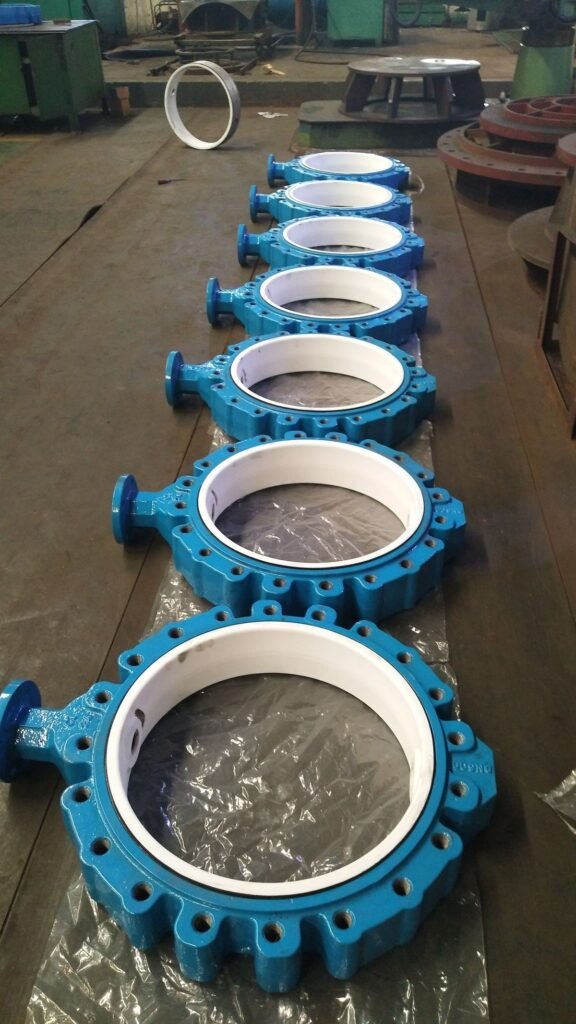
Finding the right butterfly valve bulk supplier is important for distributors, EPC contractors, industrial plants, OEM equipment manufacturers, engineering companies, and valve resellers. When purchasing hundreds or thousands of valves, the supplier’s production capability and quality consistency can have a major impact on project costs and delivery schedules.
Butterfly valves are widely used in water treatment, wastewater, HVAC, cooling water, desalination, chemical processing, power generation, marine systems, fire protection, and industrial process pipelines.
Bulk purchasing offers an obvious advantage: a lower unit cost can often be achieved through larger order quantities. But there’s a catch. A low price isn’t useful if the supplier can’t maintain consistent quality or deliver the required quantity on time.
For this reason, bulk buyers should evaluate the complete supply chain, including product specifications, manufacturing capability, raw materials, testing, inventory, production capacity, OEM support, logistics, and after-sales service.
For industrial applications requiring flanged valve configurations, you can also explore our flanged valve product range.
What Is a Butterfly Valve Bulk Supplier?
A butterfly valve bulk supplier is a company capable of supplying butterfly valves in large quantities to commercial or industrial customers.
The supplier may be:
- A direct valve manufacturer
- A factory-exporter
- A wholesale distributor
- An OEM supplier
- An ODM manufacturer
- A valve package supplier
- A combination of manufacturer and distributor
For large orders, it’s particularly useful to know whether the supplier controls production directly.
A direct manufacturer may provide stronger control over:
- Materials
- Machining
- Assembly
- Testing
- Product customization
- Production scheduling
- Engineering changes
A distributor, on the other hand, may offer multiple brands and local inventory.
Neither model is automatically better. The right choice depends on order volume, customization requirements, lead time, and technical complexity.
Why Choose a Bulk Butterfly Valve Supplier?
Bulk procurement can provide several benefits.
Lower Unit Cost
Large quantities can allow manufacturers to optimize production and offer more competitive prices.
Consistent Specifications
Purchasing from the same source can help maintain consistent:
- Valve dimensions
- Body materials
- Disc materials
- Seat materials
- Pressure ratings
- Actuator interfaces
Simplified Procurement
Instead of dealing with many suppliers, buyers can consolidate multiple valve sizes and configurations with one supplier.
Production Planning
Long-term customers may arrange scheduled production based on forecast demand.
OEM Opportunities
Manufacturers supplying large quantities may also provide private-label and customized products.
1. Verify the Supplier’s Manufacturing Capability
The first question is straightforward:
Can the supplier actually manufacture the required quantity?
For large orders, evaluate:
- Production equipment
- Machining capacity
- Assembly capacity
- Testing capacity
- Raw material availability
- Warehouse space
- Workforce
- Production scheduling
A supplier may have an attractive catalog but still lack the capacity for a large project.
Ask About Monthly Capacity
Instead of asking only whether a supplier “can manufacture” your order, ask how much it can realistically produce during your required delivery window.
This gives you a more useful picture of supply capability.
2. Evaluate the Butterfly Valve Product Range
A capable bulk supplier should offer products suitable for different pipeline applications.
Common designs include:
- Wafer butterfly valves
- Lug butterfly valves
- Flanged butterfly valves
- Double flanged butterfly valves
- Grooved butterfly valves
- Concentric butterfly valves
- Double offset butterfly valves
- Triple offset butterfly valves
Operating configurations can include:
- Lever
- Gearbox
- Chain wheel
- Electric actuator
- Pneumatic actuator
- Hydraulic actuator
A broad range allows buyers to consolidate purchases without forcing different applications into the same valve design.
3. Check Body, Disc, and Shaft Materials
Material selection is critical when purchasing in bulk.
Common valve body materials include:
| Material | Typical Applications |
|---|---|
| Cast iron | General water and HVAC |
| Ductile iron | Water and industrial service |
| Carbon steel | Process and industrial applications |
| Stainless steel | Corrosive environments |
| Aluminum bronze | Marine and selected seawater service |
Internal components may use:
- Stainless steel
- Carbon steel
- Aluminum bronze
- Special alloys
- Coated materials
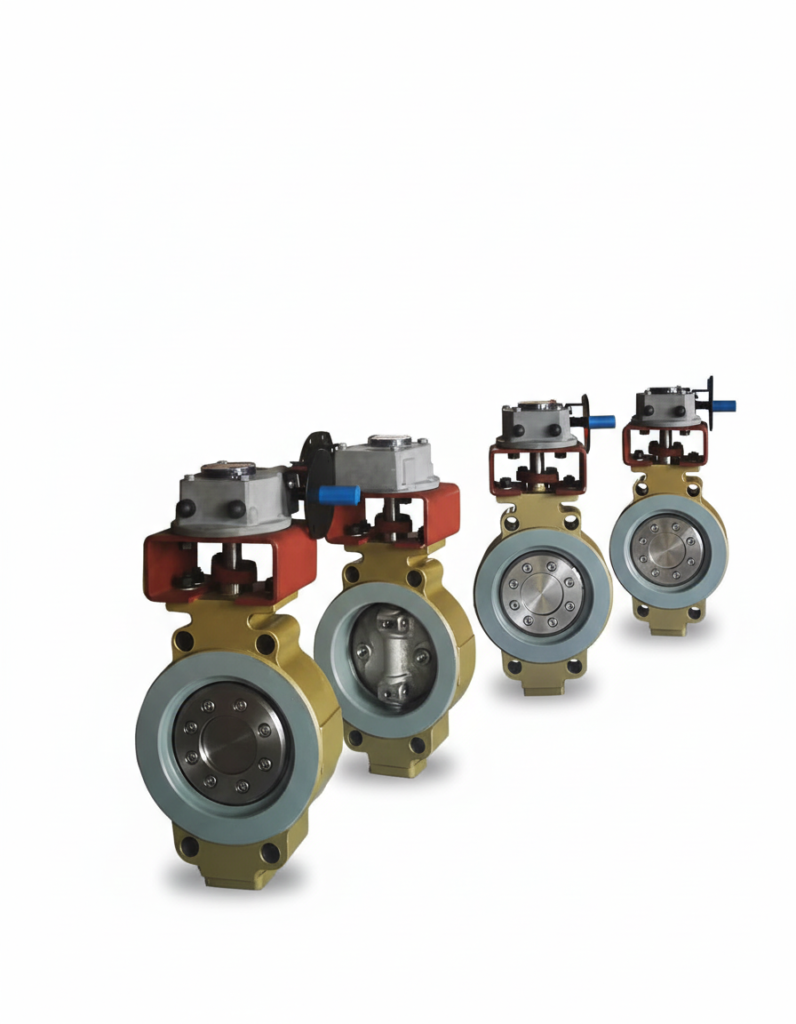
Don’t Assume Identical Pressure Ratings Mean Identical Valves
Two PN16 butterfly valves may have different material combinations, seat designs, coatings, or component specifications.
Therefore, bulk quotations should always be compared on a like-for-like basis.
4. Select the Correct Seat Material
Seat selection affects sealing performance and fluid compatibility.
Common options include:
EPDM
Often used for suitable water-related applications.
NBR
Can be selected for appropriate oil and hydrocarbon services.
PTFE
Provides strong chemical resistance in suitable applications.
FKM
Used in selected chemical, hydrocarbon, and elevated-temperature services.
Metal Seat
May be appropriate for certain high-temperature or demanding industrial applications.
The seat shouldn’t be selected based solely on price. It should match the fluid, temperature, pressure, and valve design.
5. Confirm Pressure Ratings
Common butterfly valve ratings include:
- PN10
- PN16
- PN25
- Class 150
For bulk procurement, make sure every quotation clearly identifies the pressure rating.
Also verify:
- Maximum working pressure
- Differential pressure
- Operating temperature
- Pressure-temperature limitations
- Leakage requirements
- Applicable standards
For project orders, the pressure rating should be matched to the approved technical specification.
6. Compare Bulk Pricing Correctly
Price is one of the main reasons companies purchase in bulk.
However, the cheapest quotation isn’t necessarily the lowest-cost solution.
Consider:
Valve Price + Packaging + Testing + Documentation + Freight + Import Costs + Inventory Costs + Maintenance Risk
Compare Equivalent Specifications
When comparing suppliers, check:
| Specification | Supplier A | Supplier B |
|---|---|---|
| Valve type | ||
| Size | ||
| Pressure rating | ||
| Body material | ||
| Disc material | ||
| Shaft material | ||
| Seat material | ||
| Connection | ||
| Testing | ||
| Actuator | ||
| Documentation | ||
| Quantity | ||
| Lead time | ||
| Unit price |
This prevents a superficially cheaper product from looking better simply because its specification is less complete.
7. Check MOQ and Volume Discounts
Bulk suppliers often have different pricing levels based on order quantity.
Ask for pricing at several quantities, such as:
- Trial order
- Small batch
- Standard bulk order
- Large project order
- Annual volume
Also confirm:
- Minimum order quantity
- Mixed-size ordering
- Mixed-model ordering
- Sample policy
- Volume discount
- Repeat-order pricing
For distributors, annual purchasing agreements can sometimes provide more predictable pricing than one-off orders.
8. Evaluate Production Consistency
Bulk purchasing isn’t just about producing a large number of valves. It’s about producing a large number of consistent valves.
The supplier should control:
- Dimensions
- Materials
- Seat specifications
- Shaft configuration
- Disc geometry
- Actuator interface
- Coating
- Product markings
Why Batch Consistency Matters
Imagine installing 1,000 valves across several projects and discovering that later batches have different dimensions or actuator mounting arrangements.
That can create:
- Installation problems
- Inventory complications
- Customer complaints
- Replacement issues
A reliable supplier should have a documented change-control process.
9. Review Manufacturing and Testing
A typical butterfly valve production process may look like:
Raw Material → Machining → Component Inspection → Assembly → Pressure Testing → Leakage Testing → Surface Treatment → Final Inspection → Packaging
Pressure Testing
The valve body can be tested for pressure integrity according to the applicable requirements.
Seat Leakage Testing
This evaluates the valve’s shut-off performance.
Functional Testing
The valve is operated to verify correct movement.
Dimensional Inspection
Critical dimensions are compared with approved drawings.
Final Inspection
The finished product may be checked for:
- Appearance
- Coating
- Marking
- Dimensions
- Operation
- Cleanliness
- Packaging
For major projects, customers may also require third-party inspection.
10. Consider OEM and Private-Label Capability
Bulk buyers aren’t always purchasing standard catalog valves.
Distributors and brands may require:
- Customer logos
- Custom nameplates
- Product codes
- Special packaging
- Customized documents
- Dedicated models
- Special materials
OEM
OEM production generally means manufacturing products according to customer requirements.
ODM
ODM can involve deeper engineering support, including:
- Product design
- Prototype development
- Testing
- Product optimization
- Mass production
For businesses developing a proprietary valve line, these services can be especially valuable.
Butterfly Valve Bulk Supplier for EPC Projects
Large EPC projects often require significant valve quantities across multiple sizes.
A bulk supplier may need to provide:
- Technical datasheets
- General arrangement drawings
- Material certificates
- Inspection plans
- Pressure-test reports
- Leakage-test reports
- Actuator documentation
- Certificates
- Operation manuals
- Spare-parts information
A typical procurement workflow is:
RFQ → Technical Review → Quotation → Clarification → Purchase Order → Drawing Approval → Production → Inspection → Testing → Documentation → Shipment
The supplier should have sufficient project-management capability to coordinate these stages.
Bulk Supply for Distributors and Resellers
Distributors often purchase butterfly valves in recurring batches.
Their priorities may include:
- Competitive pricing
- Stable quality
- Fast production
- Private labeling
- Product availability
- Consistent packaging
- Technical documentation
Forecast-Based Supply
For established distributors, sharing demand forecasts with the manufacturer can help improve production planning.
Instead of waiting until inventory reaches zero, buyers can schedule production ahead of time.
This can reduce the risk of stock shortages.
Bulk Butterfly Valve Supply for OEM Equipment Manufacturers
OEM customers may install butterfly valves into:
- Water treatment equipment
- HVAC systems
- Pump skids
- Process equipment
- Industrial machinery
- Filtration systems
- Cooling systems
These customers often need consistent products over many years.
Important requirements include:
- Stable dimensions
- Consistent materials
- Repeatable actuator interfaces
- Reliable sealing
- Custom branding
- Controlled engineering changes
For OEM applications, supplier consistency can be more important than getting the lowest price on the first order.
Manual and Actuated Bulk Butterfly Valves
Bulk suppliers may provide both manual and automated valves.
Manual Valves
Typical operating methods include:
- Lever
- Gearbox
- Chain wheel
Electric Actuated Valves
Useful for:
- Remote operation
- Automated isolation
- PLC integration
- Position feedback
- Modulating applications
Pneumatic Actuated Valves
Widely used in industrial automation.
Configurations may include:
- Double acting
- Spring return
Hydraulic Actuated Valves
Can be considered when high operating force is required.
For actuated bulk orders, verify actuator torque, power supply, control signals, fail-safe requirements, and accessories before production.
Logistics and Packaging for Bulk Orders
Shipping hundreds or thousands of valves requires careful logistics planning.
Important considerations include:
- Carton dimensions
- Palletization
- Wooden cases
- Container utilization
- Valve weight
- Actuator packaging
- Moisture protection
- Export markings
- Loading method
Large-diameter valves can occupy substantial container space.
A capable bulk supplier should understand how packaging affects both transportation cost and product protection.
Delivery Planning for Large Orders
Large orders should be scheduled carefully.
Discuss:
- Production lead time
- Raw material lead time
- Partial shipment options
- Inspection dates
- Packaging dates
- Container loading
- Shipping schedules
Partial Delivery
For large projects, partial shipments may be useful when valves are required at different stages.
However, partial delivery should be agreed before production.
How to Audit a Bulk Butterfly Valve Supplier
For strategic suppliers, a factory audit can be valuable.
Check:
Production Equipment
Is the machinery appropriate for the required products and volumes?
Assembly Area
Are assembly procedures organized and standardized?
Testing Facilities
Are pressure and leakage tests actually performed?
Quality Records
Can the supplier show inspection and test records?
Material Storage
Are materials clearly identified and protected?
Finished Products
Do finished valves match approved specifications?
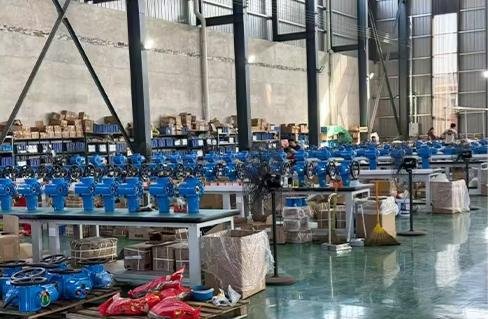
Warehouse
Can the supplier safely store large quantities?
Production Planning
Does the supplier have a clear system for managing large orders?
Common Mistakes in Bulk Valve Purchasing
Choosing Only the Lowest Price
The lowest price may hide differences in materials, testing, or component quality.
Not Approving a Sample
A sample can help confirm specifications before mass production.
Ignoring Production Capacity
A supplier may be able to manufacture small quantities but struggle with a large project.
Not Defining Specifications
Bulk production should never begin with unclear technical requirements.
Failing to Control Engineering Changes
Unauthorized changes can create inconsistencies between batches.
Ignoring Packaging
Poor bulk packaging can result in corrosion or transport damage.
Not Planning Delivery
Large orders require production and logistics coordination.
Butterfly Valve Bulk Supplier Selection Checklist
Before approving a supplier, confirm:
- Actual manufacturer
- Production facility
- Product range
- Valve design
- Valve sizes
- Pressure ratings
- Body material
- Disc material
- Shaft material
- Seat material
- Connection type
- Face-to-face dimension
- Operating method
- Actuator requirements
- Torque requirements
- MOQ
- Volume pricing
- Production capacity
- Quality control
- Pressure testing
- Leakage testing
- Certifications
- OEM/ODM capability
- Packaging
- Lead time
- Shipping plan
- Warranty
- After-sales support
Frequently Asked Questions
What is a butterfly valve bulk supplier?
A butterfly valve bulk supplier provides butterfly valves in large quantities to distributors, EPC contractors, OEMs, industrial companies, and resellers. It may be a manufacturer, exporter, wholesaler, or a combination of these.
What are the benefits of buying butterfly valves in bulk?
Bulk purchasing can provide lower unit costs, consistent specifications, simplified procurement, better production planning, and potential OEM or private-label opportunities.
What quantity is considered a bulk butterfly valve order?
There’s no universal quantity. “Bulk” can mean anything from dozens to thousands of valves, depending on the supplier, valve size, product type, and purchasing agreement.
How can I get a better bulk price?
Provide clear specifications and quantities, request volume-based pricing, compare equivalent products, and discuss repeat-order or annual purchasing plans.
Can a bulk supplier provide different valve sizes in one order?
Many suppliers can combine different sizes and configurations in a single purchase order. However, MOQ requirements may apply to individual models or sizes.
What butterfly valve materials are available for bulk orders?
Common options include cast iron, ductile iron, carbon steel, stainless steel, and aluminum bronze, with different seat materials such as EPDM, NBR, PTFE, FKM, and metal.
Can bulk suppliers provide actuated butterfly valves?
Yes. Many suppliers can provide manual valves as well as electric, pneumatic, and hydraulic actuated assemblies.
How important is production capacity for bulk purchasing?
It’s extremely important. A supplier needs enough machining, assembly, testing, labor, and material capacity to complete the order within the required schedule.
Should I request samples before a bulk order?
Yes. For a new supplier, approving representative samples before mass production can help confirm dimensions, materials, operation, appearance, and other requirements.
Can a bulk supplier provide OEM products?
Many manufacturers and specialized suppliers can provide OEM services such as customer logos, customized nameplates, packaging, product codes, and special specifications.
Conclusion
Selecting the right butterfly valve bulk supplier requires more than comparing unit prices.
For large-volume purchasing, you should evaluate manufacturing capability, product specifications, materials, seat selection, pressure ratings, quality control, testing, production capacity, MOQ, pricing, OEM capability, packaging, logistics, and delivery reliability.
Distributors need stable quality and repeat-order consistency. EPC contractors need technical documentation and dependable project coordination. OEM customers often need customized products and long-term specification control.
Before placing a large order, clearly define every important requirement, including valve type, size, pressure rating, fluid, temperature, materials, seat, connection, dimensions, operation, actuator, testing, documentation, quantity, packaging, and delivery schedule.
The best bulk supplier isn’t necessarily the one offering the lowest unit price. It’s the supplier that can produce the required quantity consistently, maintain approved specifications, pass the required tests, and deliver the valves when you need them.