
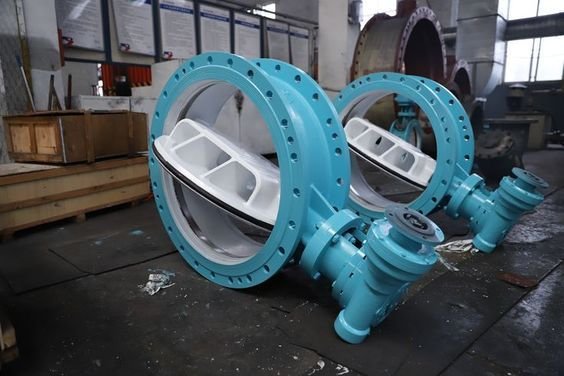
Effective butterfly valve sourcing is more than finding a supplier with the lowest quotation. For distributors, EPC contractors, OEMs, engineering companies, and industrial plants, the sourcing process must balance product quality, technical specifications, supplier reliability, price, lead time, logistics, documentation, and long-term supply stability.
Butterfly valves are widely used in water treatment, wastewater, HVAC, cooling water, desalination, chemical processing, power generation, marine systems, fire protection, and industrial pipelines. Different applications require different combinations of valve design, body material, disc material, seat material, pressure rating, connection type, and operating method.
A well-planned sourcing strategy helps buyers avoid common problems such as inconsistent quality, incorrect materials, unexpected lead times, incomplete documentation, and difficult after-sales support.
For industrial projects requiring flanged configurations, you can also explore our flanged valve product range.
What Is Butterfly Valve Sourcing?
Butterfly valve sourcing is the process of identifying, evaluating, comparing, and purchasing butterfly valves from suitable manufacturers or suppliers.
A complete sourcing process may include:
- Defining technical requirements
- Searching for potential suppliers
- Evaluating manufacturers
- Requesting quotations
- Comparing technical specifications
- Reviewing quality systems
- Checking samples
- Negotiating commercial terms
- Approving suppliers
- Placing purchase orders
- Inspecting production
- Testing products
- Arranging shipment
- Managing after-sales service
In other words, sourcing covers much more than simply sending an RFQ.
Why Is Professional Valve Sourcing Important?
The wrong supplier can create problems long after the purchase order has been signed.
For example, an unsuitable supplier may cause:
- Product quality issues
- Incorrect dimensions
- Material deviations
- Leakage problems
- Delayed delivery
- Missing documents
- Spare-parts difficulties
- Inconsistent future batches
- Higher maintenance costs
A professional sourcing strategy reduces these risks by evaluating suppliers before committing to a large order.
The Real Goal
The goal isn’t necessarily to find the cheapest butterfly valve.
It’s to find the best combination of quality, cost, delivery, technical performance, and supply reliability.

1. Define Your Butterfly Valve Requirements First
Before contacting suppliers, prepare a clear technical specification.
At minimum, define:
- Valve type
- Nominal size
- Pressure rating
- Fluid
- Operating temperature
- Body material
- Disc material
- Shaft material
- Seat material
- Connection type
- Face-to-face dimension
- Operating method
- Quantity
- Testing requirements
- Documentation requirements
For actuated valves, also define:
- Actuator type
- Required torque
- Power supply
- Control signal
- Fail position
- Accessories
- Position feedback
Why Specifications Come First
If you don’t define the requirements, suppliers may quote different products that look similar but aren’t technically equivalent.
That’s a recipe for a difficult comparison.
2. Choose the Right Supplier Type
There are several possible sourcing channels.
| Supplier Type | Best Suited For |
|---|---|
| Valve manufacturer | Large orders and customization |
| Factory exporter | International bulk purchasing |
| Distributor | Local stock and smaller quantities |
| Wholesaler | Bulk standard products |
| Trading company | Multi-source procurement |
| OEM supplier | Private-label products |
| ODM supplier | Customized product development |
The appropriate sourcing channel depends on your purchasing volume and technical requirements.
Direct Factory Sourcing
Direct sourcing can be attractive for:
- Large-volume orders
- OEM projects
- Customized valves
- Long-term contracts
Distributor Sourcing
Distributors may be more convenient when you need:
- Small quantities
- Urgent replacement
- Local inventory
- Local technical support
3. Research Potential Manufacturers
Don’t rely only on online catalogs.
Evaluate potential manufacturers based on:
- Years of manufacturing experience
- Product range
- Factory facilities
- Production equipment
- Quality-control procedures
- Testing capabilities
- Export experience
- Certifications
- Engineering capabilities
- Production capacity
Factory Capability Matters
A company may advertise dozens of valve models but manufacture only a small portion of them.
Ask whether the supplier actually produces the requested product or purchases it from another factory.
Transparency here can save a lot of headaches later.
4. Compare Butterfly Valve Specifications
Never compare quotations by price alone.
Create a technical comparison table.
| Specification | Supplier A | Supplier B | Supplier C |
|---|---|---|---|
| Valve type | |||
| Size | |||
| Pressure rating | |||
| Body material | |||
| Disc material | |||
| Shaft material | |||
| Seat material | |||
| Connection | |||
| Face-to-face | |||
| Actuator | |||
| Testing | |||
| Certification | |||
| Lead time | |||
| Price |
This makes differences much easier to spot.
5. Verify Materials Carefully
Material selection is one of the most important parts of valve sourcing.
Common body materials include:
- Cast iron
- Ductile iron
- Carbon steel
- Stainless steel
- Aluminum bronze
Common seat materials include:
- EPDM
- NBR
- PTFE
- FKM
- Metal
Match Materials to the Fluid
A butterfly valve used for clean water may have completely different requirements from one used for:
- Seawater
- Chemicals
- Oil
- Gas
- High-temperature fluids
- Abrasive media
Always provide the supplier with the actual process conditions.
6. Verify Pressure and Temperature Requirements
Common butterfly valve ratings include:
- PN10
- PN16
- PN25
- Class 150
However, the nominal rating doesn’t tell the entire story.
Check:
- Working pressure
- Differential pressure
- Operating temperature
- Pressure-temperature limitations
- Leakage requirements
- Applicable design standards
- Testing standards
For higher-temperature or more demanding applications, material and seat selection become especially important.
7. Request Samples Before Large Orders
For a new supplier, samples can be extremely useful.
A sample inspection can check:
- Overall dimensions
- Face-to-face dimensions
- Flange compatibility
- Body material
- Disc material
- Seat construction
- Shaft arrangement
- Surface finish
- Product markings
- Manual operation
For actuated valves, also check:
- Actuator mounting
- Torque
- Rotation
- Electrical interface
- Pneumatic interface
- Accessories
Sample Approval
For large orders, establish a written sample-approval process before mass production.
This creates a clear reference for future production.
8. Evaluate Supplier Quality Control
Quality shouldn’t be inspected only at the end.
A strong supplier should control quality throughout the production process.
A typical workflow is:
Incoming Materials → Machining → Component Inspection → Assembly → Pressure Testing → Leakage Testing → Final Inspection → Packaging
Important quality-control activities may include:
Material Inspection
Confirming materials match the purchase specification.
Dimensional Inspection
Checking critical dimensions against approved drawings.
Pressure Testing
Verifying pressure integrity.
Seat Leakage Testing
Checking shut-off performance.
Functional Testing
Confirming smooth and correct valve operation.
Final Inspection
Reviewing finished-product quality before shipment.
9. Review Certifications and Documentation
Documentation requirements should be defined before ordering.
Depending on the project, you may need:
- Technical datasheets
- General arrangement drawings
- Material certificates
- Pressure-test reports
- Leakage-test reports
- Certificates of conformity
- Inspection reports
- Actuator documents
- Operation manuals
- Spare-parts lists
For regulated or high-value projects, third-party inspection may also be required.
Don’t Wait Until Shipment
If documents are required for project approval, clarify them during the quotation stage.
Trying to collect missing documents at the last minute can delay shipment.
10. Compare Total Landed Cost
The purchase price isn’t the same as the final cost.
A better calculation is:
Total Landed Cost = Product Cost + Packaging + Inspection + Freight + Insurance + Duties + Customs + Local Delivery
You should also consider indirect costs such as:
- Installation problems
- Rework
- Maintenance
- Replacement
- Downtime
- Warranty claims
A slightly more expensive valve can sometimes provide better overall value if it reduces operational risk.
Butterfly Valve Sourcing for EPC Contractors
EPC contractors often have strict technical and documentation requirements.
The sourcing process may involve:
Project Specification → Approved Vendor List → RFQ → Technical Bid Evaluation → Commercial Evaluation → Supplier Approval → PO → Drawing Approval → Inspection → Testing → Shipment
Important supplier capabilities include:
- Technical submittals
- Engineering drawings
- Material certificates
- Inspection plans
- Test reports
- Project documentation
- Delivery coordination
For large projects, supplier communication is just as important as product quality.
Butterfly Valve Sourcing for Distributors
Distributors usually focus on a combination of:
- Competitive pricing
- Stable quality
- Product availability
- Fast lead time
- Repeat-order consistency
- Private labeling
- Packaging
Forecast-Based Purchasing
Distributors can improve supply stability by sharing sales forecasts with manufacturers.
Instead of ordering only when inventory is almost empty, planned purchasing can help suppliers prepare production in advance.
This is particularly useful for fast-moving valve sizes.
Butterfly Valve Sourcing for OEM Buyers
OEM customers often need customized or repeatable products.
Requirements may include:
- Private labels
- Custom nameplates
- Product codes
- Special dimensions
- Special materials
- Customized packaging
- Actuator integration
For OEM sourcing, the supplier should maintain strict engineering-change control.
Even a small change in dimensions or components can affect the customer’s equipment.
Manual and Actuated Valve Sourcing
Sourcing should clearly distinguish between manual and automated valves.
Manual Butterfly Valves
Common configurations include:
- Lever
- Gearbox
- Chain wheel
Electric Actuated Butterfly Valves
Often used for:
- Remote operation
- Automated isolation
- PLC systems
- Position feedback
- Modulating control
Pneumatic Actuated Butterfly Valves
Common in industrial automation.
Options may include:
- Double acting
- Spring return
Hydraulic Butterfly Valves
Can be considered when higher operating force is required.
For all actuated valves, verify torque requirements before selecting the actuator.
How to Qualify a Butterfly Valve Supplier
A supplier qualification process can be divided into five stages.
Stage 1: Commercial Screening
Check:
- Company history
- Main markets
- Export experience
- Financial stability
Stage 2: Technical Screening
Check:
- Product range
- Materials
- Pressure ratings
- Standards
- Engineering capability
Stage 3: Factory Evaluation
Review:
- Equipment
- Production lines
- Testing facilities
- Warehouse
- Quality systems
Stage 4: Sample Evaluation
Inspect representative products.
Stage 5: Trial Order
Place a controlled order before moving to larger purchasing volumes.
This staged approach can significantly reduce supplier risk.
Common Butterfly Valve Sourcing Mistakes
Selecting Only by Price
A low price doesn’t guarantee low total cost.
Not Checking the Factory
You should know who actually manufactures the product.
Comparing Non-Equivalent Products
Different materials and specifications can make price comparisons meaningless.
Skipping Samples
For new suppliers, sample evaluation can reveal problems early.
Ignoring Lead Times
Production capacity matters as much as quoted price.
Not Defining Documentation
Missing certificates can create project delays.
Failing to Control Future Changes
A supplier should notify customers before changing approved specifications.
Butterfly Valve Sourcing Checklist
Before approving a supplier, confirm:
- Manufacturer identity
- Factory location
- Manufacturing capability
- Product range
- Valve type
- Valve size
- Pressure rating
- Fluid
- Temperature
- Body material
- Disc material
- Shaft material
- Seat material
- Connection
- Face-to-face dimension
- Operating method
- Actuator requirements
- Torque
- Testing
- Certifications
- Documentation
- MOQ
- Production capacity
- Lead time
- Packaging
- Shipping terms
- Warranty
- After-sales support
Frequently Asked Questions
What does butterfly valve sourcing mean?
Butterfly valve sourcing is the process of finding, evaluating, comparing, and purchasing butterfly valves from suitable manufacturers or suppliers.
How do I find a reliable butterfly valve manufacturer?
Research the company’s manufacturing history, factory capability, product range, quality system, testing facilities, certifications, export experience, and customer support. Samples and factory audits can provide additional confidence.
Should I source butterfly valves directly from a factory?
Direct factory sourcing can be beneficial for large quantities, OEM projects, and customized products. Distributors may be more suitable for small quantities, urgent requirements, or local stock.
What information should I include in an RFQ?
Include valve type, size, pressure rating, fluid, temperature, materials, seat, connection, operating method, actuator requirements, quantity, testing, documentation, and delivery requirements.
How should I compare butterfly valve suppliers?
Compare technical specifications first, then evaluate quality, price, production capacity, lead time, documentation, logistics, OEM capability, and after-sales support.
Why are samples important in valve sourcing?
Samples allow buyers to verify dimensions, materials, construction, operation, markings, and overall quality before committing to large production quantities.
What certifications should I request?
The required certifications depend on the application and project specification. You may need material certificates, test reports, certificates of conformity, inspection records, or other industry-specific documentation.
How can I reduce butterfly valve sourcing costs?
Consolidate orders, compare equivalent specifications, negotiate volume pricing, optimize packaging and shipping, establish repeat-order agreements, and consider total landed cost rather than unit price alone.
How do I source OEM butterfly valves?
Start with a detailed specification covering product design, materials, dimensions, pressure rating, branding, packaging, testing, and documentation. Then evaluate the manufacturer’s engineering and production capabilities.
What is the biggest risk in butterfly valve sourcing?
One of the biggest risks is selecting a supplier based only on price without verifying manufacturing capability, technical specifications, quality control, testing, and delivery reliability.
Conclusion
Successful butterfly valve sourcing starts with clear specifications and ends with a qualified, reliable supply chain.
Whether you’re a distributor, EPC contractor, OEM, engineering company, or industrial end user, evaluate suppliers based on manufacturing capability, product quality, material compatibility, pressure ratings, testing, documentation, pricing, production capacity, delivery, and after-sales service.
The most effective approach is to define your requirements first, identify qualified manufacturers, compare equivalent specifications, inspect samples, conduct supplier evaluation, and then begin with a controlled order before moving to long-term purchasing.
Don’t let a low quotation make the decision for you. The best sourcing strategy balances price, quality, reliability, delivery, and total cost of ownership.
When these factors are managed properly, your valve procurement becomes more predictable, your projects face fewer surprises, and your long-term supply chain becomes much stronger.