
Choosing the right butterfly valve manufacturer China supplier can make a major difference to project cost, valve performance, delivery time, and long-term reliability. China has a large and diverse valve manufacturing industry, ranging from small workshops to experienced factories serving water treatment, chemical processing, HVAC, power, oil and gas, marine, and general industrial applications.
However, not every supplier offers the same level of engineering, quality control, production capacity, or after-sales support. A low quotation may look attractive at first, but poor materials, inconsistent machining, weak testing, or unreliable delivery can create much higher costs later.
For international buyers, the goal isn’t simply to find the cheapest valve. It’s to find a manufacturer that can consistently produce the right valve specification at the right quality, price, and delivery schedule.
This guide explains how to evaluate Chinese butterfly valve manufacturers and build a reliable sourcing strategy.
What Is a Butterfly Valve Manufacturer China?
A butterfly valve manufacturer China is a company based in China that designs, machines, assembles, tests, and supplies butterfly valves for industrial or commercial applications.
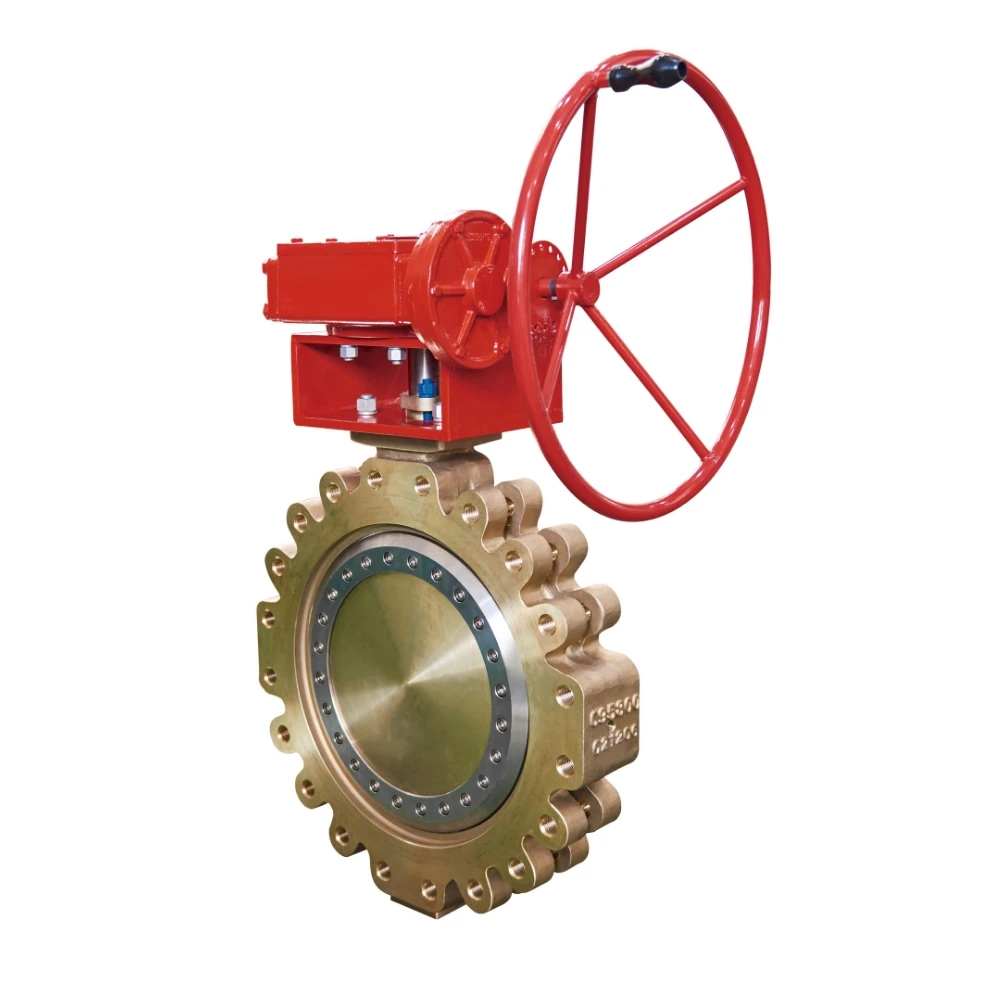
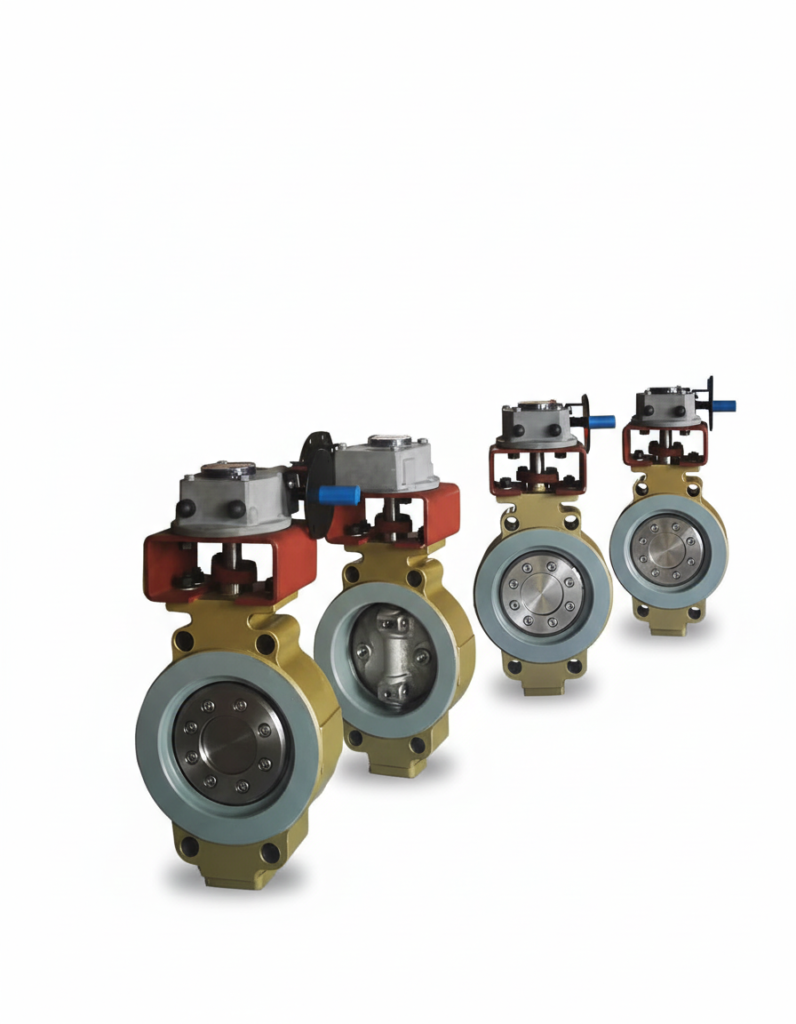
A capable manufacturer may produce several butterfly valve configurations, including:
- Wafer butterfly valves
- Lug butterfly valves
- Flanged butterfly valves
- Concentric butterfly valves
- Double-eccentric butterfly valves
- Triple-offset butterfly valves
- Manual butterfly valves
- Gear-operated butterfly valves
- Pneumatic actuator butterfly valves
- Electric actuator butterfly valves
Manufacturing capability can also extend beyond the basic valve body. Some factories provide complete valve assemblies, including actuators, limit switches, solenoid valves, positioners, mounting accessories, and other components.
The best supplier depends on the application. A butterfly valve for cooling water doesn’t necessarily require the same materials or sealing technology as a valve used in corrosive chemical service.
Therefore, buyers should evaluate the manufacturer’s technical capability, production process, quality system, testing procedures, and application experience rather than judging the company only by its catalog or website.
Why Source Butterfly Valves From China?
China has developed a broad industrial manufacturing base and a mature supply chain for valve components. This can provide international buyers with several advantages.
Competitive Manufacturing Costs
Large-scale production, established component suppliers, and extensive machining capabilities can help Chinese manufacturers offer competitive prices.
This is especially useful for projects requiring dozens, hundreds, or thousands of valves.
Wide Product Selection
Chinese manufacturers commonly offer valves in different:
- Sizes
- Pressure classes
- Body materials
- Disc materials
- Seat materials
- Connection standards
- Actuator configurations
This gives EPC contractors, distributors, and industrial users more flexibility when building a valve package.
OEM and Custom Manufacturing
Many manufacturers can produce valves according to customer drawings, specifications, branding requirements, or project documentation.
For distributors, this can support private-label programs. For engineering companies, it can make it easier to match a specific project specification.
Established Export Experience
Experienced manufacturers may already understand international packing, documentation, inspection, shipping, and communication requirements.
That said, buyers should still verify these capabilities independently rather than assuming every factory has the same export experience.
Define Your Valve Requirements Before Sourcing
Before contacting manufacturers, prepare a clear technical specification.
At minimum, define:
| Requirement | Example |
|---|---|
| Valve type | Wafer butterfly valve |
| Nominal size | DN100 |
| Pressure rating | PN16 |
| Body material | Ductile iron |
| Disc material | Stainless steel |
| Seat | EPDM |
| Connection | Wafer |
| Operation | Manual / gear / electric / pneumatic |
| Medium | Water |
| Temperature | Project-specific |
| Standard | Project-specific |
| Quantity | Project quantity |
A detailed specification helps suppliers quote the same product.
Without it, one supplier may quote a basic valve while another quotes a higher-grade configuration. Comparing the two prices would then be misleading.
Pressure, Size, and Connection Standards
Pressure and size are especially important.
Common specifications may include:
- DN sizes
- PN10
- PN16
- Class 150
- ASME-related dimensions
- ISO-related dimensions
- API-related requirements where applicable
Don’t assume that two valves with the same nominal size and pressure designation are automatically interchangeable. Face-to-face dimensions, flange drilling, pressure-temperature limits, materials, and applicable standards must be checked.
For international standards information, buyers can consult the ISO standards portal.
Choose the Right Butterfly Valve Design
The valve design should match the service conditions.
For many general water applications, a resilient-seated concentric butterfly valve can provide a practical and economical solution.
For higher-temperature, higher-pressure, or more demanding industrial applications, an offset design may be more suitable.
The three common design concepts are:
- Concentric butterfly valve
- Double-offset butterfly valve
- Triple-offset butterfly valve
Each design has different sealing, torque, temperature, and operating characteristics.
The correct choice should be based on the actual process conditions rather than simply selecting the most advanced design.
Wafer, Lug, and Flanged Butterfly Valves
Connection style is another major consideration.
Wafer valves are compact and commonly installed between two flanges.
Lug valves have threaded or tapped lugs that allow more flexible installation and can sometimes be used where one side of a piping system needs to be removed.
Flanged butterfly valves use integrated flange ends and can be selected for applications requiring a flanged valve configuration.
The piping standard and project specification should determine the appropriate connection.
Evaluate Materials and Valve Construction
Material selection directly affects valve service life.
A manufacturer should be able to clearly identify the material of major components instead of simply describing a valve as “high quality.”
Body, Disc, Shaft, and Seat Materials
Typical body materials may include:
- Ductile iron
- Cast iron
- Carbon steel
- Stainless steel
Disc materials may include:
- Ductile iron
- Stainless steel
- Coated carbon steel
- Aluminum bronze
- Other engineered alloys
Seat materials can include:
- EPDM
- NBR
- PTFE
- FKM
- Other application-specific elastomers
The correct material depends on the medium, temperature, pressure, corrosion conditions, and required service life.
For example, EPDM is widely used in many water applications, while NBR may be selected for certain oil-related services. But material compatibility should always be confirmed for the actual operating conditions.
Check Manufacturing Standards and Certifications
A serious industrial valve manufacturer should be familiar with the standards relevant to its products and target markets.
Depending on the application, specifications may reference standards covering:
- Valve dimensions
- Pressure testing
- Flange dimensions
- Material requirements
- Face-to-face dimensions
- Actuator mounting
- Marking
- Quality management
Don’t simply ask, “Are you certified?”
Ask more specific questions:
- Which products are covered?
- Which factory holds the certification?
- Is the certificate current?
- Which standard does it cover?
- Can you provide supporting documentation?
- Does the supplied valve actually match the certified product?
This approach provides much stronger evidence than a logo displayed on a website.
Assess Factory Quality Control
Quality control is one of the most important factors when selecting a Chinese valve manufacturer.
A reliable factory should have defined inspection procedures covering incoming materials, machining, assembly, testing, and final shipment.
A typical production process may include:
Raw material → Casting/forging → Machining → Component inspection → Assembly → Pressure testing → Functional testing → Final inspection → Packing
The exact process varies by valve design.
Inspection and Pressure Testing
Depending on the valve and project specification, inspection may cover:
- Body pressure testing
- Seat leakage testing
- Dimensional inspection
- Visual inspection
- Material verification
- Actuator operation
- Coating inspection
- Marking verification
- Packaging inspection
For large projects, buyers may also arrange third-party inspection before shipment.
That extra step can be worthwhile when valves are being purchased for critical infrastructure or large EPC projects.
Compare Supplier Experience and Production Capacity
Experience isn’t just about how many years a company has existed.
Look at the type of projects the manufacturer has actually supported.
A supplier experienced in municipal water projects may be excellent for water pipelines but less suitable for severe-service chemical applications.
Ask for information about:
- Main product range
- Export markets
- Typical valve sizes
- Production capacity
- Major industries served
- Quality-control resources
- Engineering capabilities
- Production equipment
- Testing equipment
Capacity is also important.
If a factory normally produces a few hundred valves per month, it may struggle with a sudden order for several thousand units.
Review OEM and ODM Capabilities
OEM capability can be valuable for distributors and brand owners.
A capable manufacturer may support:
- Private labeling
- Custom nameplates
- Packaging design
- Customized drawings
- Special materials
- Actuator combinations
- Product modifications
- Customer-specific documentation
ODM goes a step further by allowing a manufacturer to provide design and engineering support for a customized product.
However, customization should be controlled carefully.
Before mass production, approve:
- Technical drawings
- Material specifications
- Inspection requirements
- Marking
- Packaging
- Testing requirements
- Approved samples
This creates a clear reference point for future production.
Evaluate Lead Time and Supply Reliability
A competitive price means little if the valves arrive after the project deadline.
When comparing manufacturers, ask for a realistic production schedule rather than a vague promise such as “fast delivery.”
Evaluate:
- Raw material availability
- Production capacity
- Standard versus custom products
- Current factory workload
- Testing time
- Packaging time
- Shipping preparation
- Documentation lead time
For recurring orders, supplier reliability becomes even more important.
A manufacturer that consistently delivers on schedule can be more valuable than one offering a slightly lower unit price.
Calculate Total Procurement Cost
The purchase price isn’t the entire cost of sourcing butterfly valves from China.
A better calculation includes:
Total landed cost = Product price + inspection + packaging + inland transportation + international freight + insurance + duties/taxes + handling costs
Also consider hidden quality costs.
For example, suppose Supplier A offers valves for $100 each and Supplier B offers $105.
If Supplier A has a higher defect rate or inconsistent delivery, the apparent $5 saving may disappear quickly.
Total cost of ownership should consider:
- Purchase price
- Installation
- Maintenance
- Spare parts
- Downtime risk
- Leakage risk
- Replacement frequency
- Warranty support
That’s why procurement teams should focus on value, not just the lowest quotation.
How EPC Contractors Can Select a Supplier
EPC contractors often need a supplier that can handle detailed technical documentation and strict project requirements.
A suitable manufacturer should be comfortable with:
- Technical datasheets
- GA drawings
- Material certificates
- Inspection and test plans
- Quality documentation
- Packing lists
- Certificates of conformity
- Third-party inspection
- Project-specific marking
For EPC projects, communication is critical.
The manufacturer must be able to understand the purchase specification and identify conflicts before production begins.
A good technical clarification process can prevent costly mistakes later.
How Distributors Can Build a Reliable Supply Chain
Distributors have different priorities.
Instead of focusing only on one project, they need products that can be supplied repeatedly.
Important factors include:
- Stable product quality
- Consistent dimensions
- Competitive pricing
- Stock availability
- Packaging
- Private labeling
- Replacement parts
- Warranty handling
- Technical support
Distributors should also consider whether the manufacturer can maintain consistent specifications across multiple production batches.
A long-term supply agreement may be useful for high-volume customers, especially when product specifications and quality requirements are clearly documented.
Common Mistakes When Buying From China
Several sourcing mistakes appear repeatedly in industrial valve procurement.
1. Choosing Only by Price
The cheapest quotation isn’t necessarily the cheapest solution.
Material quality, testing, machining accuracy, coating, packaging, and service can all affect the real cost.
2. Failing to Define the Specification
If the buyer provides only “DN200 butterfly valve,” different manufacturers may quote completely different products.
3. Not Verifying the Factory
A trading company and a manufacturer aren’t automatically the same thing.
If direct factory manufacturing is important, verify the actual production facility.
4. Ignoring Spare Parts
For actuated valves, ask about actuator models, seal kits, switches, mounting components, and replacement parts.
5. Skipping Pre-Shipment Inspection
For large or critical orders, inspection before shipment can help identify problems while they are still easy to correct.
Butterfly Valve Manufacturer China Sourcing Checklist
Before placing an order, use this checklist:
- Technical specification confirmed
- Valve type confirmed
- Size and pressure rating confirmed
- Connection standard confirmed
- Body material confirmed
- Disc material confirmed
- Seat material confirmed
- Operating temperature confirmed
- Medium compatibility confirmed
- Testing requirements confirmed
- Certificates reviewed
- Factory capability evaluated
- Production lead time confirmed
- Packaging requirements confirmed
- Spare parts requirements confirmed
- Warranty terms confirmed
- Inspection plan agreed
- Shipping documents confirmed
A checklist may sound basic, but it can save a lot of headaches on large orders.
Frequently Asked Questions
1. How do I find a reliable butterfly valve manufacturer China supplier?
Start by defining your technical requirements, then compare manufacturers based on production capability, quality control, relevant standards, export experience, documentation, lead time, and customer support. Don’t rely on price alone.
2. Are Chinese butterfly valves good quality?
Yes, Chinese manufacturers produce butterfly valves across a wide range of quality levels. The key is selecting a factory with suitable engineering capability, controlled production processes, appropriate materials, and reliable testing.
3. Can Chinese manufacturers provide OEM butterfly valves?
Many manufacturers offer OEM services, including private labeling, customized nameplates, packaging, drawings, materials, and product configurations. Requirements should be documented and approved before mass production.
4. What information should I send when requesting a quotation?
Provide valve type, nominal size, pressure rating, connection, body material, disc material, seat material, medium, temperature, operation method, applicable standards, quantity, and any special testing or documentation requirements.
5. Should I visit the factory before ordering?
For high-value or long-term supply agreements, a factory audit can be very useful. If visiting isn’t practical, buyers can consider video inspections, third-party audits, production samples, documentation reviews, and pre-shipment inspection.
6. How can I compare quotations from different manufacturers?
Create a technical comparison table and ensure every supplier is quoting the same specification. Compare price, materials, testing, certificates, delivery, packaging, warranty, and payment terms—not just the unit price.
7. Can a manufacturer supply actuated butterfly valves?
Many valve manufacturers can supply complete assemblies with pneumatic, electric, or other actuator options. Confirm actuator torque, operating conditions, control requirements, accessories, and mounting standards before ordering.
8. What is the most important factor when selecting a manufacturer?
There isn’t one factor that works for every project. The best choice balances technical suitability, consistent quality, manufacturing capability, delivery reliability, total cost, and long-term support.
Conclusion
Selecting a butterfly valve manufacturer China supplier is a sourcing decision that requires more than comparing price lists. Buyers should evaluate the entire supply chain—from materials and machining to assembly, testing, documentation, delivery, and after-sales support.
For EPC contractors, project specifications and documentation may be the highest priorities. For distributors, repeatability, pricing, and supply stability may matter more. For industrial end users, valve performance and service life can be the deciding factors.
The strongest sourcing strategy is straightforward: define the specification, verify the manufacturer, compare equivalent products, inspect quality, calculate total cost, and build a clear long-term supply relationship.
With the right approach, Chinese butterfly valve manufacturers can provide a practical combination of product variety, engineering capability, competitive manufacturing costs, and scalable supply for international markets.