
Finding the right China butterfly valve factory can be a smart move for importers, distributors, EPC contractors, engineering companies, and industrial end users. China has a large valve manufacturing industry with factories producing a wide range of butterfly valves for water treatment, HVAC, chemical processing, power generation, marine systems, irrigation, and general industrial applications.
But here’s the catch: not every factory offers the same product quality or manufacturing capability.
Two factories may quote almost the same butterfly valve while using different body materials, disc materials, shaft designs, seats, machining processes, testing methods, and quality-control procedures. A third supplier may be a trading company rather than a direct manufacturer.
For this reason, successful sourcing isn’t simply about finding a low price. It’s about finding a factory that can consistently manufacture the required valve, meet the project specification, maintain stable quality, and deliver on time.
This guide explains the major factors international buyers should consider before choosing a Chinese butterfly valve factory.
What Is a China Butterfly Valve Factory?
A China butterfly valve factory is a manufacturing facility in China that produces butterfly valves and related valve assemblies.
Depending on its capabilities, a factory may handle several stages of production, including:
- Product design
- Casting or forging
- CNC machining
- Component inspection
- Valve assembly
- Pressure testing
- Surface treatment
- Painting or coating
- Actuator installation
- Final inspection
- Packaging
Some factories focus on standard resilient-seated butterfly valves, while others manufacture high-performance, double-offset, or triple-offset designs.
A factory may also supply different operating methods, such as:
- Lever operated
- Gear operated
- Pneumatic actuator operated
- Electric actuator operated
- Hydraulic actuator operated
- Chain wheel operated
The important point is to understand what the factory actually manufactures.
A supplier’s website may display dozens of valve types, but that doesn’t necessarily mean all of them are manufactured in-house. Buyers should ask which products are produced directly at the factory and which components or products are sourced from other suppliers.
Why Buy Butterfly Valves From China?
China has built a broad industrial supply chain for metal products, machinery, automation components, and flow-control equipment.
This can offer several advantages to international valve buyers.
Competitive Manufacturing Costs
Large production volumes and established component supply chains can allow Chinese factories to provide competitive prices.
For distributors and large industrial projects, this can be particularly attractive because purchasing hundreds or thousands of valves can create significant savings.
However, the lowest unit price shouldn’t automatically win the order. Quality and total landed cost matter just as much.
Broad Product Availability
Chinese factories commonly manufacture butterfly valves in many sizes, pressure ratings, materials, and configurations.
A buyer may be able to source several related products from one factory instead of managing multiple suppliers.
Customization and OEM Support
Many Chinese valve factories have experience with OEM production.
Depending on the factory, services may include:
- Customer branding
- Custom nameplates
- Special colors
- Packaging customization
- Customized drawings
- Special materials
- Actuator configurations
- Project-specific documentation
This can be useful for valve distributors that want to develop their own product brand.
Identify Your Butterfly Valve Requirements
Before contacting factories, prepare a clear purchasing specification.
At minimum, include:
| Parameter | Example |
|---|---|
| Valve type | Concentric butterfly valve |
| Nominal size | DN100 |
| Pressure rating | PN16 |
| Connection | Wafer |
| Body | Ductile iron |
| Disc | Stainless steel |
| Seat | EPDM |
| Shaft | Stainless steel |
| Operation | Gear operated |
| Medium | Water |
| Temperature | Application-specific |
| Quantity | Required quantity |
| Standard | Project-specific |
This step may seem simple, but it can prevent major problems.
If you ask five factories for a “DN200 butterfly valve” without additional information, they may quote five different products.
The prices won’t be directly comparable.
Size, Pressure, and Connection Standards
Nominal size and pressure rating are fundamental parameters.
Common industrial specifications include:
- DN50–DN2000 and other nominal sizes
- PN10
- PN16
- PN25
- Class 150
- Other application-specific pressure ratings
Connection standards also matter. A wafer valve, lug valve, and flanged valve aren’t interchangeable simply because they have the same nominal diameter.
Check:
- Face-to-face dimensions
- Flange drilling
- Pressure rating
- Installation space
- Piping standard
- Temperature limitations
For standards information, buyers can review the ISO standards portal and then confirm the exact applicable standard with the manufacturer.
Select the Right Butterfly Valve Design
Not every butterfly valve is designed for the same service.
A basic concentric butterfly valve can be an excellent choice for many water and general-service applications. More demanding services may require a double-offset or triple-offset configuration.
The main design categories include:
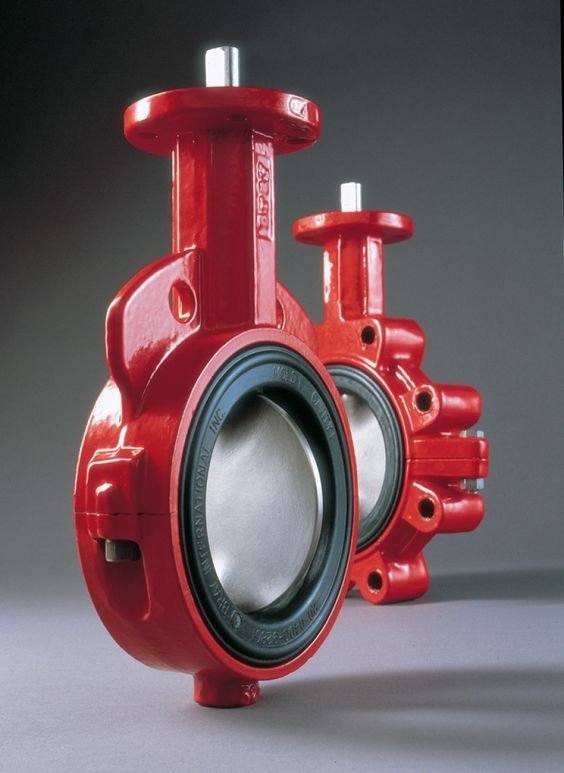
Concentric butterfly valves: Common for water, HVAC, irrigation, and general industrial isolation.
Double-offset butterfly valves: Designed to reduce seat contact during opening and closing and may be suitable for more demanding services.
Triple-offset butterfly valves: Often selected for applications requiring metal seating and more demanding temperature or pressure conditions.
The valve design should always be selected according to the actual process conditions.
Wafer, Lug, and Flanged Designs
Connection style is another important selection factor.
Wafer butterfly valves are compact and are installed between pipeline flanges.
Lug butterfly valves have lugs around the body and can provide greater installation flexibility.
Flanged butterfly valves have integrated flanged ends and are selected where a flanged connection is required by the piping system.
The factory should provide accurate dimensional drawings so the buyer can verify compatibility before ordering.
Evaluate Valve Materials
Material selection has a direct effect on valve durability and application suitability.
A professional factory should be able to provide a clear material specification for the major valve components.
Body, Disc, Shaft, and Seat Materials
Common butterfly valve body materials include:
- Cast iron
- Ductile iron
- Carbon steel
- Stainless steel
Disc materials can include:
- Ductile iron
- Stainless steel
- Carbon steel with suitable coating
- Aluminum bronze
- Other engineered alloys
Seat materials may include:
- EPDM
- NBR
- PTFE
- FKM
- Other elastomers
The best combination depends on the fluid, temperature, pressure, corrosion conditions, and operating frequency.
For example, a valve intended for drinking-water service may require a different material and compliance approach from a valve used with hydrocarbons or aggressive chemicals.
Don’t accept a generic statement such as “premium material.” Ask for the actual material grade and applicable documentation.
Check Manufacturing Standards and Certifications
A reliable factory should understand the standards applicable to the products it manufactures.
Depending on the market and application, specifications may involve standards covering:
- Valve dimensions
- Pressure testing
- Leakage testing
- Flange dimensions
- Materials
- Marking
- Quality management
- Actuator mounting
Certification should also be evaluated carefully.
Don’t stop at a certificate logo on a website. Ask:
- What organization issued the certificate?
- What standard does it cover?
- Is it current?
- What products are included?
- Does the certificate apply to the actual manufacturing facility?
- Can the factory provide supporting documents?
This simple verification process can separate a serious manufacturer from a supplier relying mainly on marketing material.
Evaluate Factory Production Capability
Production capability is one of the strongest indicators of whether a supplier can support your business over the long term.
Look at the factory’s:
- Manufacturing area
- CNC equipment
- Assembly lines
- Testing equipment
- Warehouse
- Production workforce
- Engineering team
- Quality department
- Monthly production capacity
A factory doesn’t need to be enormous to be reliable. What matters is whether its equipment, personnel, and processes match your requirements.
For example, a distributor ordering 200 standard butterfly valves may not need the same factory capacity as an EPC contractor ordering 5,000 valves for a major infrastructure project.
Machining, Assembly, and Testing
Machining accuracy matters because critical components must fit correctly during assembly.
The production process may include:
Casting → machining → component inspection → assembly → pressure testing → coating → final inspection → packaging
Testing is particularly important.
Depending on the product specification, factory inspection may include:
- Shell pressure testing
- Seat leakage testing
- Dimensional checks
- Visual inspection
- Operating tests
- Coating inspection
- Nameplate verification
Ask the factory to explain its testing process and provide sample inspection records when appropriate.
Inspect Quality Control Procedures
Quality control should exist throughout the manufacturing process rather than only at the final inspection stage.
A strong QA/QC system can include:
Incoming Material Inspection
Materials and purchased components should be checked before entering production.
Process Inspection
Machining and assembly processes should be monitored to identify problems early.
Final Inspection
Completed valves should be checked against the purchase specification before shipment.
For large orders, buyers can also arrange third-party inspections.
A pre-shipment inspection can verify:
- Quantity
- Dimensions
- Materials
- Appearance
- Marking
- Pressure testing
- Accessories
- Packaging
- Documentation
This is especially useful when the buyer cannot personally visit the factory.
Review OEM and ODM Services
For companies building their own valve brand, OEM and ODM capability can be a major advantage.
A factory may be able to provide:
- Customized logo
- Private labeling
- Custom packaging
- Product catalogs
- Technical drawings
- Customized components
- Special coating
- Actuator combinations
Before starting OEM production, establish written requirements.
The approved documentation should cover:
- Product drawings
- Material specifications
- Testing requirements
- Marking
- Packaging
- Inspection standards
- Approved samples
This reduces the risk of product variation between batches.
Compare Pricing and Total Procurement Cost
Price is important, but it shouldn’t be the only factor.
Calculate the complete purchasing cost.
Total procurement cost = Product price + inspection + packaging + inland freight + international freight + duties/taxes + handling
Also consider quality-related costs.
A cheaper valve can become expensive if it causes:
- Installation delays
- Leakage
- Rework
- Early replacement
- Spare-part problems
- Project downtime
When comparing factories, make sure quotations are based on identical specifications.
A $100 valve and a $120 valve may look different in price, but the more expensive product may include better materials, more testing, or stronger documentation.
Check Lead Time and Supply Reliability
Delivery performance can be just as important as product quality.
Ask manufacturers for:
- Standard production lead time
- Custom-product lead time
- Current production capacity
- Raw-material availability
- Testing schedule
- Packaging time
- Shipping preparation time
For recurring orders, also evaluate whether the factory can maintain stable delivery over multiple months or years.
A good supplier should communicate early when there is a production problem rather than waiting until the shipment date.
That kind of transparency can save everyone a lot of trouble.
Factory Selection for EPC Contractors
EPC contractors often require much more than a standard commercial quotation.
A suitable factory should be able to handle detailed technical documentation such as:
- Datasheets
- General arrangement drawings
- Material certificates
- Inspection and test plans
- Pressure-test reports
- Certificates of conformity
- Packing lists
- Project-specific nameplates
- Third-party inspection requirements
Technical communication is particularly important.
Before production starts, the factory should clarify uncertain specifications rather than making assumptions.
For major projects, establish a document approval process and inspection plan before issuing the final production order.
Factory Selection for Distributors
Distributors usually care about consistency and repeat orders.
A good manufacturing partner should provide:
- Stable product specifications
- Consistent quality
- Competitive pricing
- Reliable delivery
- Private-label support
- Spare parts
- Technical assistance
- Warranty support
The factory should also be capable of maintaining the same dimensions and material specifications across different production batches.
This is important because distributors need customers to receive a consistent product every time they reorder.
Common Mistakes When Choosing a Factory
Mistake 1: Choosing the Cheapest Quotation
Low price can be attractive, but it doesn’t tell you enough about quality.
Always compare equivalent specifications.
Mistake 2: Assuming Every Online Supplier Is a Factory
Some companies specialize in trading, sourcing, or exporting.
That isn’t necessarily bad, but if direct factory manufacturing is part of your requirement, verify the production facility.
Mistake 3: Not Checking Materials
A valve body, disc, shaft, and seat can all have different material requirements.
Ask for detailed material information.
Mistake 4: Ignoring Testing
A valve shouldn’t be evaluated only by appearance.
Pressure and leakage testing are important parts of quality assurance.
Mistake 5: Ordering Large Quantities Without a Sample
For new suppliers, sample approval can provide an important quality benchmark before mass production.
Mistake 6: Failing to Confirm Documentation
For industrial projects, missing certificates or incorrect drawings can delay approval even when the physical valve is acceptable.
China Butterfly Valve Factory Audit Checklist
Before selecting a factory, buyers can use this checklist:
- Confirm actual manufacturing location
- Verify product range
- Review factory experience
- Check production equipment
- Review quality-control procedures
- Confirm material specifications
- Verify pressure-testing capability
- Review applicable certifications
- Check export experience
- Request technical drawings
- Confirm OEM/ODM capability
- Compare equivalent quotations
- Confirm production capacity
- Check lead time
- Review packaging
- Confirm warranty conditions
- Define inspection requirements
- Approve samples when necessary
- Confirm spare-parts availability
- Establish communication procedures
For high-value orders, consider conducting a factory audit before signing a long-term supply agreement.
Frequently Asked Questions
1. How can I verify whether a supplier is a real butterfly valve factory?
Ask for the factory address, manufacturing photos or videos, production equipment information, quality certificates, product drawings, and inspection records. For larger orders, an on-site or third-party factory audit provides stronger verification.
2. Are butterfly valves made in China suitable for international projects?
Yes. Chinese manufacturers supply butterfly valves to many international markets. However, suitability depends on the individual factory’s engineering capability, materials, quality control, applicable standards, and testing procedures.
3. What should I ask a Chinese butterfly valve factory before ordering?
Ask about product specifications, materials, pressure ratings, standards, testing, production capacity, lead time, OEM capability, certifications, warranty, packaging, and spare parts.
4. Can a Chinese factory manufacture custom butterfly valves?
Many factories offer OEM or customized manufacturing. The buyer should provide clear drawings and technical requirements and approve samples or production documentation before mass production.
5. How do I compare two Chinese butterfly valve factories?
Use the same technical specification for both suppliers. Then compare product quality, material grades, testing, certifications, production capability, lead time, total cost, warranty, and communication.
6. Should I request a sample before a bulk order?
For a new supplier, a sample can be a useful quality benchmark. It allows the buyer to review construction, dimensions, materials, operation, documentation, and packaging before committing to a larger order.
7. What industries use butterfly valves?
Butterfly valves are widely used in water treatment, HVAC, irrigation, chemical processing, power generation, marine applications, industrial utilities, and many other flow-control systems.
8. Is the cheapest factory always the best choice?
No. The best supplier is the one that offers the appropriate balance of quality, price, delivery, technical support, and long-term reliability. A slightly higher initial price can be worthwhile if it reduces quality and project risks.
Conclusion
Choosing a China butterfly valve factory requires a structured approach. The right supplier should be evaluated not only on quotation price but also on manufacturing capability, materials, engineering experience, testing, quality control, certifications, OEM support, delivery performance, and after-sales service.
For EPC contractors, detailed documentation and project compliance may be critical. For distributors, consistent quality and repeatable supply can be more important. For industrial users, service conditions and long-term valve reliability should remain at the center of the decision.
The best approach is simple: define your requirements first, verify the factory, compare equivalent products, inspect quality, calculate total cost, and establish clear production requirements before placing a large order.
With careful supplier evaluation, buyers can build a dependable supply chain and take advantage of China’s extensive valve manufacturing capabilities while keeping quality and project risk under control.