
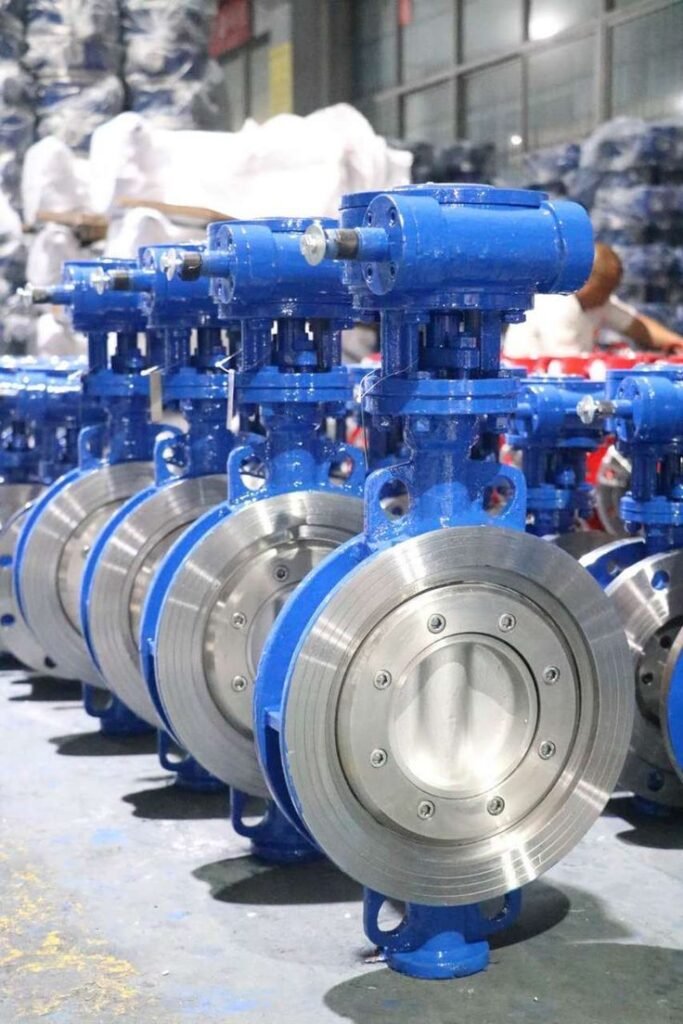
What Is a Center Line Butterfly Valve?
A center line butterfly valve, also known as a concentric butterfly valve, is the most widely used type of butterfly valve in industrial and municipal piping systems. In this design, the stem passes through the exact center of the disc, and the disc rotates around a central axis within the valve body.
The seat is positioned concentrically around the disc, creating a simple yet effective sealing structure that delivers reliable shutoff and flow control.
Center line butterfly valves are commonly used in:
- Water treatment plants
- Wastewater systems
- HVAC installations
- Irrigation projects
- Fire protection networks
- General industrial pipelines
Because of their compact design and affordable cost, they remain one of the most popular valve solutions worldwide.
How Does a Center Line Butterfly Valve Work?
The operation of a center line butterfly valve is based on a quarter-turn rotating disc.
Working Principle
- The valve disc is mounted on a central shaft.
- Rotating the shaft turns the disc.
- When the disc is parallel to the flow direction, the valve is fully open.
- When rotated 90 degrees, the disc blocks the flow path and closes the valve.
- Intermediate positions allow throttling and flow regulation.
This simple mechanism enables fast operation with minimal torque requirements.
Key Features of a Center Line Butterfly Valve
Concentric Structure
The shaft, disc, and valve body all share the same centerline.
Compact Design
Requires less installation space compared to gate valves and globe valves.
Lightweight Construction
Reduces transportation and installation costs.
Bubble-Tight Sealing
Soft seat materials provide reliable shutoff performance.
Low Torque Operation
Suitable for manual and automated actuation.
Cost Efficiency
One of the most economical valve options for large pipeline systems.
Main Components of a Center Line Butterfly Valve
Valve Body
Available materials include:
- Ductile iron
- Cast iron
- Stainless steel
- Carbon steel
Valve Disc
Controls fluid flow within the pipeline.
Common disc materials:
- Ductile iron
- Stainless steel 304
- Stainless steel 316
- Aluminum bronze
Valve Seat
Creates the seal between the body and disc.
Common seat materials:
| Seat Material | Typical Application |
|---|---|
| EPDM | Water treatment |
| NBR | Oil-containing media |
| PTFE | Chemical processing |
| Viton | High-temperature systems |
Stem (Shaft)
Transfers motion from the actuator to the valve disc.
Actuation System
Available options:
- Lever handle
- Worm gear operator
- Pneumatic actuator
- Electric actuator
Advantages of Center Line Butterfly Valves
Easy Installation
Simple wafer, lug, or flanged connections reduce installation time.
Excellent Flow Characteristics
The disc design provides low pressure loss.
Reduced Maintenance
Fewer moving parts result in easier maintenance.
Long Service Life
Quality seat materials ensure reliable sealing over many operating cycles.
Wide Size Availability
Available from small diameters to large industrial sizes.
Versatile Applications
Suitable for water, air, wastewater, and many non-corrosive fluids.

Types of Center Line Butterfly Valves
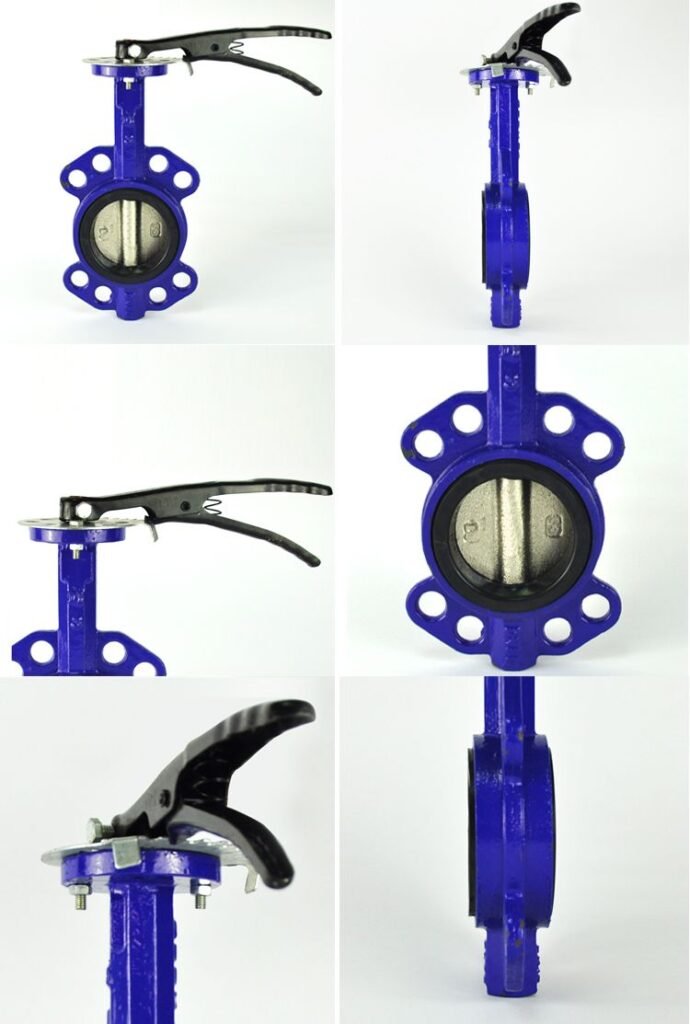
Wafer Center Line Butterfly Valve
Installed between two pipeline flanges.
Advantages
- Lightweight
- Economical
- Compact
Applications:
- Water treatment
- HVAC systems
Lug Center Line Butterfly Valve
Features threaded inserts for flange bolting.
Benefits
- Easy maintenance
- End-of-line service capability
Applications:
- Industrial processing
- Utility systems
Flanged Center Line Butterfly Valve
Provides a stronger pipeline connection.
Advantages
Applications:
- Municipal infrastructure
- Water transmission systems
Materials Used in Center Line Butterfly Valves
Ductile Iron
Most common body material.
Benefits:
- High strength
- Affordable cost
- Excellent durability
Stainless Steel
Common grades:
- SS304
- SS316
- SS316L
Benefits:
- Corrosion resistance
- Hygienic performance
Carbon Steel
Benefits:
- High mechanical strength
- Suitable for industrial systems
Applications of Center Line Butterfly Valves
Water Treatment Plants
Used for:
- Water distribution
- Filtration systems
- Pump stations
Wastewater Treatment Facilities
Applications include:
- Effluent control
- Sludge pipelines
- Treatment systems
HVAC Systems
Used in:
- Chilled water systems
- Heating networks
- Building services
Fire Protection Systems
Suitable for:
- Fire sprinkler systems
- Water supply control
Irrigation Networks
Applications include:
- Agricultural water distribution
- Pumping stations
- Canal systems
Center Line Butterfly Valve vs Double Offset Butterfly Valve
| Feature | Center Line Butterfly Valve | Double Offset Butterfly Valve |
|---|---|---|
| Structure | Concentric | Offset shaft design |
| Cost | Lower | Higher |
| Sealing | Soft seat | Enhanced sealing |
| Pressure Capability | Medium | Higher |
| Temperature Resistance | Moderate | Better |
| Maintenance Cost | Lower | Moderate |
For general-purpose applications, center line butterfly valves offer the best balance of performance and cost.
Pressure Ratings and Sizes
Common pressure ratings:
- PN10
- PN16
- PN25
Common sizes:
- DN40 to DN2000+
The correct selection depends on pipeline design and operating conditions.
Quality Standards and Certifications
Reliable manufacturers follow international standards.
Common Certifications
- ISO 9001
- CE Certification
- WRAS Approval
- EN Standards
Testing Procedures
- Hydrostatic pressure testing
- Seat leakage testing
- Torque testing
- Material verification
Industry references:
Frequently Asked Questions
What is a center line butterfly valve?
A center line butterfly valve is a concentric butterfly valve where the shaft passes through the center of the disc and valve body.
What are the advantages of center line butterfly valves?
Compact size, low cost, easy installation, reliable sealing, and simple maintenance.
What industries use center line butterfly valves?
Water treatment, HVAC, wastewater management, irrigation, and fire protection systems.
Can center line butterfly valves regulate flow?
Yes. They can be used for both isolation and throttling applications.
What seat materials are commonly used?
EPDM, NBR, PTFE, and Viton are widely used depending on the media.
What pressure ratings are available?
PN10, PN16, and PN25 are the most common options.
Conclusion
A center line butterfly valve is one of the most practical and cost-effective solutions for industrial and municipal flow control systems. Its concentric design, reliable sealing performance, lightweight construction, and simple operation make it ideal for water treatment, HVAC, wastewater, irrigation, and general industrial applications.
By selecting the proper body material, seat material, and pressure rating, users can achieve efficient flow control, reduced maintenance costs, and long-term operational reliability.