
Butterfly valves are widely used in industrial piping because they offer a compact design, relatively low weight, simple quarter-turn operation, and flexible automation options. From water treatment plants to chemical facilities, HVAC systems, desalination projects, and industrial utilities, butterfly valves can provide reliable pipeline isolation and, in selected applications, flow regulation.
However, the quality of the finished valve depends heavily on the capabilities of the butterfly valve manufacturer behind it.
A professional manufacturer should do more than produce valve bodies. It should have the engineering, machining, assembly, testing, quality control, and customization capabilities needed to deliver consistent products for different operating conditions.
The right manufacturer can also help customers select suitable body materials, disc materials, seat compounds, pressure ratings, connection standards, and actuator configurations.
For projects requiring flanged butterfly valves, you can also explore our flanged valve product range.
What Does a Butterfly Valve Manufacturer Do?
A butterfly valve manufacturer designs, produces, assembles, inspects, and tests butterfly valves for specific industrial applications.
A typical manufacturing process can involve:
- Engineering design
- Material selection
- Casting or forging
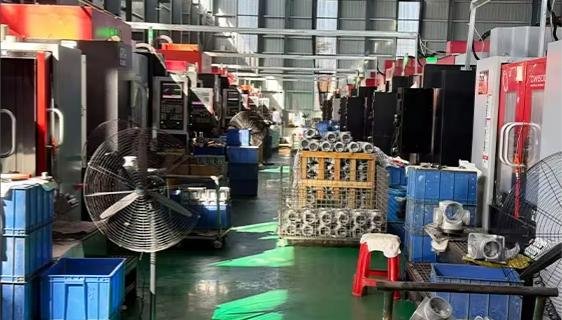
- Machining
- Component inspection
- Valve assembly
- Pressure testing
- Leakage testing
- Functional testing
- Surface treatment
- Final inspection
- Packaging
Manufacturers may also provide:
- OEM production
- Private labeling
- Custom dimensions
- Special materials
- Actuated valve assemblies
- Project documentation
- Technical support
This makes the manufacturer’s capabilities an important consideration for both standard purchases and customized industrial projects.
Why Is the Butterfly Valve Manufacturer Important?
Two butterfly valves with the same nominal size and pressure rating may not deliver the same long-term performance.
Differences can exist in:
- Body casting quality
- Shaft design
- Disc construction
- Seat formulation
- Machining accuracy
- Coating quality
- Assembly procedures
- Pressure testing
- Quality control
A reliable manufacturer should have consistent procedures for controlling these factors.
Key Benefits of Working With an Experienced Manufacturer
- Consistent product quality
- Better material control
- Reliable sealing performance
- More accurate dimensions
- Better actuator compatibility
- Flexible customization
- Complete testing
- Stronger technical support
For distributors and EPC contractors, these factors can also affect project delivery and customer satisfaction.
1. Types of Butterfly Valves
A professional butterfly valve manufacturer may produce several different designs.
Concentric Butterfly Valves
Also called resilient-seated butterfly valves, these are widely used in:
- Water treatment
- Wastewater
- HVAC
- Cooling water
- General industrial services
The shaft and disc are arranged concentrically within the valve body.
Common seat materials include:
- EPDM
- NBR
- PTFE
- FKM
Double Offset Butterfly Valves
Double offset designs move the shaft away from the centerline of the disc and sealing surface.
This reduces rubbing between the disc and seat during operation.
Potential advantages include:
- Reduced seat wear
- Lower operating torque
- Improved durability
- Better performance for demanding services
Triple Offset Butterfly Valves
Triple offset butterfly valves use a more complex geometry that creates a cam-like opening and closing movement.
They’re commonly considered for applications involving:
- Higher temperatures
- Higher pressures
- Metal sealing
- Steam
- Hydrocarbons
- Demanding industrial service
The appropriate design depends on the actual application.
2. Butterfly Valve Materials
Material selection is one of the manufacturer’s most important responsibilities.
Common Body Materials
| Material | Typical Applications |
|---|---|
| Cast iron | General water and HVAC |
| Ductile iron | Water and industrial pipelines |
| Carbon steel | Industrial process systems |
| Stainless steel | Corrosive services |
| Aluminum bronze | Marine and selected seawater applications |
The internal components may use different materials.
For example:
- Stainless steel disc
- Ductile iron disc
- Aluminum bronze disc
- Stainless steel shaft
- EPDM seat
- NBR seat
- PTFE seat
- FKM seat
- Metal seat
Material selection should consider the complete service environment.
3. Butterfly Valve Seat Selection
The seat plays a major role in valve sealing performance.
EPDM
Commonly used in:
- Water
- Wastewater
- Cooling water
EPDM provides good resistance to many water-based applications but isn’t generally suitable for every hydrocarbon service.
NBR
NBR is often selected for applications involving oils and certain hydrocarbons, depending on the specific conditions.
PTFE
PTFE can provide strong chemical resistance and is often considered for more chemically demanding services.
FKM
FKM can be useful for selected applications involving higher temperatures and hydrocarbons.
Metal Seat
Metal-seated butterfly valves may be selected for demanding high-temperature applications where resilient seats aren’t suitable.
The correct seat should always be selected based on the actual medium and operating temperature.
4. Butterfly Valve Pressure Ratings
Butterfly valves are manufactured for different pressure classes.
Common ratings include:
- PN10
- PN16
- PN25
- Class 150
The manufacturer should provide appropriate pressure-temperature information.
Important parameters include:
- Nominal pressure
- Maximum working pressure
- Differential pressure
- Operating temperature
Pressure capability shouldn’t be evaluated independently of temperature.
5. Butterfly Valve Connection Standards
Butterfly valves can be manufactured with different connection configurations.
Common options include:
- Wafer
- Lug
- Flanged
- Double flanged
- Grooved
- Customized connections
Flange dimensions can vary according to the applicable standard.
For international projects, the manufacturer should confirm the exact flange standard and dimensions before production.
This is particularly important when valves are being installed into existing piping systems.
6. Butterfly Valve Size Range
Butterfly valves are particularly useful for large-diameter applications.
Depending on the manufacturer, available sizes may range from relatively small pipeline diameters to very large valves used in water infrastructure and industrial plants.
Large-diameter butterfly valves can offer advantages such as:
- Compact construction
- Lower weight than some alternative valve designs
- Lower installation requirements
- Quarter-turn operation
However, large valves require careful consideration of:
- Shaft strength
- Disc strength
- Seat design
- Actuator torque
- Flange loads
- Installation space
7. Manual and Automated Butterfly Valves
Butterfly valves can be operated manually or automatically.
Manual Butterfly Valves
Common operating methods include:
- Lever handle
- Gearbox
- Chain wheel
Manual operation is often suitable for valves that don’t need frequent remote operation.
Electric Actuated Butterfly Valves
Electric actuators can provide:
- Remote operation
- PLC integration
- Position feedback
- Automated isolation
- Modulating control
Pneumatic Actuated Butterfly Valves
Pneumatic actuators can provide rapid quarter-turn operation.
They may be configured as:
- Double acting
- Spring return
Hydraulic Actuated Butterfly Valves
Hydraulic actuators may be used where high operating force is required.
8. Butterfly Valve Torque and Actuator Sizing
Correct actuator sizing is critical for automated butterfly valves.
Required torque can be affected by:
- Valve size
- Seat material
- Differential pressure
- Fluid conditions
- Temperature
- Valve design
- Operating frequency
The manufacturer should calculate or verify the required operating torque rather than selecting an actuator based only on valve size.
The actuator should have sufficient output throughout the complete operating cycle.
Fail-Safe Requirements
Some applications require the valve to:
- Fail open
- Fail closed
- Remain in position
The required fail position should be identified before actuator selection.
9. Butterfly Valve Manufacturing Process
A professional manufacturer should use a controlled production process.
Casting or Forging
Valve bodies and other components are produced according to approved designs.
Machining
Critical surfaces are machined to specified tolerances.
These can include:
- Shaft holes
- Seat surfaces
- Disc surfaces
- Flange faces
- Mounting interfaces
Assembly
Components are carefully assembled according to established procedures.
Testing
Finished valves undergo appropriate pressure and functional tests.
Surface Treatment
Depending on the material and application, valves may receive:
- Painting
- Epoxy coating
- Powder coating
- Special protective coatings
Final Inspection
The finished valve is checked for:
- Dimensions
- Appearance
- Marking
- Operation
- Leakage
- Packaging
10. Butterfly Valve Testing and Quality Control
Testing is an essential part of manufacturing.
Typical tests can include:
Shell Test
Checks the pressure integrity of the valve body.
Seat Leakage Test
Verifies shut-off performance.
Operational Test
Confirms that the valve opens and closes correctly.
Dimensional Inspection
Checks important dimensions against approved drawings.
Material Verification
Confirms that supplied materials meet specified requirements.
For automated valves, additional testing can include:
- Actuator operation
- Limit switch operation
- Position feedback
- Solenoid operation
- Fail-safe function
Testing requirements should be agreed upon before manufacturing begins.
Butterfly Valve Manufacturer for OEM Projects
Many distributors and industrial valve companies don’t manufacture every product themselves.
An OEM relationship can allow them to source butterfly valves according to their own requirements.
OEM services may include:
- Customer branding
- Custom nameplates
- Special packaging
- Private documentation
- Customized materials
- Modified dimensions
- Special seat materials
- Actuated assemblies
For long-term OEM cooperation, consistency is particularly important.
The manufacturer should maintain stable:
- Product design
- Materials
- Manufacturing procedures
- Testing methods
- Packaging
- Documentation
This helps ensure that products supplied over multiple orders remain consistent.
Butterfly Valve Manufacturer for EPC Contractors
EPC contractors often need more than a product catalog.
They may require:
- Valve schedules
- Technical datasheets
- General arrangement drawings
- Material certificates
- Inspection plans
- Pressure test reports
- Actuator datasheets
- Certificates
- Operation manuals
- Spare parts information
A capable manufacturer should understand project document control and be able to respond efficiently to technical clarifications.
A typical procurement workflow is:
RFQ → Technical Review → Quotation → Clarification → Drawing Approval → Production → Inspection → Testing → Documentation → Shipment
How to Choose a Butterfly Valve Manufacturer
Don’t choose a manufacturer based only on price.
Evaluate the following factors:
| Factor | What to Evaluate |
|---|---|
| Manufacturing capability | Actual production facilities |
| Product range | Valve types and sizes |
| Materials | Available body and internal materials |
| Engineering | Design and technical support |
| Testing | Pressure and functional testing |
| Automation | Actuator assembly capability |
| Customization | Ability to meet special requirements |
| Quality control | Inspection procedures |
| Documentation | Project documentation |
| Production capacity | Ability to handle volume |
| Delivery | Manufacturing lead time |
| Experience | Relevant application history |
A strong manufacturer should be able to explain why a particular valve configuration is suitable for the application.
Common Mistakes When Buying Butterfly Valves
Selecting Only by Price
A low purchase price doesn’t necessarily mean low total cost.
Poor sealing or premature wear can create higher maintenance expenses later.
Choosing the Wrong Seat Material
Seat compatibility with the process medium and temperature is essential.
Ignoring Actuator Torque
An actuator that’s too small may fail to operate the valve.
Using the Wrong Valve Design
A standard resilient-seated valve isn’t suitable for every high-temperature or high-pressure application.
Not Checking Flange Dimensions
A valve that doesn’t match the existing piping standard can cause installation problems.
Ignoring Testing Requirements
Pressure and leakage testing should be specified before production.
Butterfly Valve Manufacturer Selection Checklist
Before placing an order, confirm:
- Valve type
- Nominal size
- Pressure rating
- Body material
- Disc material
- Shaft material
- Seat material
- Fluid
- Operating temperature
- Operating pressure
- Connection type
- Flange standard
- Face-to-face dimension
- Manual or automatic operation
- Actuator type
- Required torque
- Fail position
- Accessories
- Testing requirements
- Inspection requirements
- Documentation
- Packaging
- Delivery schedule
Providing these details early can significantly reduce technical clarification later.

Frequently Asked Questions
What does a butterfly valve manufacturer do?
A butterfly valve manufacturer designs, manufactures, assembles, inspects, and tests butterfly valves. Many manufacturers also provide customization, OEM production, actuator assemblies, and technical documentation.
What types of butterfly valves can manufacturers produce?
Common designs include concentric, double offset, and triple offset butterfly valves. Wafer, lug, flanged, and other connection configurations may also be available.
What materials are commonly used for butterfly valves?
Common body materials include cast iron, ductile iron, carbon steel, stainless steel, and aluminum bronze. Internal components can use stainless steel, coated materials, or other alloys.
How do I choose the right butterfly valve seat?
The seat should be selected according to the fluid, temperature, pressure, and chemical compatibility. Common materials include EPDM, NBR, PTFE, FKM, and metal.
Can a butterfly valve manufacturer provide actuators?
Yes. Many manufacturers can supply complete valve assemblies with electric, pneumatic, or hydraulic actuators and accessories.
How is butterfly valve actuator torque determined?
Torque depends on factors such as valve design, size, seat material, differential pressure, temperature, and operating conditions. The manufacturer should calculate or verify the required torque before actuator selection.
What pressure ratings are available for butterfly valves?
Common ratings include PN10, PN16, PN25, and Class 150, although the available ratings depend on the valve design and manufacturer.
Can butterfly valves be customized?
Yes. Manufacturers may customize materials, dimensions, coatings, seat materials, connections, actuators, accessories, branding, and packaging.
What testing should a butterfly valve undergo?
Depending on the applicable requirements, testing can include shell pressure testing, seat leakage testing, dimensional inspection, operational testing, and actuator functional testing.
How can I evaluate a butterfly valve manufacturer?
Look at manufacturing capability, engineering support, material control, testing, quality systems, customization capability, production capacity, documentation, delivery performance, and experience with similar applications.
Conclusion
Choosing the right butterfly valve manufacturer is an important decision for industrial piping projects. A reliable manufacturer should provide more than a standard valve. It should offer appropriate materials, accurate machining, reliable sealing, proper testing, suitable actuation, and technical support.
Before making a purchase, carefully evaluate the valve design, pressure rating, materials, seat selection, connection standard, operating conditions, actuator requirements, testing, and documentation.
For EPC contractors, distributors, OEM customers, and industrial operators, a manufacturer with strong engineering and production capabilities can provide significant value throughout the entire procurement process.
The right manufacturing partner can help ensure that the butterfly valve isn’t merely compatible with the pipeline on paper, but is properly engineered and tested for the conditions in which it will actually operate.