

Choosing the right butterfly valve distributor can make a big difference in industrial valve procurement. For contractors, engineering companies, water treatment plants, OEMs, equipment manufacturers, and maintenance teams, a reliable distributor can provide the right products, technical support, fast delivery, and dependable after-sales service.
Butterfly valves are widely used in water supply, wastewater treatment, HVAC, cooling water, desalination, chemical processing, power generation, marine systems, fire protection, and general industrial pipelines.
However, not every butterfly valve is suitable for every application. Valve size, pressure rating, fluid, temperature, body material, disc material, seat material, connection type, and operating method all need to be considered.
A good distributor should do more than quote a price. It should understand the application and help customers select a valve that matches the actual operating conditions.
For industrial projects requiring flanged configurations, you can also explore our flanged valve product range.
What Is a Butterfly Valve Distributor?
A butterfly valve distributor is a company that purchases, stocks, markets, and supplies butterfly valves to customers.
A distributor may work with one or several manufacturers and can serve different markets through:
- Local warehouses
- Regional sales offices
- Online sales channels
- Engineering support
- Project procurement
- Technical consultation
- After-sales service
Some distributors focus on standard valves, while others specialize in industrial or engineered valve solutions.
Distributor vs Manufacturer
The distinction is important.
| Distributor | Manufacturer |
|---|---|
| Purchases and resells products | Manufactures products |
| May stock multiple brands | Controls its own production |
| Often provides local inventory | Provides direct factory support |
| Can offer multiple product sources | Can offer deeper customization |
| Useful for urgent replacement | Useful for OEM/ODM and large orders |
Some companies operate as both manufacturers and distributors.
Why Work With a Butterfly Valve Distributor?
Buying through a distributor can offer several practical advantages.
Local Inventory
A distributor may keep commonly used butterfly valves in stock, reducing waiting time.
Faster Delivery
For urgent maintenance or replacement work, local inventory can be extremely valuable.
Product Selection
A distributor working with multiple manufacturers may offer different:
- Materials
- Pressure classes
- Sizes
- Connection types
- Seat materials
- Actuator options
Technical Support
Experienced distributors can help customers compare valve configurations and identify suitable products.
After-Sales Support
Local distributors may provide:
- Replacement parts
- Troubleshooting
- Technical assistance
- Warranty coordination
- Product replacement
1. Evaluate the Distributor’s Product Range
A reliable distributor should offer products suitable for the applications it serves.
Common butterfly valve types include:
- Wafer butterfly valves
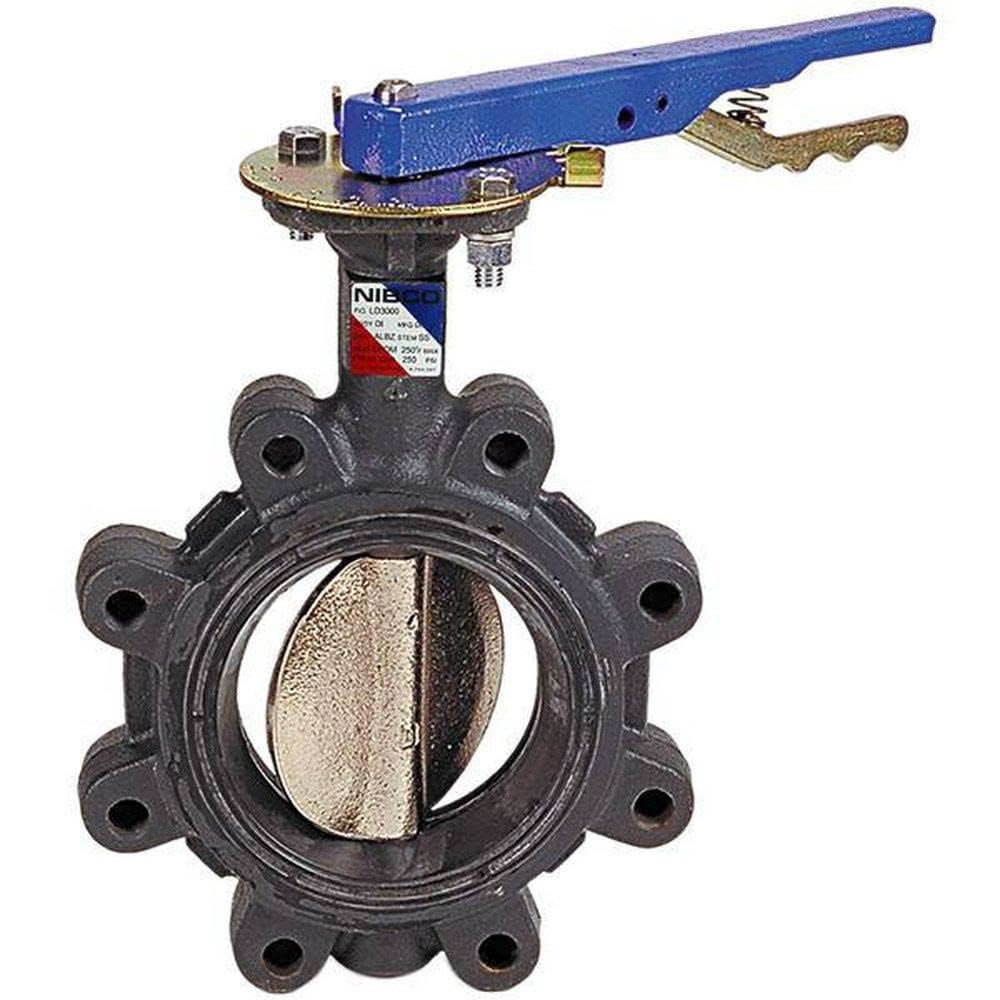
- Lug butterfly valves
- Flanged butterfly valves
- Double flanged butterfly valves
- Grooved butterfly valves
- Concentric butterfly valves
- Double offset butterfly valves
- Triple offset butterfly valves
Operating configurations may include:
- Lever operated
- Gear operated
- Chain wheel operated
- Electric actuator
- Pneumatic actuator
- Hydraulic actuator
A broad product range makes it easier to select the appropriate valve without forcing every application into the same configuration.
2. Check Valve Materials
Material selection is one of the first technical factors to review.
Common body materials include:
| Body Material | Typical Application |
|---|---|
| Cast iron | General water and HVAC |
| Ductile iron | Water and industrial service |
| Carbon steel | Process and industrial applications |
| Stainless steel | Corrosive environments |
| Aluminum bronze | Marine and selected seawater service |
Common seat materials include:
- EPDM
- NBR
- PTFE
- FKM
- Metal
The correct combination depends on the process fluid and operating conditions.
Why Fluid Compatibility Matters
A valve used in ordinary water service may require a completely different material combination from one used with:
- Chemicals
- Hydrocarbons
- Seawater
- High-temperature fluids
- Abrasive media
A knowledgeable distributor should ask about the fluid before recommending a valve.
3. Check Pressure Ratings
Common butterfly valve pressure ratings include:
- PN10
- PN16
- PN25
- Class 150
However, the nominal pressure rating isn’t enough by itself.
You should also confirm:
- Maximum working pressure
- Differential pressure
- Operating temperature
- Pressure-temperature limitations
- Leakage requirements
- Applicable design standard
- Testing requirements
For critical industrial applications, ask for the relevant technical documentation.
4. Evaluate Available Valve Connections
Butterfly valves are available with different pipeline connections.
Common configurations include:
Wafer Type
Installed between pipeline flanges and commonly used for compact installations.
Lug Type
Provides threaded or lugged mounting arrangements and can be useful in certain maintenance configurations.
Flanged Type
Uses integral flanges and can be suitable for applications requiring a more substantial flanged connection.
Grooved Type
Used with grooved piping systems where appropriate.
Before ordering, confirm:
- Flange standard
- Bolt-hole pattern
- Face-to-face dimension
- Valve diameter
- Overall dimensions
- Actuator mounting dimensions
Correct dimensions can prevent installation problems.
5. Review Distributor Inventory
Inventory is one of the biggest advantages a distributor can provide.
Ask whether the distributor stocks the products you commonly need.
Typical stock categories might include:
- Small-diameter butterfly valves
- Large-diameter butterfly valves
- PN10 valves
- PN16 valves
- Class 150 valves
- Wafer valves
- Lug valves
- Flanged valves
- Manual valves
- Actuated valves
- Replacement seats
- Spare components
Why Inventory Matters
If a valve fails unexpectedly, waiting several weeks for production may not be practical.
A distributor with local inventory can potentially shorten downtime.
For project procurement, however, custom or large-diameter valves may still require factory production.
6. Examine Quality Control
A distributor doesn’t manufacture the product in every case, so buyers should understand how it controls supplier quality.
A responsible distributor should know:
- Who manufactures the valve
- What materials are used
- Which standards apply
- How the valve is tested
- What documentation is available
- How product changes are controlled
Typical Manufacturing Process
Material → Casting/Forging → Machining → Assembly → Pressure Testing → Leakage Testing → Final Inspection → Packaging
The distributor should be able to obtain appropriate quality documents from its manufacturing partners when required.
7. Check Testing and Certification
Testing provides evidence that the supplied valve meets its specified requirements.
Common checks include:
- Shell pressure testing
- Seat leakage testing
- Functional testing
- Dimensional inspection
- Visual inspection
Depending on the project, customers may also require:
- Material certificates
- Inspection reports
- Certificates of conformity
- Test reports
- Third-party inspection
- Factory documentation
The exact documentation depends on the product, standard, industry, and project specification.
8. Evaluate Technical Support
An experienced distributor should provide more than a product list.
Technical support may include:
- Valve selection
- Material selection
- Seat selection
- Pressure-rating advice
- Actuator selection
- Torque verification
- Dimensional confirmation
- Technical drawings
- Datasheets
- Installation guidance
- Maintenance support
Why This Is Important
A butterfly valve may look simple, but selecting the wrong seat, material, pressure rating, or actuator can cause problems later.
A good distributor should ask questions such as:
- What’s the fluid?
- What’s the operating pressure?
- What’s the operating temperature?
- How often will the valve operate?
- Is the valve for isolation or control?
- Does it need remote operation?
- What connection standard is required?
These questions show that the supplier is focusing on the application rather than simply making a sale.
9. Manual and Actuated Butterfly Valves
A distributor may supply both manually operated and automated valves.
Manual Butterfly Valves
Common operating methods include:
- Lever
- Gearbox
- Chain wheel
They’re often used where remote operation isn’t required.
Electric Actuated Butterfly Valves
Electric actuators can support:
- Remote operation
- Automated isolation
- Position feedback
- PLC integration
- Modulating applications
Pneumatic Actuated Butterfly Valves
Pneumatic actuators are widely used in automated industrial systems.
They can be configured as:
- Double acting
- Spring return
Hydraulic Actuated Butterfly Valves
Hydraulic actuators can be considered where high operating force is required.
10. Check Actuator Sizing and Torque
For an actuated valve, selecting an actuator by valve size alone isn’t enough.
Required torque can depend on:
- Valve diameter
- Seat material
- Differential pressure
- Disc geometry
- Fluid
- Temperature
- Operating frequency
The distributor should obtain or calculate the valve’s required operating torque and select a suitable actuator accordingly.
Fail-Safe Requirements
Some applications require the valve to:
- Fail open
- Fail closed
- Remain in its current position
This should be defined before the actuator is selected.
Butterfly Valve Distributor for EPC Contractors
EPC contractors often require suppliers that can handle technical and documentation requirements.
A suitable distributor may provide:
- Valve datasheets
- General arrangement drawings
- Material certificates
- Inspection documents
- Pressure-test reports
- Leakage-test reports
- Actuator documents
- Certificates
- Operation manuals
- Spare-parts information
A typical procurement process is:
RFQ → Technical Review → Quotation → Clarification → Purchase Order → Drawing Approval → Production/Stock Allocation → Inspection → Testing → Documentation → Delivery
A distributor that understands project procurement can reduce communication and coordination work.
Butterfly Valve Distributor for Industrial Maintenance
Maintenance departments often have different priorities from EPC contractors.
They may need:
- Fast delivery
- Replacement valves
- Spare seats
- Replacement discs
- Shafts
- Actuators
- Gearboxes
- Repair kits
Emergency Replacement
For emergency situations, having the correct replacement valve available locally can reduce downtime.
However, replacement valves shouldn’t be selected by size alone.
Always check:
- Face-to-face dimension
- Pressure rating
- Connection
- Seat material
- Disc material
- Shaft arrangement
- Actuator interface
Butterfly Valve Distributor for OEM Customers
OEM equipment manufacturers often require consistent valve products for repeated assembly.
A distributor may support:
- Dedicated models
- Private labeling
- Custom packaging
- Product codes
- Documentation
- Repeat orders
- Special configurations
For larger OEM programs, direct cooperation between the distributor, manufacturer, and equipment builder can help maintain consistent specifications.
How to Compare Butterfly Valve Distributors
Don’t compare suppliers based solely on price.
Use a structured comparison:
| Factor | Distributor A | Distributor B | Distributor C |
|---|---|---|---|
| Product range | |||
| Valve brands | |||
| Local inventory | |||
| Materials | |||
| Pressure ratings | |||
| Testing | |||
| Certifications | |||
| Technical support | |||
| Actuators | |||
| OEM support | |||
| Lead time | |||
| Warranty | |||
| Price |
This makes it easier to identify the best overall supplier.
What Makes a Reliable Distributor?
A strong distributor typically combines five capabilities.
Product Knowledge
Its team understands valve designs and applications.
Supply Capability
It can maintain stock or coordinate factory production.
Quality Management
It knows the origin and specifications of the products it supplies.
Technical Support
It can help customers select suitable valves and actuators.
After-Sales Service
It remains available when customers need replacement parts or technical assistance.
A distributor that performs well in all five areas can become a long-term supply partner rather than simply another vendor.

Common Mistakes When Choosing a Distributor
Choosing Only by Price
A lower price may reflect differences in materials, quality, testing, or service.
Not Checking Product Origin
Always understand who actually manufactures the valve.
Ignoring Stock Availability
For maintenance applications, lead time can be critical.
Not Confirming Dimensions
A valve can have the correct nominal size but still be incompatible with the existing pipeline.
Ignoring Fluid Compatibility
Seat and body materials must match the service conditions.
Choosing an Actuator Without Torque Verification
The actuator must be appropriately sized for the valve and operating conditions.
Failing to Define Documentation
Project documentation should be agreed before ordering.
Butterfly Valve Distributor Selection Checklist
Before selecting a distributor, confirm:
- Product range
- Actual manufacturer
- Valve type
- Valve size
- Pressure rating
- Fluid compatibility
- Operating temperature
- Body material
- Disc material
- Shaft material
- Seat material
- Connection type
- Flange standard
- Face-to-face dimension
- Manual or actuated operation
- Actuator type
- Operating torque
- Stock availability
- Testing
- Certifications
- Technical documents
- Lead time
- Warranty
- After-sales support
Frequently Asked Questions
What is a butterfly valve distributor?
A butterfly valve distributor supplies butterfly valves to customers and may provide inventory, technical support, project procurement, and after-sales service. Some distributors also operate manufacturing facilities.
What is the difference between a distributor and a manufacturer?
A manufacturer produces the valves, while a distributor typically purchases and resells products. Some companies perform both functions.
Why buy butterfly valves from a distributor?
A distributor may provide local stock, faster delivery, multiple product options, technical support, replacement parts, and local after-sales service.
How do I choose a reliable butterfly valve distributor?
Compare its product range, manufacturers, inventory, quality control, testing, technical expertise, certifications, delivery capability, warranty, and after-sales service.
What information should I provide when requesting a valve quotation?
Provide valve size, pressure rating, fluid, temperature, body and disc materials, seat material, connection type, actuator requirements, quantity, testing requirements, documentation, and delivery location.
Can distributors provide actuated butterfly valves?
Yes. Many distributors supply complete assemblies with electric, pneumatic, or hydraulic actuators.
Do distributors stock butterfly valves?
Many distributors maintain inventory of commonly used sizes and configurations. Custom or unusual valves may need to be produced to order.
Can a distributor provide OEM butterfly valves?
Some distributors offer OEM and private-label services, either directly or through their manufacturing partners.
What documents should I request from a distributor?
Depending on the application, you may request datasheets, drawings, material certificates, pressure-test reports, leakage-test reports, certificates of conformity, and actuator documentation.
Should I choose a local distributor or buy directly from a factory?
It depends on your needs. A local distributor may offer faster delivery and easier after-sales support, while direct factory purchasing can be attractive for large quantities, OEM projects, or highly customized products.
Conclusion
The right butterfly valve distributor can provide much more than a competitive quotation. A dependable distributor should combine product knowledge, quality control, inventory capability, technical support, reliable delivery, and responsive after-sales service.
When evaluating suppliers, first determine whether the company is a manufacturer, distributor, or both. Then review its product range, materials, pressure ratings, testing procedures, inventory, technical capabilities, actuator options, documentation, and delivery performance.
For maintenance teams, local stock and fast replacement can be especially valuable. For EPC contractors, documentation and project support may be more important. For OEM customers, consistent specifications and long-term supply are key considerations.
Most importantly, don’t select a butterfly valve based on size and price alone. Confirm the fluid, pressure, temperature, materials, seat, connection, dimensions, operating method, torque, testing, and documentation requirements.
A good distributor doesn’t just sell you a valve—it helps you choose the right valve for the job and supports you throughout its service life.