
A butterfly valve may look simple at first glance, but producing a reliable industrial valve requires careful engineering, accurate machining, controlled assembly, and strict testing. For distributors, EPC contractors, OEM customers, and industrial operators, choosing the right butterfly valve factory can have a major impact on product quality, project schedules, and long-term operating costs.
Butterfly valves are widely used for pipeline isolation and selected flow-control applications. They’re common in water treatment, wastewater, HVAC, cooling water, desalination, chemical processing, power generation, marine systems, and general industrial facilities.
However, not every factory has the same production capabilities.
Some factories focus mainly on standard water-service valves, while others can manufacture high-performance butterfly valves, automated valve assemblies, customized products, and project-specific configurations.
For buyers, the key is to look beyond the catalog and understand the factory’s actual manufacturing capabilities.
For industrial projects requiring flanged valves, you can also view our flanged valve product range.
What Is a Butterfly Valve Factory?
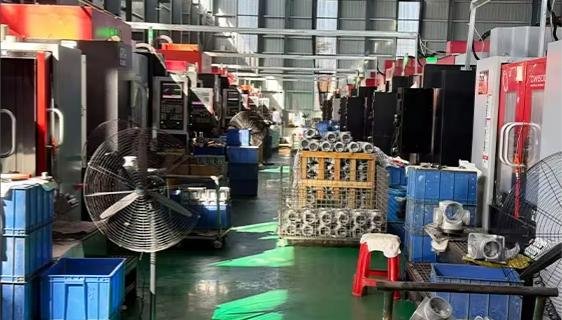
A butterfly valve factory is a manufacturing facility that produces butterfly valves and their related components.
Depending on its production capabilities, a factory may handle:
- Product engineering
- Casting
- Forging
- CNC machining
- Component inspection
- Valve assembly
- Pressure testing
- Leakage testing
- Coating
- Final inspection
- Packaging
Some factories also provide:
- OEM manufacturing
- Private-label production
- Custom valve configurations
- Actuator assembly
- Special materials
- Customized coatings
- Project documentation
The more processes controlled within the factory, the easier it can be to maintain consistency across production batches.
Why Does the Factory Matter?
When buying industrial valves, customers aren’t simply purchasing metal components. They’re purchasing a product that must withstand pressure, temperature, fluid exposure, mechanical loads, and repeated operation.
Factory capabilities can directly influence:
- Valve sealing
- Operating torque
- Dimensional accuracy
- Mechanical strength
- Corrosion resistance
- Service life
- Leakage performance
- Product consistency
For example, poor machining of the shaft or disc can affect valve alignment. Inadequate seat manufacturing can cause leakage. Poor coating preparation can lead to premature corrosion.
A reliable factory should therefore have a controlled process for each critical manufacturing stage.
1. Types of Butterfly Valves Produced by a Factory
A capable factory may manufacture several butterfly valve designs.
Concentric Butterfly Valves
These are commonly used in:
- Water treatment
- Wastewater
- HVAC
- Cooling water
- Irrigation
- General industrial services
They’re often equipped with resilient seats such as EPDM or NBR.
Double Offset Butterfly Valves
The shaft is offset from the centerline of the disc and sealing surface.
This design reduces rubbing between the disc and seat during operation.
Potential benefits include:
- Lower friction
- Reduced seat wear
- Improved operating performance
- Better suitability for demanding applications
Triple Offset Butterfly Valves
Triple offset designs use more complex geometry to create a cam-like sealing action.
They’re often considered for:
- High-temperature applications
- Steam
- Hydrocarbons
- Higher-pressure services
- Metal-seated applications
A factory with multiple valve designs can offer customers more flexibility when selecting products.
2. Butterfly Valve Materials
Material selection is a major factor in valve performance.
Common body materials include:
| Material | Typical Applications |
|---|---|
| Cast iron | General water and HVAC |
| Ductile iron | Water and industrial pipelines |
| Carbon steel | Industrial process systems |
| Stainless steel | Corrosive environments |
| Aluminum bronze | Marine and selected seawater applications |
Internal components may use:
- Stainless steel
- Aluminum bronze
- Carbon steel
- Special alloys
- Coated materials
The correct material combination depends on the actual operating conditions.
Material Selection Should Consider
- Fluid chemistry
- Pressure
- Temperature
- Corrosion
- Abrasion
- Mechanical loading
- Required service life
A professional factory should be able to provide clear material specifications for critical components.
3. Butterfly Valve Seat Options
The seat is one of the most important components in a resilient-seated butterfly valve.
EPDM
Commonly used for:
- Drinking water
- Wastewater
- Cooling water
- General water applications
NBR
Often considered for selected oil and hydrocarbon services.
PTFE
Provides strong chemical resistance and can be suitable for certain demanding chemical applications.
FKM
Can be selected for specific hydrocarbon, chemical, and elevated-temperature services.
Metal Seat
Metal sealing systems are often considered for demanding high-temperature applications where elastomeric seats aren’t appropriate.
Seat selection should always be based on the actual medium and temperature.
4. Pressure Ratings and Valve Standards
A reliable factory should clearly specify its valve pressure ratings.
Common ratings include:
- PN10
- PN16
- PN25
- Class 150
However, nominal pressure alone doesn’t tell the complete story.
Buyers should also check:
- Maximum working pressure
- Differential pressure
- Operating temperature
- Pressure-temperature limits
- Leakage requirements
For industrial projects, the valve should be selected according to the actual operating conditions rather than only the pipeline’s nominal pressure.
5. Connection Types and Dimensions
A butterfly valve factory may produce several connection types.
Common options include:
- Wafer
- Lug
- Flanged
- Double flanged
- Grooved
The valve must match the piping system’s connection standard.
Important dimensions can include:
- Face-to-face length
- Flange diameter
- Bolt-hole pattern
- Bolt-hole diameter
- Overall valve dimensions
- Actuator mounting dimensions
This becomes especially important for replacement projects.
Even if the valve size and pressure rating are correct, incorrect dimensions can make installation difficult.
6. Manual and Automated Valve Production
A modern factory may manufacture both manual and actuated butterfly valves.
Manual Butterfly Valves
Common operating methods include:
- Lever
- Gearbox
- Chain wheel
These are suitable for many basic isolation applications.
Electric Actuated Butterfly Valves
Electric actuators are commonly used for:
- Remote operation
- Automated isolation
- PLC control
- Position feedback
- Modulating applications
Pneumatic Actuated Butterfly Valves
Pneumatic actuators can provide fast quarter-turn operation.
They may be configured as:
- Double acting
- Spring return
Hydraulic Actuated Butterfly Valves
Hydraulic actuators can be used where higher operating force is required.
7. Actuator Assembly and Torque Verification
A factory supplying automated butterfly valves should understand actuator sizing.
Required operating torque can be influenced by:
- Valve size
- Seat material
- Differential pressure
- Disc design
- Fluid conditions
- Temperature
- Operating frequency
The actuator shouldn’t be selected simply because its mounting interface fits the valve.
The factory should verify that sufficient torque is available throughout the valve’s operating cycle.
Fail-Safe Requirements
Automated valves may need to:
- Fail open
- Fail closed
- Remain in their last position
These requirements should be established before production.
8. Butterfly Valve Manufacturing Process
A professional factory should use a controlled manufacturing process.
Casting or Forging
Pressure-containing components are manufactured according to approved specifications.
Machining
Critical components are machined to required tolerances.
Important areas may include:
- Disc
- Shaft
- Seat surfaces
- Flanges
- Bearing areas
- Actuator mounting interfaces
Component Inspection
Components are inspected before assembly.
Assembly
The shaft, disc, seat, bearings, seals, and other parts are assembled according to established procedures.
Surface Treatment
Depending on the valve material and application, the factory may use:
- Epoxy coating
- Painting
- Powder coating
- Other protective finishes
Final Inspection
The completed valve is inspected for:
- Dimensions
- Appearance
- Marking
- Operation
- Leakage
- Coating quality
9. Factory Testing and Quality Control
Testing is one of the clearest ways to evaluate a valve factory.
Shell Pressure Test
The valve body is tested for pressure integrity.
Seat Leakage Test
The valve’s shut-off performance is verified.
Functional Test
The valve is operated to confirm proper movement.
Dimensional Inspection
Critical dimensions are checked against approved drawings.
Material Inspection
Specified materials should be verified according to the project requirements.
Actuator Testing
For automated assemblies, testing may include:
- Opening
- Closing
- Position feedback
- Limit switches
- Solenoid operation
- Fail-safe functions
Testing requirements should be established before production begins.
Butterfly Valve Factory for OEM Production
OEM customers often need more than a standard valve.
A capable factory may provide:
- Customer logo
- Custom nameplate
- Private packaging
- Special product marking
- Customized documentation
- Special coatings
- Modified specifications
OEM projects can also involve customized:
- Seat materials
- Body materials
- Valve dimensions
- Connections
- Actuators
- Accessories
For repeat OEM orders, production consistency is critical.
The factory should maintain stable specifications and controlled manufacturing processes so that products supplied over time remain consistent.
Butterfly Valve Factory for EPC Projects
EPC contractors often have detailed technical and documentation requirements.
A factory may need to provide:
- Datasheets
- Valve schedules
- General arrangement drawings
- Material certificates
- Inspection plans
- Pressure test reports
- Actuator datasheets
- Certificates
- Operation manuals
- Spare parts lists
A typical project workflow can be:
RFQ → Technical Review → Quotation → Clarification → Drawing Approval → Production → Inspection → Testing → Documentation → Shipment
For large projects, document control can be just as important as manufacturing capacity.
How to Evaluate a Butterfly Valve Factory
Don’t judge a factory by product photos or price alone.
Evaluate the following:
| Factor | What to Check |
|---|---|
| Production facilities | Actual manufacturing capability |
| Product range | Valve types, sizes, and ratings |
| Machining | Equipment and dimensional control |
| Materials | Body, disc, shaft, and seat options |
| Assembly | Manufacturing and assembly procedures |
| Testing | Pressure and leakage testing |
| Quality control | Inspection processes |
| Automation | Actuator assembly capability |
| Customization | Ability to meet special specifications |
| OEM service | Branding and private-label capability |
| Documentation | Technical project documents |
| Capacity | Production volume |
| Delivery | Lead times and planning |
| Experience | Relevant industrial applications |
A factory that can demonstrate its production and testing processes gives buyers more confidence than a supplier that only provides a product list.
Butterfly Valve Factory vs Trading Company
Understanding this difference can help buyers evaluate suppliers.
Factory
A factory generally has direct control over:
- Production
- Machining
- Assembly
- Testing
- Quality control
Trading Company
A trading company may source products from one or more manufacturers.
That isn’t automatically a disadvantage, but buyers should understand who actually manufactures the valve.
For long-term OEM cooperation or highly customized projects, direct communication with the actual factory can simplify technical discussions and quality control.
Common Mistakes When Choosing a Butterfly Valve Factory
Choosing Only by Price
A lower price may reflect differences in materials, testing, coatings, or manufacturing controls.
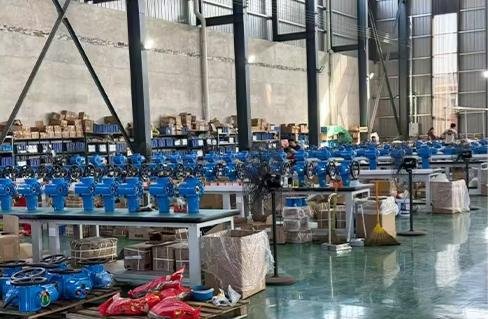
Not Checking Actual Production Capability
A supplier may offer many products but outsource most manufacturing.
Ignoring Seat Material
The wrong seat can cause premature leakage or material degradation.
Selecting an Actuator Without Torque Verification
An actuator that physically fits may still be unsuitable for the required operating torque.
Not Confirming Dimensions
Incorrect face-to-face or flange dimensions can cause installation problems.
Ignoring Testing
Testing should be defined before production, especially for project-specific orders.
Not Considering Production Capacity
Large projects require a factory with sufficient production capacity and supply-chain control.
Butterfly Valve Factory Selection Checklist
Before selecting a factory, confirm:
- Valve design
- Valve size
- Pressure rating
- Body material
- Disc material
- Shaft material
- Seat material
- Fluid
- Operating pressure
- Operating temperature
- Connection type
- Flange standard
- Face-to-face dimension
- Manual or automatic operation
- Actuator type
- Required torque
- Fail position
- Accessories
- Testing requirements
- Inspection requirements
- Documentation
- OEM requirements
- Production capacity
- Packaging
- Delivery schedule
How to Establish Long-Term Cooperation With a Butterfly Valve Factory
For distributors, OEM buyers, and EPC contractors, long-term cooperation can offer important advantages.
A stable manufacturing relationship can provide:
- Consistent product specifications
- More predictable quality
- Faster technical communication
- Stable production capacity
- Better customization
- Easier repeat ordering
- More efficient spare-parts management
It’s useful to establish clear procedures for:
- Drawing revisions
- Material changes
- Product modifications
- Quality complaints
- Warranty claims
- Delivery changes
Clear communication at the beginning can prevent plenty of problems later.
Frequently Asked Questions
What is a butterfly valve factory?
A butterfly valve factory is a manufacturing facility that produces butterfly valves and may handle casting, machining, assembly, testing, coating, inspection, and packaging.
What types of butterfly valves can a factory produce?
Depending on its capabilities, a factory may produce concentric, double offset, and triple offset butterfly valves, along with wafer, lug, flanged, and other configurations.
What materials are commonly available?
Common body materials include cast iron, ductile iron, carbon steel, stainless steel, and aluminum bronze. Internal components and sealing materials can be selected according to the application.
How do I choose the right butterfly valve factory?
Evaluate its manufacturing facilities, product range, engineering capability, material control, machining, testing, quality control, OEM services, production capacity, documentation, and delivery performance.
Can a butterfly valve factory provide actuated valves?
Yes. Many factories can assemble butterfly valves with electric, pneumatic, or hydraulic actuators and provide accessories such as limit switches, solenoid valves, and position indicators.
What tests should a butterfly valve factory perform?
Depending on the applicable specification, testing can include shell pressure testing, seat leakage testing, functional testing, dimensional inspection, material verification, and actuator testing.
Can factories provide OEM butterfly valves?
Yes. OEM services can include private labeling, custom nameplates, packaging, product markings, customized materials, and special configurations.
What pressure ratings are common for industrial butterfly valves?
Common ratings include PN10, PN16, PN25, and Class 150. The appropriate rating depends on valve design, material, temperature, and operating pressure.
Why is factory production capacity important?
A factory with sufficient capacity can better support large orders and repeat projects while maintaining more predictable delivery schedules.
How can I verify whether a supplier is a real valve factory?
Ask for information about production facilities, machining equipment, assembly processes, testing capabilities, quality-control procedures, factory documentation, and manufacturing scope. For major projects, an audit or third-party inspection can provide additional verification.
Conclusion
Choosing the right butterfly valve factory requires a close look at manufacturing capability, engineering expertise, material control, machining accuracy, assembly procedures, testing, and quality management.
The right factory should be able to provide more than a standard product catalog. It should understand the customer’s fluid, pressure, temperature, valve size, sealing requirements, connection standard, actuation needs, testing requirements, and project documentation.
For EPC contractors, distributors, OEM customers, and industrial operators, a capable factory can provide better consistency, easier customization, and stronger control over product quality and delivery.
In the long run, the best factory isn’t necessarily the one with the lowest quotation. It’s the one that can consistently manufacture properly engineered, accurately machined, thoroughly tested butterfly valves that perform reliably in the conditions they’re designed for.