
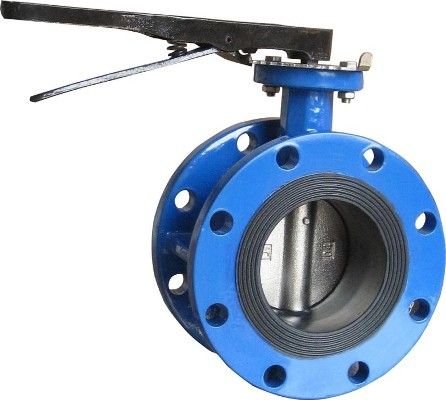
Industrial valve buyers don’t always need an off-the-shelf product. A distributor may want to develop a unique valve series, an equipment manufacturer may need a modified butterfly valve for its system, and an engineering company may require a project-specific design.
In these situations, butterfly valve ODM manufacturing can offer a more flexible solution.
ODM stands for Original Design Manufacturer. Unlike a basic private-label arrangement, ODM manufacturing can involve the manufacturer taking responsibility for product design, engineering, development, manufacturing, testing, and sometimes packaging.
This makes ODM particularly useful for companies that want a differentiated butterfly valve product without investing in their own valve design and manufacturing infrastructure.
Butterfly valves are used in many industries, including water treatment, wastewater, HVAC, cooling water, desalination, chemical processing, power generation, marine systems, and general industrial pipelines. Each application can have different requirements for materials, pressure, temperature, sealing, actuation, and dimensions.
A capable ODM partner can help turn those requirements into a manufacturable valve product.
For industrial applications requiring flanged valves, you can also explore our flanged valve product range.
What Is Butterfly Valve ODM?
Butterfly valve ODM means a manufacturer develops and produces butterfly valves based on a customer’s product requirements, application needs, or market objectives.
The manufacturer may be responsible for:
- Product design
- Engineering development
- Prototype production
- Material selection
- Component design
- Manufacturing
- Testing
- Quality control
- Packaging
- Production scaling
The customer may then sell the finished product under its own brand.
Typical ODM Customers
ODM services can be useful for:
- Valve distributors
- Industrial brands
- Equipment manufacturers
- System integrators
- EPC contractors
- Pump manufacturers
- Water-treatment companies
- Automation companies
The exact division of responsibilities should be clearly defined at the beginning of the project.
OEM vs ODM: What’s the Difference?
OEM and ODM are often used interchangeably, but they can involve different levels of manufacturer responsibility.
| OEM | ODM |
|---|---|
| Customer usually provides specifications | Manufacturer may develop the design |
| Focuses on manufacturing | Focuses on design + manufacturing |
| Customer design may already exist | Manufacturer can provide engineering |
| Custom branding is common | Custom product development is common |
| Less product-development work | More product-development involvement |
For example, if a customer provides a complete butterfly valve drawing and asks a factory to manufacture it, that’s generally closer to an OEM manufacturing model.
If the customer provides performance requirements and the manufacturer develops the valve design, that is closer to ODM.
In practice, companies may offer hybrid OEM/ODM services.
Why Choose Butterfly Valve ODM?
ODM can provide several advantages for companies that want to create their own valve products.
Major Benefits
- Access to engineering expertise
- Faster product development
- Lower investment in manufacturing infrastructure
- Product customization
- Private-label branding
- Prototype development
- Scalable production
- Technical support
- Easier product-line expansion
Instead of starting with raw materials, machinery, engineers, testing equipment, and production processes, a company can work with an experienced ODM manufacturer.
That’s often a much more practical route for businesses entering the industrial valve market.
1. Custom Butterfly Valve Design
One of the biggest advantages of ODM is design flexibility.
A customer may have a specific requirement for:
- Valve dimensions
- Pressure rating
- Flow characteristics
- Sealing system
- Materials
- Shaft arrangement
- Disc geometry
- Actuator interface
- Connection type
The ODM manufacturer can evaluate these requirements and develop an appropriate design.
Design Development May Include
- Concept design
- 3D modeling
- Engineering drawings
- Component selection
- Material analysis
- Prototype production
- Design verification
- Production drawings
A good design process should balance performance, manufacturability, reliability, and cost.

2. Custom Valve Materials
Different applications require different materials.
Common body materials include:
| Material | Typical Application |
|---|---|
| Cast iron | General water service |
| Ductile iron | Water and industrial pipelines |
| Carbon steel | Process applications |
| Stainless steel | Corrosive environments |
| Aluminum bronze | Marine and selected seawater applications |
Internal components can also be customized.
Potential materials include:
- Stainless steel
- Aluminum bronze
- Carbon steel
- Special alloys
- Coated materials
Material selection should be based on:
- Fluid chemistry
- Pressure
- Temperature
- Corrosion
- Mechanical loads
- Required service life
An ODM manufacturer should be able to explain the engineering reason behind the selected material combination.
3. Custom Butterfly Valve Seat Design
Sealing performance is a key part of butterfly valve design.
Common seat materials include:
EPDM
Often used for water-based applications such as:
- Drinking water
- Wastewater
- Cooling water
NBR
Can be suitable for selected oil and hydrocarbon applications.
PTFE
Offers strong chemical resistance for suitable applications.
FKM
Can be used in selected chemical and hydrocarbon services.
Metal Seat
Metal sealing systems may be selected for high-temperature or other demanding applications.
An ODM project may also involve a customized seat geometry or retention method.
The final design should be verified against the operating conditions rather than selected only by price.
4. Custom Pressure and Connection Requirements
ODM customers may need valves for different international markets.
Common pressure ratings include:
- PN10
- PN16
- PN25
- Class 150
Connection configurations may include:
- Wafer
- Lug
- Flanged
- Double flanged
- Grooved
The design can also be developed around specific face-to-face dimensions or flange standards.
Why This Matters
Suppose an equipment manufacturer has a limited installation space. A standard valve may not fit.
An ODM manufacturer may be able to develop a configuration that meets the required:
- Face-to-face dimension
- Overall height
- Flange arrangement
- Actuator mounting
- Pipeline connection
This is one area where ODM can provide value beyond simply applying a different logo.
5. Actuated Butterfly Valve Development
Modern industrial systems often require automated valves.
An ODM manufacturer may develop complete assemblies using:
- Electric actuators
- Pneumatic actuators
- Hydraulic actuators
Additional components can include:
- Limit switches
- Solenoid valves
- Position indicators
- Positioners
- Manual overrides
- Junction boxes
Actuator Torque
Actuator sizing depends on:
- Valve size
- Seat material
- Differential pressure
- Disc design
- Fluid
- Temperature
- Operating frequency
A proper ODM development process should verify valve torque before selecting the actuator.
For fail-safe systems, the project may also specify:
- Fail open
- Fail closed
- Fail in place
6. Prototype Development and Testing
Prototype development is often an important stage of ODM manufacturing.
A typical process may be:
Requirements → Design → Engineering Review → Prototype → Testing → Design Modification → Final Approval → Mass Production
Prototype testing can identify problems before large-scale production.
Depending on the valve application, testing may include:
- Shell pressure testing
- Seat leakage testing
- Functional testing
- Dimensional inspection
- Torque testing
- Actuator testing
- Material verification
The exact tests should be defined according to the product specification and applicable standards.
7. From Prototype to Mass Production
Developing a successful prototype is only part of the job.
The ODM manufacturer must also be able to reproduce the design consistently.
Production control should cover:
- Approved drawings
- Bill of materials
- Material specifications
- Machining tolerances
- Assembly procedures
- Inspection requirements
- Testing procedures
- Packaging specifications
Production Consistency
A product that works perfectly in a prototype but varies significantly during mass production isn’t a successful ODM product.
The manufacturer should therefore have processes for controlling:
- Supplier changes
- Material substitutions
- Engineering revisions
- Component dimensions
- Assembly procedures
This becomes especially important for long-term orders.
Butterfly Valve ODM for Industrial Brands
Industrial brands can use ODM services to develop differentiated valve products.
Instead of selling a generic valve, a company can create a defined product series with:
- Unique model numbers
- Custom specifications
- Dedicated packaging
- Brand identity
- Application-specific configurations
This can help the brand compete on value rather than price alone.
For example, a brand could develop separate product families for:
- Water treatment
- Industrial utilities
- Chemical applications
- Marine systems
- Automated process systems
The ODM manufacturer handles much of the technical development and production work behind the scenes.
Butterfly Valve ODM for Equipment Manufacturers
Equipment manufacturers often have special installation and performance requirements.
A standard valve may not fit perfectly into the equipment.
ODM development can address:
- Space restrictions
- Special connections
- Custom actuator mounting
- Specific operating torque
- Unique control requirements
- Equipment-specific dimensions
This can make the valve easier to integrate into the final machine or system.
Butterfly Valve ODM for EPC Projects
EPC projects can also benefit from customized valve development when standard products don’t fully meet the project requirements.
Potential requirements include:
- Special materials
- Specific pressure ratings
- Project-specific dimensions
- Customized actuators
- Special coatings
- Additional testing
- Inspection requirements
- Detailed documentation
An ODM partner should be able to manage technical documents such as:
- General arrangement drawings
- Datasheets
- Material specifications
- Inspection plans
- Test procedures
- Test reports
- Operation manuals
How to Choose a Butterfly Valve ODM Manufacturer
Choosing an ODM partner requires more than checking whether it sells butterfly valves.
Evaluate its ability to manage the entire product-development cycle.
| Evaluation Factor | What to Check |
|---|---|
| Engineering team | Design and development capability |
| Manufacturing | Actual production facilities |
| Prototyping | Ability to build development samples |
| Testing | Product verification capabilities |
| Materials | Material selection and control |
| Customization | Design flexibility |
| Actuation | Automated valve integration |
| Quality | Process and inspection controls |
| Documentation | Drawings and technical files |
| Production capacity | Ability to scale |
| OEM support | Branding and private labeling |
| Communication | Technical response |
| IP management | Confidentiality and design protection |
| Delivery | Production planning |
For strategic ODM projects, visiting or auditing the manufacturing facility can be worthwhile.
Intellectual Property in ODM Projects
ODM projects can involve proprietary designs and commercial information.
Customers should clearly define:
- Ownership of new designs
- Existing manufacturer technology
- Customer drawings
- Product specifications
- Branding rights
- Confidential information
- Engineering changes
- Use of the design for third parties
A written agreement can help avoid misunderstandings.
Change Control
Once the design is approved, changes should be documented.
A material substitution or dimensional modification may affect the product’s performance.
The customer should therefore be notified and approval obtained when required by the agreement.
Quality Control for ODM Butterfly Valves
Quality control should begin during design and continue through production.
Important stages include:
Design Review
Check the valve against the intended operating conditions.
Material Inspection
Verify materials against the approved specification.
Machining Inspection
Check critical dimensions and tolerances.
Assembly Inspection
Confirm correct component installation.
Pressure Testing
Verify pressure integrity.
Leakage Testing
Verify shut-off performance.
Functional Testing
Confirm proper opening and closing.
Final Inspection
Check:
- Dimensions
- Appearance
- Marking
- Coating
- Operation
- Packaging
This systematic approach helps convert a custom design into a reliable production product.
Butterfly Valve ODM Cost Considerations
ODM pricing depends on more than the valve’s material cost.
Factors can include:
- Engineering development
- Prototype quantity
- Tooling
- Testing
- Custom components
- Special materials
- Production volume
- Packaging
- Documentation
A higher initial development cost may be justified if the resulting product can be manufactured repeatedly at competitive unit costs.
Think About Total Cost
Instead of asking only:
“What’s the unit price?”
Consider:
“What’s the total cost of developing, producing, testing, packaging, and supporting this product over its expected sales volume?”
This provides a more useful basis for evaluating ODM proposals.
Common Mistakes in Butterfly Valve ODM Projects
Starting Production Before Finalizing the Design
Unfinished specifications can cause expensive modifications later.
Choosing a Partner Based Only on Price
ODM requires engineering and development capability, not just low manufacturing costs.
Skipping Prototype Testing
A prototype provides an opportunity to identify technical problems before mass production.
Not Defining IP Ownership
Design ownership should be clear from the beginning.
Allowing Uncontrolled Engineering Changes
Even small changes can affect interchangeability and performance.
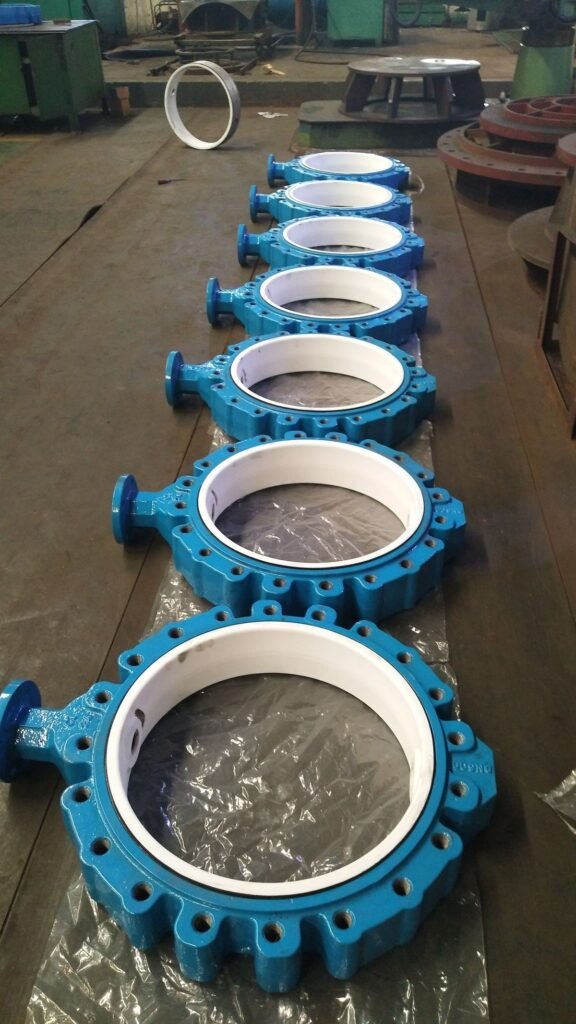
Ignoring Production Scalability
A manufacturer may be good at prototypes but unable to support large-scale production.
Not Defining Acceptance Criteria
The customer and manufacturer should agree on inspection and testing requirements before production.
Butterfly Valve ODM Project Checklist
Before starting development, confirm:
- Product application
- Valve design
- Valve size
- Pressure rating
- Fluid
- Operating temperature
- Operating pressure
- Body material
- Disc material
- Shaft material
- Seat material
- Connection
- Face-to-face dimension
- Actuator requirements
- Operating torque
- Fail-safe requirements
- Accessories
- Prototype requirements
- Testing requirements
- Quality criteria
- Drawings
- Documentation
- Branding
- Packaging
- IP ownership
- Change-control procedure
- Production volume
- Delivery schedule
Frequently Asked Questions
What does butterfly valve ODM mean?
Butterfly valve ODM means a manufacturer provides product design and manufacturing services based on a customer’s requirements. The manufacturer may develop the valve design, produce prototypes, conduct testing, and manufacture the final product.
What is the difference between butterfly valve OEM and ODM?
OEM commonly involves manufacturing according to customer-provided specifications, while ODM generally involves greater manufacturer responsibility for product design and development. Some manufacturers provide both services.
Can an ODM manufacturer design a completely customized butterfly valve?
Potentially, yes. Depending on the manufacturer’s engineering capabilities, customization can include dimensions, disc geometry, materials, seat design, connections, actuator interfaces, and other components.
Can ODM butterfly valves use my brand name?
Yes. ODM products can generally be supplied with customer branding, including logos, nameplates, model numbers, packaging, and documentation, subject to the commercial agreement.
Is prototype development necessary for ODM projects?
For new or significantly customized designs, prototype development and testing are strongly useful. They can identify design issues before mass production.
Can ODM manufacturers provide electric or pneumatic actuators?
Many can integrate electric, pneumatic, or hydraulic actuators into the customized butterfly valve assembly.
How long does butterfly valve ODM development take?
The timeline varies significantly depending on design complexity, tooling, materials, prototype requirements, testing, and order quantity. A simple modification may be much faster than a completely new valve design.
Who owns the ODM valve design?
Ownership depends on the agreement between the customer and manufacturer. It should be explicitly defined before development begins, including ownership of new designs, drawings, tooling, and modifications.
What testing is required for an ODM butterfly valve?
Depending on the design and application, testing may include shell pressure testing, seat leakage testing, functional testing, torque testing, dimensional inspection, material verification, and actuator testing.
How do I choose a reliable butterfly valve ODM manufacturer?
Look for proven engineering capability, manufacturing facilities, prototype development, testing resources, quality control, material expertise, production scalability, documentation, IP management, and experience with customized industrial valves.
Conclusion
Butterfly valve ODM provides a practical route for companies that want to develop customized industrial valve products without building their own complete design and manufacturing infrastructure.
The biggest advantage of ODM is that the manufacturer can participate in the design and engineering process, rather than simply producing an existing drawing. This can be particularly valuable when customers need special dimensions, materials, sealing systems, actuator configurations, or application-specific performance.
A successful ODM project should follow a controlled process:
Requirements → Engineering → Prototype → Testing → Approval → Mass Production → Quality Control
Before selecting an ODM partner, carefully evaluate its engineering team, manufacturing facilities, testing capabilities, production capacity, quality system, documentation, and approach to intellectual property.
When these elements are managed properly, an ODM partnership can help companies launch differentiated butterfly valve products faster, reduce development investment, and build a scalable product line for long-term industrial markets.