
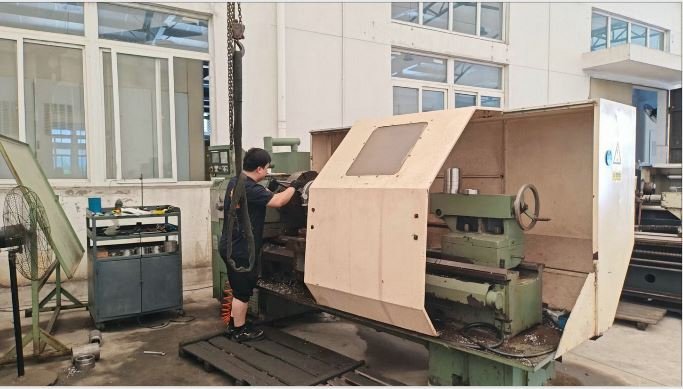
An industrial ball valve is a robust and high-performance device designed to control the flow of liquids and gases in demanding industrial environments. Known for its strength, reliability, and tight sealing capability, it is widely used in industries where safety and efficiency are critical.
At the core of its functionality is the Ball Valve, which uses a rotating spherical element to regulate or shut off flow with precision.

Introduction to Industrial Ball Valves
Industrial ball valves are essential for large-scale fluid control systems.
What Is an Industrial Ball Valve
An industrial ball valve is a heavy-duty version of a ball valve designed for high-pressure, high-temperature, and corrosive environments. It operates using a quarter-turn mechanism for quick and reliable flow control.
Key features include:
- Strong and durable construction
- High-pressure resistance
- Excellent sealing performance
- Long operational life
Importance in Industrial Systems 🏭
Industrial ball valves play a crucial role in:
- Ensuring safe fluid handling
- Preventing leaks and system failures
- Improving operational efficiency
- Supporting automation systems
Working Principle of Industrial Ball Valve ⚙️
Quarter-Turn Operation
The valve operates by rotating the ball 90 degrees:
- Open: Bore aligned with pipeline
- Closed: Bore perpendicular to flow
Flow Regulation Mechanism
The internal ball allows full flow or complete shut-off, ensuring minimal pressure drop and efficient control.
Key Components of Industrial Ball Valve
Valve Body
The main structure that houses internal components and withstands pressure.
Ball and Stem
The ball controls flow, while the stem connects it to the actuator or handle.
Seats and Seals
Provide tight sealing and prevent leakage.
Types of Industrial Ball Valves 🔍
Floating Ball Valve
The ball is supported by seats and moves slightly under pressure.
Trunnion Mounted Ball Valve
The ball is anchored and supported, ideal for high-pressure applications.
Multi-Port Ball Valve
Allows multiple flow paths for complex systems.
Materials Used in Industrial Ball Valves 🏗️
Stainless Steel
Provides corrosion resistance and durability.
Carbon Steel
Offers strength and cost-effectiveness.
Special Alloys
Used in extreme environments such as high temperature or corrosive conditions.

Advantages of Industrial Ball Valve 🌟
High Durability
Designed to withstand harsh industrial conditions.
Tight Shut-Off
Ensures leak-proof operation.
Low Maintenance
Requires minimal servicing over time.
Applications of Industrial Ball Valve ⚙️
Oil and Gas Industry
Used in pipelines, refineries, and offshore platforms.
Chemical Processing Plants
Handle aggressive and hazardous fluids.
Power Generation
Control steam, water, and fuel systems.
Water and Wastewater Treatment
Regulate flow in treatment facilities.
How to Choose the Right Industrial Ball Valve 🔍
Pressure and Temperature Ratings
Ensure compatibility with operating conditions.
Material Compatibility
Select materials suitable for the fluid type.
Valve Size and Design
Choose based on system requirements and layout.
Maintenance and Troubleshooting 🛠️
Common maintenance practices include:
- Regular inspection
- Cleaning internal components
- Replacing worn seals
- Checking actuator performance
Standards and Certifications
API Standards
Ensure performance in oil and gas applications.
ISO Standards
Provide international quality assurance.
Future Trends in Industrial Ball Valve Technology 🚀
Smart Valves
Integration with IoT for real-time monitoring.

Automated Systems
Use of electric and pneumatic actuators.
Eco-Friendly Materials
Development of sustainable and corrosion-resistant materials.
Advanced Sealing Technologies
Improved durability and leak prevention.
Frequently Asked Questions
What is an industrial ball valve?
It is a heavy-duty valve used for controlling fluid flow in industrial systems.
How does it work?
It uses a rotating ball to allow or block flow.
What industries use industrial ball valves?
Oil and gas, chemical processing, power generation, and water treatment.
Are industrial ball valves durable?
Yes, they are designed for long-term use in harsh environments.
Can they handle high pressure?
Yes, especially trunnion-mounted designs.
Do they require maintenance?
Minimal maintenance is required with proper use.
Conclusion
An industrial ball valve is a critical component for efficient and reliable fluid control in industrial applications. Built around the robust Ball Valve mechanism, it offers durability, precision, and low maintenance.
As industries move toward automation and smart systems, industrial ball valves will continue to evolve, delivering enhanced performance, safety, and sustainability for modern engineering challenges. 🔧🏭