
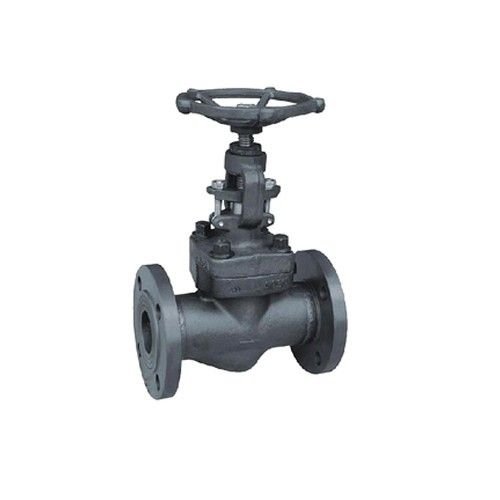
Understanding butterfly valve leakage class is essential when selecting a valve for reliable shut-off. A butterfly valve may look fully closed from the outside, but its actual sealing performance depends on the seat design, disc condition, pressure differential, fluid, temperature, and applicable testing standard.
In industrial applications, terms such as Class IV, Class VI, bubble-tight shut-off, API 598, and ISO 5208 are often used when discussing valve leakage. However, these terms don’t all describe exactly the same thing.
Choosing the correct leakage requirement helps prevent misunderstandings between valve manufacturers, engineers, contractors, and end users.
This guide explains the major leakage classifications, testing standards, seat designs, common causes of leakage, and practical considerations when specifying a butterfly valve.
What Is Butterfly Valve Leakage Class?
A leakage class defines the allowable amount of fluid that may pass through a valve’s closed sealing system under specified test conditions.
For a butterfly valve, the main concern is usually seat leakage when the disc is in the closed position.
Depending on the standard and valve application, leakage may be measured as:
- Bubbles per minute
- Volumetric flow
- Mass flow
- Drops per minute
- Gas leakage
- Liquid leakage
The important point is that “zero leakage” isn’t a universal engineering term. It needs to be connected to a particular test standard and test condition.
For example, a valve described as “bubble tight” generally means that no visible bubbles are permitted during a specified gas-pressure seat test. It doesn’t necessarily mean that the valve meets every possible leakage requirement under every operating condition.
Butterfly Valve Leakage Class vs Leakage Rate
These terms are related but shouldn’t be treated as identical.
A leakage class is a defined acceptance category under a particular standard.
A leakage rate is the actual measured amount of fluid passing through the valve.
For example, a specification may require:
Butterfly valve shall achieve a specified leakage class according to the applicable testing standard.
The manufacturer then tests the valve under defined conditions and determines whether it passes.
This distinction matters because two valves may both be described as “low leakage” while being tested under different standards.
Major Butterfly Valve Leakage Standards
Several standards may appear in butterfly valve specifications.
ANSI/FCI 70-2
ANSI/FCI 70-2 is widely associated with control-valve seat leakage classifications.
It defines leakage classes from Class I through Class VI, with progressively tighter requirements.
However, these classes are primarily associated with control valves and should not automatically be applied to every industrial butterfly valve.
API 598
API 598 covers inspection and testing of valves, including shell and closure testing requirements for applicable valve types.
It is widely encountered in industrial valve specifications.
ISO 5208
ISO 5208 specifies pressure testing of metallic industrial valves and includes leakage-rate categories for closure tests.
The terminology and acceptance criteria should therefore be interpreted according to the specific edition and valve type being tested.
EN 12266-1
EN 12266-1 provides pressure-testing requirements for industrial valves and defines leakage rates for closure tests.
The applicable standard should be identified clearly in the valve purchase specification.
Understanding ANSI/FCI 70-2 Leakage Classes
ANSI/FCI 70-2 uses six principal leakage classes.
| Leakage Class | General Description |
|---|---|
| Class I | Basic acceptance requirement |
| Class II | Lower allowable leakage than Class I |
| Class III | Tighter leakage requirement |
| Class IV | Commonly associated with metal-seated control valves |
| Class V | Very low allowable leakage |
| Class VI | Extremely low specified leakage |
The exact allowable leakage depends on valve size, test pressure, differential pressure, and other parameters defined by the standard.
Important
It’s incorrect to simply say:
“Class VI means zero leakage.”
Class VI establishes a very low allowable leakage rate under specified test conditions. It is not the same as claiming absolute zero leakage under all possible service conditions.
What Is Bubble Tight Butterfly Valve Shut-Off?
“Bubble tight” is a commonly used industry term for extremely tight shut-off.
In a typical gas-pressure seat test, the valve is closed and pressure is applied. The downstream side is observed for gas bubbles in a liquid test medium.
If no visible bubbles are produced during the specified test period, the valve may be described as achieving bubble-tight shut-off under that test.
This is particularly common for resilient seated butterfly valves.
A properly selected:
- EPDM seated butterfly valve
- NBR seated butterfly valve
- PTFE seated butterfly valve
can provide very tight shut-off when the seat material and valve design are appropriate for the application.
Soft-Seated vs Metal-Seated Butterfly Valve Leakage
Seat design has a major influence on leakage performance.
Soft-Seated Butterfly Valves
Soft seats use elastomeric or polymeric sealing materials.
Common materials include:
- EPDM
- NBR
- PTFE
- FKM, depending on design
Soft seats can provide excellent shut-off because the flexible seat conforms closely to the disc.
They’re widely used for:
- Water
- HVAC
- Cooling systems
- Wastewater
- General industrial service
However, temperature, chemical compatibility, and abrasive particles can limit their application.
Metal-Seated Butterfly Valves
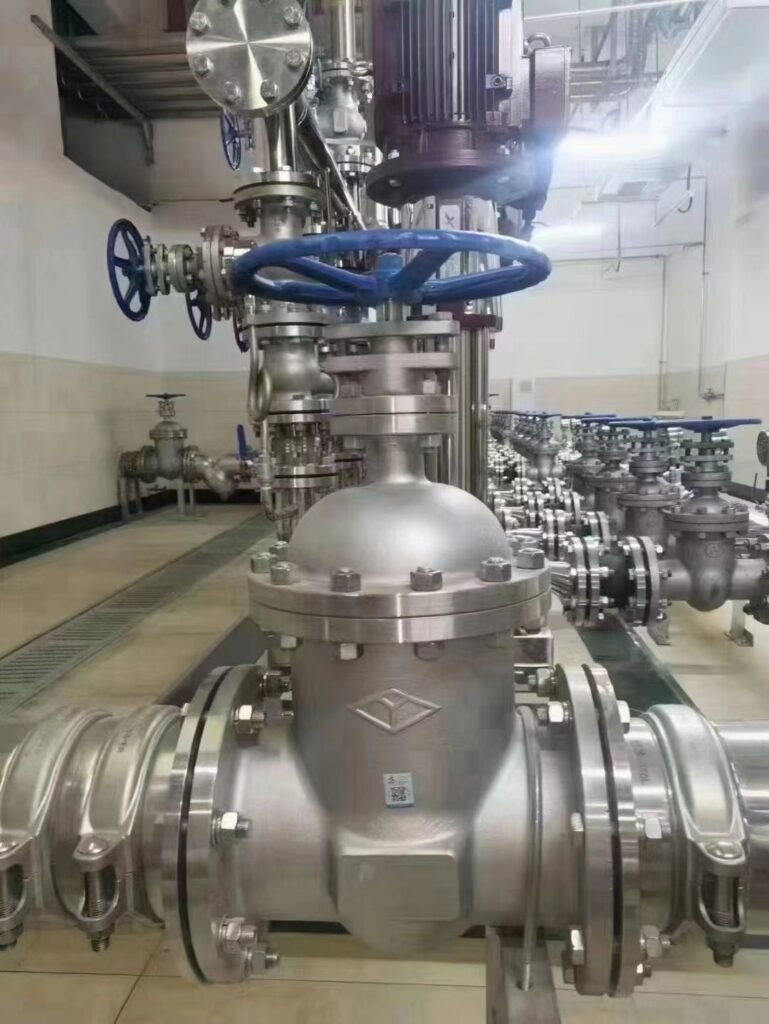
Metal-seated butterfly valves use metallic sealing surfaces.
They’re commonly considered for more demanding applications involving:
- High temperature
- Severe service
- Certain abrasive media
- High pressure
- Thermal cycling
Metal seating can offer excellent durability, but the achievable leakage rate depends heavily on the valve design and applicable testing standard.
Therefore, a metal seat shouldn’t automatically be assumed to provide tighter shut-off than a soft seat.
How Is Butterfly Valve Leakage Tested?
A typical closure test involves several stages.
1. Position the Valve
The valve is closed according to the manufacturer’s specified procedure.
2. Apply Test Pressure
The specified pressure is applied to one side of the closed valve.
3. Stabilize the Test
The test pressure is maintained for the required period.
4. Measure Leakage
The leakage is measured using the method required by the applicable standard.
5. Compare With Acceptance Criteria
The measured leakage is compared with the allowable value.
The exact procedure varies by standard, valve type, size, pressure rating, test medium, and project specification.
What Causes Butterfly Valve Seat Leakage?
A butterfly valve can develop leakage for many reasons.
Damaged Seat
Cuts, cracks, deformation, or excessive wear can prevent proper sealing.
Damaged Disc
Corrosion, erosion, or scratches on the disc sealing surface can create leakage paths.
Foreign Material
Particles trapped between the disc and seat are a common cause of leakage.
Incorrect Installation
Pipe misalignment or excessive mechanical stress can affect valve operation and sealing.
Excessive Differential Pressure
Some valves have limitations on the differential pressure that can be safely shut off.
Incorrect Seat Material
A chemically incompatible elastomer can deteriorate and lose its sealing properties.
Actuator Problems
An actuator may fail to provide sufficient torque to move the disc completely into the required closed position.
Butterfly Valve Leakage Class and Pressure Rating
Leakage performance shouldn’t be considered separately from pressure rating.
A valve may pass a factory closure test under one pressure condition but operate under significantly different conditions in the field.
When selecting a valve, check:
- Nominal pressure
- Maximum differential pressure
- Test pressure
- Operating temperature
- Fluid type
- Seat material
- Valve size
- Flow direction
- Actuator torque
For example, a valve suitable for low-pressure water isolation may not be appropriate for a high-pressure chemical application simply because it has a similar nominal diameter.
Butterfly Valve Leakage Class and Valve Size
Valve size can affect leakage-test requirements and allowable leakage rates.
Larger valves may have larger effective sealing circumferences and different test parameters.
Therefore, a leakage requirement should always be evaluated together with:
Valve size + pressure + test medium + test standard + seat design
This is one reason manufacturers need complete technical information before confirming a valve’s leakage performance.
How to Specify Butterfly Valve Leakage Requirements
A good valve specification should avoid vague phrases such as:
“Valve must have zero leakage.”
Instead, specify the relevant standard and acceptance requirement.
For example, a project specification might identify:
- Applicable testing standard
- Closure-test direction
- Test medium
- Test pressure
- Test duration
- Allowable leakage
- Valve size
- Pressure class
- Seat material
The manufacturer can then provide a clear compliance statement.
This approach is much more useful than relying on informal terms such as “tight sealing.”
Butterfly Valve Leakage Class Selection Guide
Different applications may have different priorities.
| Application | Typical Priority |
|---|---|
| HVAC water | Reliable shut-off |
| Drinking water | Tight sealing + approved materials |
| Wastewater | Tight sealing + debris tolerance |
| Cooling water | Reliable operation |
| Seawater | Corrosion resistance + shut-off |
| Chemical service | Seat compatibility + leakage control |
| High temperature | Seat durability + leakage |
| Control service | Leakage class + flow control |
| Critical isolation | Verified closure performance |
The required leakage class should be determined by the process and project specification rather than choosing the tightest possible class automatically.
Butterfly Valve Leakage Class and Actuator Torque
Leakage performance and actuator sizing are closely connected.
The actuator must provide enough torque to close the valve under the specified operating conditions.
Required torque can be affected by:
- Seat friction
- Differential pressure
- Disc position
- Fluid pressure
- Temperature
- Seat material
- Valve design
An undersized actuator may leave the valve partially open, resulting in leakage even when the valve itself is mechanically capable of achieving tight shut-off.
For automated butterfly valves, actuator sizing should therefore be checked together with the valve’s torque curve.
How to Reduce Butterfly Valve Leakage
Several practices can help maintain reliable sealing.
Use the Correct Seat Material
Confirm chemical and temperature compatibility.
Keep the Pipeline Clean
Prevent debris from entering the sealing area.
Install the Valve Correctly
Proper flange alignment helps prevent mechanical distortion.
Avoid Exceeding Pressure Limits
Check the maximum allowable differential pressure.
Inspect the Seat Regularly
Replace damaged or excessively worn seats.
Verify Actuator Settings
Make sure the actuator reaches the correct closed position.
Follow the Manufacturer’s Test Procedure
Don’t use a generic procedure when the valve manufacturer provides a specific one.
Butterfly Valve Leakage Troubleshooting Checklist
| Problem | Possible Cause | Recommended Check |
|---|---|---|
| Internal leakage | Damaged seat | Inspect seat |
| Internal leakage | Debris | Clean sealing area |
| Internal leakage | Damaged disc | Inspect disc |
| Internal leakage | Incorrect closure | Check actuator |
| External leakage | Shaft seal | Inspect shaft seal |
| Flange leakage | Gasket problem | Inspect connection |
| High torque | Seat friction | Check seat |
| High torque | Corrosion | Inspect disc/shaft |
| High torque | Differential pressure | Check operating conditions |
| Repeated leakage | Wrong valve selection | Review application |
Butterfly Valve Leakage Class: Practical Inspection Checklist
Before approving a valve for service, verify:
- Valve size is correct
- Pressure rating is correct
- Seat material is suitable
- Fluid compatibility is confirmed
- Applicable leakage standard is identified
- Closure test has been completed where required
- Test pressure is documented
- Test medium is documented
- Leakage result meets acceptance criteria
- Actuator torque is adequate
- Valve reaches the fully closed position
- No external leakage is observed
- Test documentation is available
For critical industrial projects, maintaining these records can make future troubleshooting much easier.
Frequently Asked Questions
What is butterfly valve leakage class?
It describes the allowable seat leakage of a closed butterfly valve under specified test conditions and according to a particular testing standard.
What is the difference between Class IV and Class VI leakage?
Both are leakage classifications under ANSI/FCI 70-2, but Class VI has a much tighter allowable leakage requirement. The exact acceptance criteria depend on the standard’s defined test conditions.
Is Class VI completely zero leakage?
No. Class VI specifies an extremely low allowable leakage rate under defined test conditions. “Zero leakage” is often used informally, but engineering specifications should identify the actual test standard and acceptance criteria.
What does bubble-tight mean for a butterfly valve?
It generally refers to no visible bubbles during a specified gas-pressure seat test. The precise meaning depends on the applicable testing procedure.
Are soft-seated butterfly valves more leak-tight than metal-seated valves?
Soft seats can provide very tight shut-off because elastomeric materials conform closely to the disc. Metal-seated valves can be more suitable for high-temperature or severe-service conditions. Neither should automatically be considered superior in every application.
Which standards are used for butterfly valve leakage testing?
Commonly encountered standards include API 598, ISO 5208, EN 12266-1, and ANSI/FCI 70-2 for applicable valve/control-valve applications. The correct standard depends on the valve type and project specification.
Why does a butterfly valve leak when fully closed?
Possible causes include damaged seats, disc damage, debris, excessive differential pressure, incorrect actuator adjustment, mechanical misalignment, or an unsuitable valve for the service conditions.
Can an actuator cause butterfly valve leakage?
Yes. If the actuator doesn’t provide sufficient torque or doesn’t reach the correct closed position, the disc may not properly engage the seat.
How can I specify butterfly valve leakage requirements?
Identify the applicable testing standard, test medium, pressure, test duration, leakage acceptance criteria, valve size, pressure class, and seat design rather than simply specifying “zero leakage.”
Conclusion
Understanding butterfly valve leakage class is important when selecting, testing, and maintaining industrial butterfly valves. Leakage performance depends on much more than the valve’s nominal size. Seat material, disc design, actuator torque, pressure differential, temperature, installation quality, and testing procedures all influence shut-off performance.
The most important lesson is to avoid treating terms such as Class VI, bubble tight, zero leakage, API 598, and ISO 5208 as interchangeable. Each term belongs to a particular testing context, and the applicable standard should always be clearly identified in the technical specification.
For water and general industrial isolation, resilient seated butterfly valves can provide excellent shut-off when correctly selected and installed. For high-temperature or demanding services, metal-seated and offset butterfly valve designs may be more appropriate.
Ultimately, the best specification is one that clearly defines the required leakage rate, testing standard, test conditions, and acceptance criteria. That gives both the buyer and manufacturer a measurable target and helps ensure reliable valve performance in actual service.