
What Are Industrial Butterfly Valves?
Industrial butterfly valve types are designed to regulate, isolate, or control the flow of liquids, gases, steam, and other process media in industrial piping systems. Their compact design, quarter-turn operation, and cost-effective installation make butterfly valves one of the most widely used valve solutions across industries such as water treatment, HVAC, oil and gas, chemical processing, marine engineering, mining, and power generation.
Different butterfly valve designs are engineered to meet specific operating pressures, temperatures, sealing requirements, and installation conditions.
Why Choose Butterfly Valves for Industrial Applications?
Industrial butterfly valves offer several advantages:
- Compact and lightweight construction
- Fast quarter-turn operation
- Low operating torque
- Easy automation with electric or pneumatic actuators
- Lower installation costs
- Minimal maintenance requirements
- Wide range of materials and pressure ratings
- Suitable for large-diameter pipelines
These benefits make butterfly valves a reliable and economical choice for industrial flow control.
Main Industrial Butterfly Valve Types
1. Wafer Butterfly Valve
The wafer butterfly valve is installed between two pipeline flanges and secured using long bolts.
Key Features
- Lightweight design
- Compact installation
- Cost-effective
- Easy maintenance
Typical Applications
- Water treatment
- HVAC systems
- Irrigation
- Municipal water distribution
2. Lug Butterfly Valve
The lug butterfly valve features threaded inserts around the valve body, allowing each flange to be bolted independently.
Advantages
- Suitable for end-of-line service
- Easier pipeline maintenance
- Strong mechanical support
Common Applications
- Chemical plants
- Industrial processing
- Pump stations
3. Double Flanged Butterfly Valve
A double flanged butterfly valve has integral flanges that provide a secure connection to the pipeline.
Benefits
- Excellent structural stability
- Ideal for large pipe diameters
- Simplified installation
Applications
- Municipal water systems
- Wastewater treatment
- Large industrial pipelines
4. Resilient Seated Butterfly Valve
A resilient seated butterfly valve uses an elastomer seat, such as EPDM or NBR, to create a bubble-tight seal.
Features
- Excellent sealing performance
- Low operating torque
- Cost-effective
- Easy maintenance
Applications
- Potable water
- Wastewater
- HVAC
- Fire protection
5. High-Performance Butterfly Valve
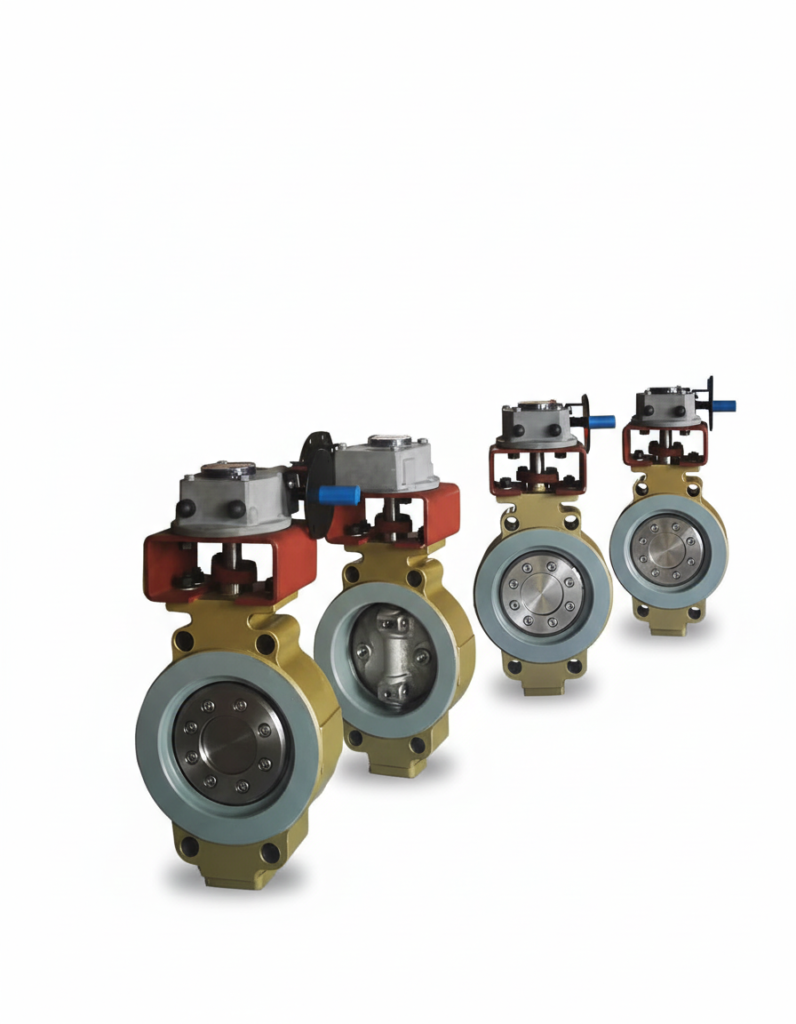
A high-performance butterfly valve incorporates a double-offset disc design to reduce seat wear and improve sealing.
Advantages
- Higher pressure capability
- Better temperature resistance
- Longer service life
- Reduced operating torque
Applications
- Oil and gas
- Chemical processing
- Industrial manufacturing
6. Double Offset Butterfly Valve
The double offset butterfly valve is designed with two shaft offsets that reduce friction between the disc and seat during operation.
Benefits
- Lower seat wear
- Improved sealing
- Longer operating life
Typical Uses
- Steam systems
- Petrochemical plants
- Industrial utilities
7. Triple Offset Butterfly Valve
A triple offset butterfly valve features three geometric offsets and a metal-to-metal sealing design for severe service.
Advantages
- Zero leakage performance
- Excellent high-temperature resistance
- Suitable for high-pressure applications
- Long service life
Applications
- Power plants
- Refineries
- LNG facilities
- Offshore platforms
Industrial Butterfly Valve Types Comparison
| Valve Type | Best For | Main Advantage |
|---|---|---|
| Wafer | Water treatment, HVAC | Lightweight and economical |
| Lug | Industrial processing | End-of-line service capability |
| Double Flanged | Large pipelines | Strong and stable connection |
| Resilient Seated | Water and wastewater | Bubble-tight sealing |
| High Performance | Oil and gas | Higher pressure and temperature resistance |
| Double Offset | Chemical processing | Reduced seat wear |
| Triple Offset | Severe service | Metal-to-metal sealing and zero leakage |
Materials Used in Industrial Butterfly Valves
Selecting the correct material is essential for reliable performance.
Body Materials
- Ductile Iron
- Carbon Steel
- Stainless Steel
- Cast Steel
Disc Materials
- Stainless Steel 304
- Stainless Steel 316
- Aluminum Bronze
- Duplex Stainless Steel
Seat Materials
| Material | Typical Application |
|---|---|
| EPDM | Water treatment and HVAC |
| NBR | Oil-based media |
| PTFE | Chemical processing |
| Viton | High-temperature fluids |
| Metal Seat | Steam and abrasive service |
Industrial Applications
Industrial butterfly valves are widely used in:
Water Treatment
- Water distribution
- Filtration
- Pump stations
Wastewater Treatment
- Sludge handling
- Effluent systems
HVAC
- Chilled water
- Heating systems
- Cooling towers
Oil and Gas
- Pipelines
- Storage terminals
- Refineries
Chemical Processing
- Corrosive media
- Process control
Marine
- Ballast systems
- Cooling water
- Shipbuilding
Power Generation
- Steam systems
- Cooling water
- Auxiliary services
How to Choose the Right Industrial Butterfly Valve
When selecting among different industrial butterfly valve types, consider:
- Operating pressure
- Temperature range
- Fluid characteristics
- Pipeline diameter
- Installation method
- Sealing requirements
- Manual or automated operation
- Applicable industry standards
Choosing the correct valve type helps improve system efficiency, reduce maintenance, and extend service life.
Quality Standards
Reliable butterfly valves are manufactured according to internationally recognized standards.
Common Standards
- ISO 9001
- EN 593
- API 609
- CE Certification
- ANSI
- DIN
- JIS
Industry references:
Frequently Asked Questions
What are the main industrial butterfly valve types?
The main types include wafer, lug, double flanged, resilient seated, high-performance, double offset, and triple offset butterfly valves.
Which butterfly valve is best for water treatment?
Resilient seated wafer and double flanged butterfly valves are commonly used because they provide reliable sealing and cost-effective operation.
What is the difference between high-performance and triple offset butterfly valves?
High-performance valves use a double-offset design for improved sealing, while triple offset valves feature a metal-to-metal seal designed for high-pressure and high-temperature service.
Can industrial butterfly valves be automated?
Yes. They can be equipped with electric, pneumatic, or hydraulic actuators for automated flow control.
Which materials are commonly used for butterfly valves?
Common materials include ductile iron, carbon steel, stainless steel, aluminum bronze, EPDM, PTFE, and metal seats.
How do I choose the right butterfly valve type?
Consider the operating pressure, temperature, media, pipeline size, sealing requirements, and industry standards to select the most suitable valve.
Conclusion
Understanding the different industrial butterfly valve types is essential for selecting the most effective flow control solution for your application. From compact wafer valves and maintenance-friendly lug valves to resilient seated, high-performance, double offset, and triple offset designs, each type offers unique advantages for specific operating conditions.
By choosing the appropriate valve design, material, and sealing configuration, industries can improve operational efficiency, reduce maintenance costs, and achieve long-term reliability in water treatment, HVAC, oil and gas, chemical processing, marine, and power generation systems.