
What Is a Power Plant Butterfly Valve?
A power plant butterfly valve is a heavy-duty industrial valve designed for use in thermal power plants, nuclear power stations, hydroelectric plants, and other energy generation facilities. It is used to control, regulate, and isolate the flow of water, steam, cooling media, and other process fluids under demanding operating conditions.
These valves are engineered to withstand:
- High pressure
- High temperature
- Continuous operation
- Corrosive cooling media
They are commonly installed in:
- Cooling water systems
- Boiler feedwater systems
- Condenser systems
- Auxiliary pipelines
- Circulation water networks
- Hydropower control systems
Why Butterfly Valves Are Used in Power Plants
Power plants require reliable, efficient, and durable flow control solutions for large-scale systems.
Key Advantages
- Compact design for large-diameter pipelines
- Lower weight compared to gate valves
- Fast opening and closing
- Reduced pressure loss
- Easy automation and remote control
- Lower installation and maintenance costs
Butterfly valves are especially suitable for cooling water and utility systems in power generation facilities.
How Does a Power Plant Butterfly Valve Work?
A butterfly valve uses a rotating disc mounted on a central shaft to control fluid flow.
When the actuator turns:
- The disc aligns with the pipeline to allow full flow.
- The disc rotates perpendicular to block flow.
- Partial rotation allows throttling and flow regulation.
Operating Positions
| Disc Position | Function |
|---|---|
| 0° | Fully Closed |
| 45° | Flow Regulation |
| 90° | Fully Open |
This simple mechanism ensures fast and reliable operation in critical systems.
Types of Power Plant Butterfly Valves
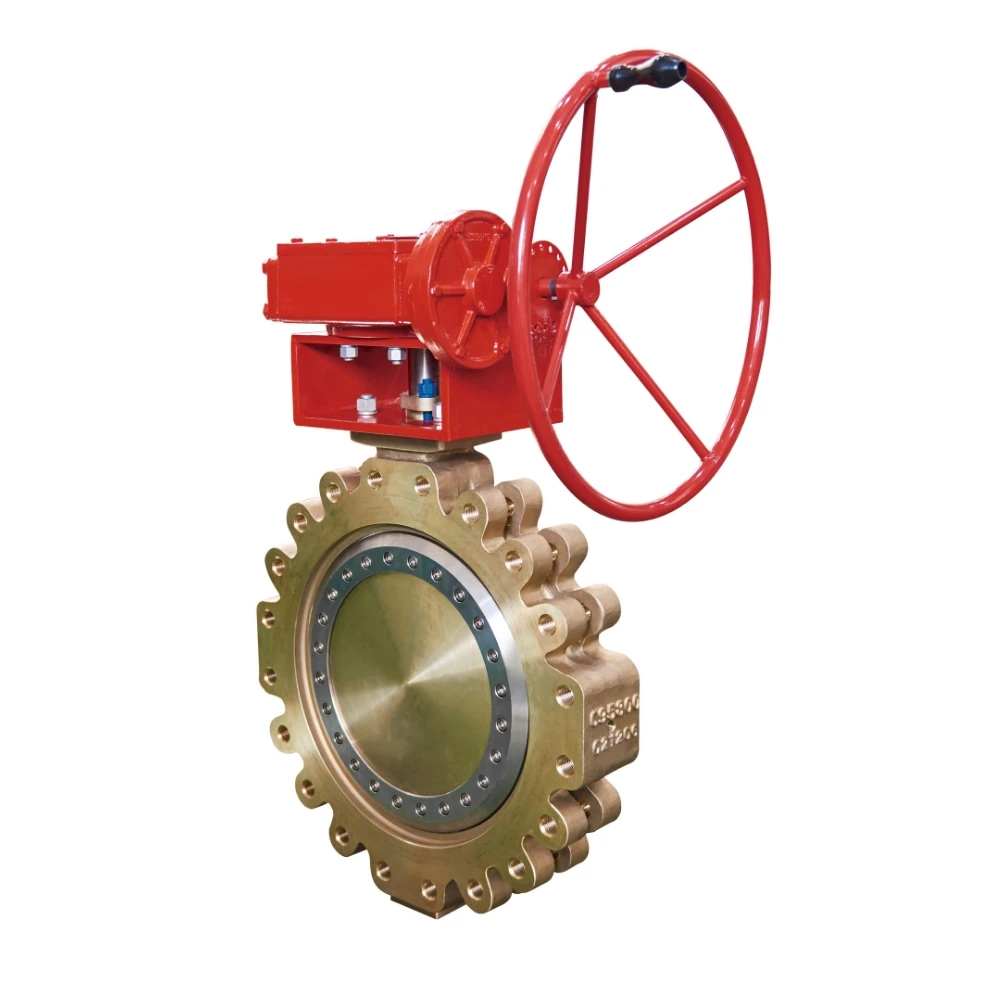
High Performance Butterfly Valve
Designed for demanding industrial environments.
Features
- Offset disc design
- Reduced seat wear
- Improved sealing performance
Applications
- Cooling water systems
- Auxiliary power plant pipelines
Double Offset Butterfly Valve
Common in utility systems.
Advantages
- Lower operating torque
- Extended service life
- Improved sealing efficiency
Triple Offset Butterfly Valve
Used in severe service conditions.
Benefits
- Metal-to-metal sealing
- Fire-safe design
- High temperature resistance
- Near-zero leakage performance
Applications
- Steam systems
- High-pressure applications
Metal Seated Butterfly Valve
Designed for:
- High temperature
- Abrasive media
- High-pressure operation
Materials Used in Power Plant Butterfly Valves
Carbon Steel
Widely used in power plant systems.
Benefits
- High strength
- Pressure resistance
- Cost-effective
Applications:
- Cooling water systems
- Utility pipelines
Stainless Steel
Provides:
- Corrosion resistance
- Long service life
- Stability under harsh conditions
Applications:
- Condenser systems
- Chemical dosing lines
Alloy Steel
Used for high-temperature and high-pressure environments.
Duplex Stainless Steel
Provides:
- Superior corrosion resistance
- High mechanical strength
Applications:
- Coastal power plants
- Cooling seawater systems
Applications of Power Plant Butterfly Valves
Cooling Water Systems
Used in:
- Condenser cooling loops
- Heat exchanger circuits
- Circulating water systems
Boiler Feedwater Systems
Control high-pressure water feeding into boilers.
Steam and Condensate Systems
Used for isolation and flow control in steam cycles.
Hydropower Systems
Regulate water flow in:
- Penstocks
- Turbine systems
- Water intake structures
Nuclear Power Plants
Used in:
- Auxiliary cooling systems
- Safety-related water systems
- Non-radioactive fluid circuits
Advantages of Power Plant Butterfly Valves
High Reliability
Designed for continuous operation in critical infrastructure.
Efficient Flow Control
Minimizes pressure loss in large pipelines.
Space-Saving Design
Ideal for large-diameter piping systems in confined plant layouts.
Automation Compatibility
Can be equipped with:
- Electric actuators
- Hydraulic actuators
- Pneumatic actuators
for remote operation.
Reduced Maintenance
Simplified structure reduces downtime and service costs.
How to Choose the Right Power Plant Butterfly Valve
Evaluate Operating Conditions
Consider:
- Pressure levels
- Temperature ranges
- Fluid type (water, steam, condensate)
Select Suitable Valve Type
- Double offset for general service
- Triple offset for severe service
- Metal seated for high temperature
Choose Material Carefully
Material selection is critical for long-term reliability.
Check Actuation Requirements
Determine whether manual or automated control is required.
Verify Industry Standards
Ensure compliance with power plant engineering specifications.
Industry Standards and Testing
Power plant butterfly valves must meet strict quality and safety requirements.
Common Standards
- ISO 9001
- API standards
- ASME standards
- EN standards
Common Tests
- Hydrostatic pressure testing
- High-temperature performance testing
- Leakage testing
- Torque testing
- Material analysis
Industry references:
Frequently Asked Questions
What is a power plant butterfly valve?
A butterfly valve designed for use in power generation systems such as thermal, nuclear, and hydroelectric plants.
Where are butterfly valves used in power plants?
Cooling systems, boiler feedwater lines, steam systems, and auxiliary pipelines.
Which type of butterfly valve is best for power plants?
Double offset and triple offset butterfly valves are commonly used depending on pressure and temperature conditions.
Can power plant butterfly valves handle high temperatures?
Yes. Metal-seated and triple offset designs are suitable for high-temperature applications.
Are butterfly valves used in nuclear power plants?
Yes, but mainly in non-critical or auxiliary systems with strict certification requirements.
Can these valves be automated?
Yes. They can be equipped with electric, pneumatic, or hydraulic actuators.
Conclusion
A power plant butterfly valve is a vital component in modern energy generation systems, providing reliable flow control, durability, and efficient operation under demanding conditions. From cooling water circuits to boiler and steam systems, these valves ensure stable performance and safe operation in thermal, nuclear, and hydroelectric power plants.
Selecting the right valve type, material, and actuation system helps improve efficiency, reduce maintenance costs, and ensure long-term reliability in critical power generation infrastructure.